As we mentioned in another recent review, Chile isn’t really known for pinot noir. But there have been a few Chilean pinots that we’ve tasted that have impressed us recently, like this one.
The William Cole Columbine Special Reserve pinot noir comes from the Casablanca Valley. This area is generally known as a cool-climate region with a strong maritime influence, which makes it a good candidate for pinot noir. But ironically, the Casablanca Valley isn’t really a valley. It does have a valley at it’s center, which is where the bulk of vineyard plantings are located, but the region as a whole extends beyond what is technically “the valley” and into western coastal hills. As such, there are a variety of micro-climates, altitudes, soils, etc that make this a diverse region.
As a side note, this William Cole from Chile should not be confused with the one from California.
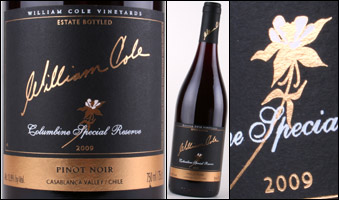
Wow, just wow. I wasn’t ready for the intensity on the nose of this pinot noir. The aromas are incredible from this wine, with raspberry, cola, violets and a little bit of bacon fat making a beautiful bouquet. On the palate a strawberry flavor stands out along with raspberry and a touch of spice. The tannins are moderate and the acidity is good. There’s a slight bitter note on the finish, which I would attribute to a touch too much oak, but overall this is a very nice pinot noir.
This wine would pair well with a simple marinara sauce on pasta. A friend of mine started a recipe blog a couple years ago and did a great recipe for marinara sauce, but stopped updating his blog after only two recipes. Nonetheless, I highly recommend his marinara recipe and encourage you to comment on his blog to get his ass in gear and post some more recipes.
Wine: William Cole Columbine Special Reserve
Variety: Pinot Noir
Vintage: 2009
Alcohol: 13.9%
Rating: 88
Price: $15.00
Disclosure: This wine was received as a sample.
Although I’m a big fan of Chilean wines, one thing they haven’t really built a strong reputation for yet is pinot noir. Some might even say they’ve struggled with it. But I’ve noticed improvements in Chilean pinot noir over the past couple years and hopefully this is a great example of even more good things to come.
Veramonte has been experimenting with pinot noir for about 10 years, and their results are promising. Their “Ritual” brand is a step up from their basic pinot. The fruit comes from the Casablanca Valley, a region best known for white wines. It was aged for 12 months in French oak, only 40% of which was new oak. French oak tends to have a softer influence on the flavor than American oak and by only using 40% new oak, they were able to further manage the influence of oak to develop an elegant, rather than a clunky wine.
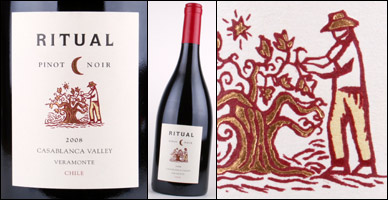
I wouldn’t guess this to be a Pinot Noir by the look of it in my glass, the color is much deeper than most Pinot. There isn’t a lot of intensity on the nose, but I wouldn’t call it tight. It’s quite pleasant, with aromas of cranberry, plum, nutmeg and tree bark. On the palate it has good fruit with cherry and raspberry flavors being the most obvious. It also has some vanilla, some chocolate notes and a good dose of spiciness, which makes it interesting. It’s a pretty “big” wine for a Pinot Noir, but I’m not complaining. However, if you’re expecting this to be like a typical Californian pinot noir, you’ll need to adjust your expectations. The acidity and tannins are perfect for drinking now. The finish is long and luscious, leaving a velvety feel in your mouth and cherry flavors with a touch of spice.
Wine: Veramonte Ritual
Variety: Pinot Noir
Vintage: 2008
Alcohol: 14.5%
Rating: 88
Price: $17.99
Find Veramonte Ritual Pinot Noir with Snooth
Disclosure: This wine was received as a sample.
This is going to be a quick, to-the-point review.
It’s another Sauvignon Blanc from Marlborough, New Zealand, and this is from the Dashwood brand. I know some folks in the wine world don’t like to use the word, “brand” but that’s what it is. Anyway, Dashwood is produced by Vavasour — which, as I mentioned in another recent review, is owned by Foley Family Wines from Sonoma.
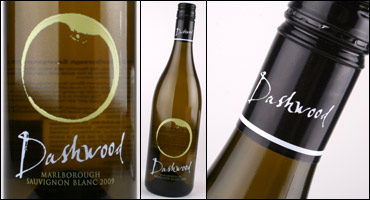
While this is still characteristically proper for a sauvignon blanc, it’s not nearly as grassy or grapefruity as I’d expect from New Zealand. The nose has a fairly powerful mineral quality, as well as melon, citrus and nettle. The palate brings a lot more citrus than the aromas would lead you to believe. It has flavors of grapefruit, melon and green apple, with good concentration. The acidity is just right.
Although it’s a slightly different than I’d expect from New Zealand, it’s still a nice sauvignon blanc.
Wine: Dashwood
Variety: Sauvignon Blanc
Vintage: 2009
Alcohol: 13%
Rating: 87
Price: $10.99
Find Dashwood Sauvignon Blanc with Snooth
Disclosure: This wine was received as a sample.
This past week I took part in an online wine tasting organized by Wines of Chile, an organization that works to promote Chilean wine around the world. This particular tasting was put together specifically for wine bloggers, like me. It’s an opportunity for bloggers to taste some wines they might not have otherwise tasted, and the obvious goal for the participating Chilean wineries is to get some publicity from the wine blogging community — and it works.
The wines were provided as samples, there were a total of eight wines. Given the quantity of wine, and my propensity not to be wasteful, I invited about a dozen friends over to join me for the tasting. All of those I invited over enjoy wine, but they’re not as geeky about it as me.
The way these events work is the participating bloggers receive the wines ahead of time, then on the night of the event we all log onto a web conference. There’s a split screen video displayed with a moderator from New York City in one view and the winemakers in Chile in another view. We taste the wines in a predetermined order while the winemakers talk about each one. There’s a window for chat, we’re bloggers share their comments and post questions to the winemakers. The participating bloggers often Tweet their comments too. If you do a Twitter search for #ChileBlends you’ll see some of the Tweets from that night.
One of the things that always strikes me as interesting about these events is how long it takes others participating to loosen up. I’ve noticed that some other bloggers are concerned with being taken seriously and try to follow establish a professional decorum. While I agree that if you’re doing product reviews you should have a consistent methodology and take the review itself seriously, I also like the irreverence and individuality that should be inherent in blogging.
At the beginning of the evening I made some humorous comments in the chat stream and nobody got the jokes — except for those who were at the house with me. Some of those who joined me commented that none of the bloggers seemed to have a sense of humor. It took until about four glasses in for other participants to loosen up. This leaves me with one comment to wine bloggers out there: lighten up and have some fun!!
Many of the wines in this tasting were priced above our typical $20 limit here at Cheap Wine Ratings. But hey, I’m not going to let that stop me from tasting them. After all, how can I tell you that a $15 bottle of wine tastes like a $40 bottle if I never drink the higher-priced stuff. But since many of these wines are over the price that readers of this blog are seeking, I’m going to do my reviews in one long post rather than my typical one-post-per-bottle approach.
Here are my impressions of the wines, in the order we tasted them:
Valdivieso, Eclat
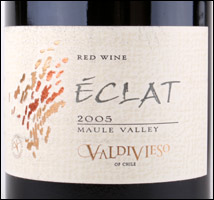 This wine comes from the Maule Valley region and is composed of 56% carignan, 24% mourvedre and 20% syrah. It’s an interesting blend. The grapes in it at first glance appear to be a blend that might come from Southern France, although I don’t think I’ve ever had a blend dominated by that much carignan.
This wine has very pleasant aromas with vanilla, red currant, blackberry and a little bit of smoked meat. The palate is filled with red berry and plum flavors and the mouthfeel is mouth-coatingly wonderful. The acidity really pops on this wine too, giving it a lively characteristic. It’s very nice.
Wine: Valdivieso, Eclat
Variety: Red Blend
Vintage: 2005
Alcohol: 13.5%
Rating: 88
Price: $27.00
Find Valdivieso, Eclat with Snooth
De Martino, Las Cruces Single Vineyard, Old Bush Vines
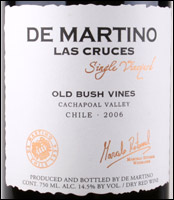 Coming from Cachapoal Valley, this was one of the higher-priced wines of the evening at $45. It’s a blend of 66% malbec and 34% carmenere. While I’ve tasted plenty of Malbec from Argentina and some from France, this may be the first I’ve tasted from Chile.
The nose is really interesting on this wine, in mostly a good way. It’s very herbal in nature and almost syrupy smelling. It has dark fruit aromas as well as something unique. As I smell this wine, my olfactory memories are buzzing. “Is it vinyl? No. Is it a Chiclet? No. I got it!!! It’s grape Kool-Aid powder!” I commented to the group tasting along with me and they all excitedly exclaimed, “Yes! That’s it!” Then I posted the comment into the web conference chat, and my all-too-serious wine blogging brethren ignored it and went on about mint or some similar bullshit. I think they may have considered a Kool-Aid reference to be insulting. But hey, it was clear as daylight to me. And I still enjoyed this wine a lot in spite of it.
In the mouth it has dense, dark fruit flavors, and loads of chocolate. The concentration of flavors is outstanding. The finish is nice and long. This is a rich and delicious wine.
Wine: De Martino, Las Cruces Single Vineyard, Old Bush Vines
Variety: Red Blend
Vintage: 2006
Alcohol: 14.5%
Rating: 91
Price: $45.00
Find De Martino, Las Cruces Single Vineyard, Old Bush Vinest with Snooth
Estampa Gold Assemblage
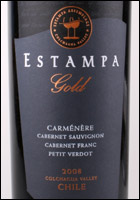 This blend of 57% carmenere, 23% cabernet sauvignon, 12% cabernet franc and 8% petit verdot comes from Colchagua Valley. With both carmenere and cabernet franc in the blend I would expect some herbal characteristics to the wine, but it really didn’t strike me that way.
The nose is tighter on this wine, compared ot the first two, but it does show a little bit of red raspberry and leather. It does have an outstanding mouth feel, with rich, mouth-coating tannins. The flavors are raspberry, plum and black pepper.
Wine: Estampa Gold Assemblage
Variety: Red Blend
Vintage: 2008
Alcohol: 14%
Rating: 86
Price: $22.00
Montes, Limited Selection, Cabernet Sauvignon Carmenere
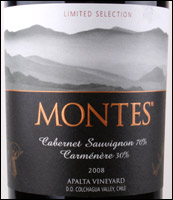 The blend of this wine is 70% cabernet sauvignon and 30% carmenere. It comes from Colchagua Valley. This is the first wine of the night that was within our typical price range, and it held its own next to the more expensive wines in the lineup.
Despite being only 30% of the blend, the carmenere stands out on the nose of this wine with a soft green pepper aroma. It also has a slightly dusty aroma, some chocolate and blackberry. The palate is brimming with ripe blackberry flavors, chocolate on the mid palate and a nice, relatively long finish. I also like the mouthfeel of this wine.
Wine: Montes, Limited Selection, Cabernet Sauvignon Carmenere
Variety: Red Blend
Vintage: 2008
Alcohol: 14%
Rating: 86
Price: $15.00
Find Montes, Limited Selection, Cabernet Sauvignon Carmenere with Snooth
Maquis Lien
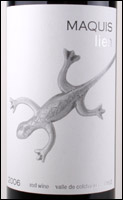 This is another wine that meets our target pricing limits. It also appeared to be the favorite label of the night for many participants. While I often veer away from wines with “critters” on the label, this one is done in a classy way and isn’t too cute. The blend is made up of 42% syrah, 30% carmenere, 12% cabernet franc, 9% petit verdot and 7% malbec.
The intensity on the nose is moderate, with aromas of licorice, raspberry and vanilla. Licorice is one of those aromas that I geek out about when I find it in wines, as I think it adds a nice touch. The flavors are raspberry, cherry and plum. This wine is loaded with tasty, ripe fruit. The finish is super long, with berry and vanilla flavors hanging out for ages.
Wine: Maquis Lien
Variety: Red Blend
Vintage: 2006
Alcohol: 14.5%
Rating: 87
Price: $19.00
Find Maquis Lien with Snooth
Hacienda Araucano Clos de Lolol
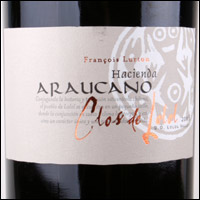 The blend in this wine is 31% syrah, 29% cabernet franc, 23% cabernet sauvignon, and 17% carmenere. It’s yet another wine from Colchagua Valley.
The aromas from this wine are beautiful and complex. Red fruit is the most obvious aroma, like raspberry, cherry and strawberry. But it doesn’t end there. It has some nice herbal and spice qualities adding complexity, like clove and a hint of tomato leaf. And finally, there’s a slight smokiness on the nose too. I get a nice strawberry-cherry flavor from this wine, with a velvety mouthfeel. This wine is dense—almost chewy, but smooth.
Wine: Hacienda Araucano Clos de Lolol
Variety: Red Blend
Vintage: 2008
Alcohol: 14%
Rating: 88
Price: $23.00
Emiliana Coyam
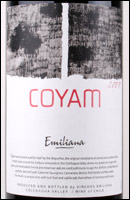 The final wine of the night from Colchagua Valley, this one is a blend of 38% syrah, 21% cabernet sauvignon, 21% carmenere, 17% merlot, 2% petit verdot and 1% mourvedre.
The aromas from this wine are a nice blend of fruit and earth, with blackberry, beets, leather and chocolate. The palate is very juicy, with ripe blackberry and plum flavors. There is some chocolate in there too. I noticed the oak a little too much in the back of the palate, but only for a second. It’s still a very nice wine.
Wine: Emiliana Coyam
Variety: Red Blend
Vintage: 2007
Alcohol: 14.5%
Rating: 88
Price: $29.00
Find Emiliana Coyam with Snooth
Casas del Bosque, Gran Estate Selection, Private Reserve
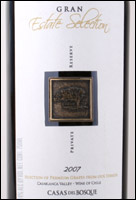
This is the final and most expensive bottle we tasted that evening, priced at $50. It’s also the heaviest bottle of the evening, and when empty feels as heavy as most bottles feel when they’re full. It’s a blend of 61% syrah, 26% merlot and 13% pinot noir.
There is a ton of complexity in this wine. The aromas are dark, like cassis, mushrooms, tar, soy sauce, and black pepper. The concentration on the palate is outstanding, with flavors like black currant, blackberry, chocolate and a hint of salami. It’s a nice wine and has a super-smooth mouth feel. While it’s a big wine, it’s still elegant.
Wine: Casas del Bosque, Gran Estate Selection, Private Reserve
Variety: Red Blend
Vintage: 2007
Alcohol: 14%
Rating: 90
Price: $50.00
Find Casas del Bosque, Gran Estate Selection, Private Reserve with Snooth
Tonight we’re checking out another sauvignon blanc from New Zealand, and this one comes from a box. Not a boxy box, but an octagon-shaped box from Octavin. These boxes hold 3 liters of wine, which is the equivalent of four 750ML bottles. For me, there are pros and cons of boxed wines. The cons include the fact that you don’t get to go through the ritual of pulling a cork. Enjoying wine can be experiential and pulling a cork is part of the experience. But the pros for boxed wine include the fact that you don’t have to open bottles as often, after all there are four bottles worth in here. And bag-in-box wine stays fresh much longer than wine in bottles. You can work on one box for a month or longer and it will still be good, while wine in a bottle goes bad within a couple days of opening.
This Silver Birch sauvignon blanc is from Marlborough, which is located at the northern tip of the southern island of New Zealand. This is the largest wine district in New Zealand and is well known for its sauvignon blanc. In fact, New Zealand is known more for sauvignon blanc than any other type of wine, with more hectares of sauvignon blanc grapes planted than all other varieties combined.
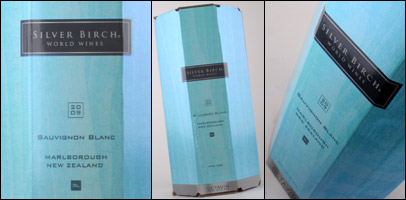
The nose is a little bit tight on this sauvignon blanc — that is to say there’s not a lot of intensity to the aromas. Melon is the most prominent aroma, with green apple and and mango wafting underneath it. In the mouth, the acidity gives it life and flavors of melon soaked in lime juice. The finish is medium in length and tastes like green apples. There’s not a lot of intensity or concentration to this wine, but it’s passable as a subtle sauvignon blanc.
Wine: Silver Birch
Variety: Sauvignon Blanc
Vintage: 2009
Alcohol: 13%
Rating: 83
Price: $23.99 for 3 liters
Find Silver Birch Sauvignon Blanc with Snooth
Here’s what others thought of the this wine:
Disclosure: This wine was received as a sample.
If there’s one type of wine that New Zealand is best known for, it’s sauvignon blanc. The reason for this is the intense tropical and citrus flavors typically found in their sauvignon blanc. And this one from Goldwater is a beautiful example of what you can expect from this region.
Goldwater Estate was established in 1978 by Kim and Jeanette Goldwater and merged with Vavasour in 2006, under the ownership of the New Zealand Wine Fund. Then, in 2009, the New Zealand Wine Fund was sold to Foley Family Wines from Sonoma. It’s amazing when you dig into the mergers and acquisitions in the wine world, you’ll find that many wines you see on the shelves are related.
This particular wine is not only from the Marlborough region in New Zealand, but more specifically is 100% from Wairau Valley.
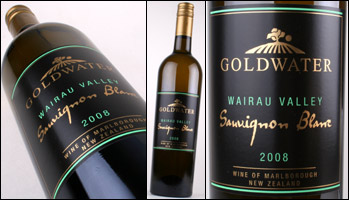
It doesn’t get anymore grapefruit-y than this sauvignon blanc. On the nose, the aromas are grapefruit, papaya, a subtle cut grass and mineral. The flavors explode with fresh, white grapefruit and a bit of melon. Imagine peeling a fresh, ripe grapefruit and eating a piece of it and that’s the primary flavor. The acidity is outstanding, making this crisp and refreshing. The finish is incredibly long and shows grapefruit flavors at first, but evolves into tangerine. If you enjoy sauvignon blanc with a strong grapefruit characteristic, this is a great choice. This one gets a solid 90 points.
Wine: Goldwater
Variety: Sauvignon Blanc
Vintage: 2008
Alcohol: 13%
Rating: 90
Price: $14.99
Find Goldwater Sauvignon Blanc with Snooth
Disclosure: This wine was received as a sample.
We’ve focused a lot of our sauvignon blanc reviews on Chile and also had a few from California and New Zealand. But we shouldn’t forget about France, and so today we’re checking out a French sauvignon blanc.
This wine is called Le Jaja de Jau and is produced by Château de Jau in southern France. “Jaja” is a colloquialism used in that region to describe everyday wines. I don’t know much French, let alone their colloquialisms, so I’m not personally familiar with the term. Nonetheless, the full name translates to mean “the everyday wine from Jau.”
You may notice that on the label it also says, “Ben.” This is because Le Jaja de Jau was established as an association of the artist, Benjamin Vauthier, who designed the label, and the winemaker Estelle Dauré.
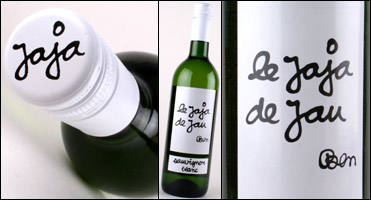
This is a more subtle and less tropical sauvignon blanc, than many others we’ve tasted recently, with a fairly strong mineral characteristic on the nose. There is a slight cut grass aroma and some citrus too, but it’s very soft. The palate has good acidity and flavors of lime, grapefruit and granny smith apple. The finish combines a sea salt mineral note with citrus acidity. It’s a very crisp sauvignon blanc with muted flavors making it a good, neutral wine for delicately flavored foods, like light fish.
Wine: Le Jaja de Jau
Variety: Sauvignon Blanc
Vintage: 2009
Alcohol: 11.5%
Rating: 84
Price: $10.49
Find Le Jaja de Jau Sauvignon Blanc with Snooth
Disclosure: This wine was received as a sample.
The sauvignon blanc we’re reviewing tonight is from California and is “certified green,” which at first struck me as just marketing spin but is actually a classification certified by a third party, called Protected Harvest. There is a lot of buzz around the wine industry about using sustainable practices, but for most producers that can be whatever they determine to be sustainable. But with this certification, Morro Bay has produced their wine according to guidelines set by Lodi growers and certified by Protected Harvest.
The winemaking used in this wine is also somewhat unique as a “sur lie” production method was used. That translates from French into “on lees”, which means that the lees was regularly stirred into this wine during the fermentation process. The lees is the yeast that settles to the bottom of the wine as it ferments. It is fairly common for wine to be siphoned off from the lees to help clarify the wine. But stirring the lees into the wine can give it a different flavor characteristic.
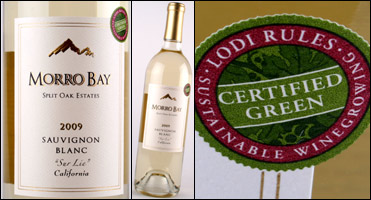
This is certainly subtle on the nose for a sauvignon blanc, and the bouquet is markedly different a lot of other sauvignon blanc. There’s a slight bread-like, yeast characteristic on the nose — no doubt a result of the “sur lie” production method. There are also notes of pear and mineral on the nose. The palate is also somewhat subtle with flavors of melon, pear and green apple. The acidity is sufficient, but not as intense as more tropical sauvignon blancs. It has a slightly creamy mouth feel, which is also a result of stirring the lees. The finish brings melon and mineral flavors. This is a softer style of sauvignon blanc, for those who like less intensity to the fruit characteristics in their sauvignon blanc.
Wine: Morro Bay, Split Oak Estates
Variety: Sauvignon Blanc
Vintage: 2009
Alcohol: 12.8%
Rating: 85
Price: $10.00
Disclosure: This wine was received as a sample.

 Prev
Prev