Laurier is one of 50-some brands owned by Bronco Wine Company, best known for producing extremely inexpensive wine brands. But coming in at $20 a bottle, this is one of their pricier brands.
The juice in this bottle comes from Los Carneros, a cool and windy region that spans the southern edge of both Sonoma and Napa counties in California. It’s one of the oldest wine districts in the state, with its first plantings dating to 1870. But those first plantings didn’t last long due to a phylloxera outbreak in the 1880s. And while replanting began in 1942, the region really didn’t gain notoriety until the 1980s, when wine consumers began to take notice of the pinot noir and sparkling wines coming from this region.
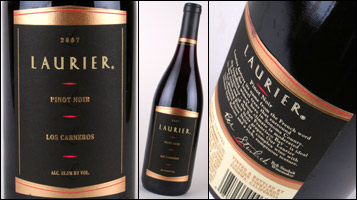
The intensity of the aromas is fairly soft, but pleasant, with cranberry, cherry and violet aromatics. The palate is cherry and bacon fat. It does have a really nice mouth feel. Texture is really important part of making a wine good and this one is pretty good in that way with dry tannins and sufficient acidity. This is a nice wine, with a bit of complexity and good texture, but there’s nothing that is overwhelmingly wow-ing about it.
Wine: Laurier – Los Carneros
Variety: Pinot Noir
Vintage: 2007
Alcohol: 12.5%
Rating: 85
Price: $20.00
Find Laurier Los Carneros Pinot Noir with Snooth
Disclosure: This wine was received as a sample.
The latest edition of Mutineer Magazine, issue #14, is out and in it you’ll find my Wine Steals column, which this month features pinot noir for under twenty bucks. This is one of the wines I mention in the article.
The name of this producer, Au Bon Climat, looks so simple and yet I feel like I’m mispronouncing it every time I say it—and I probably am. But that’s really the only thing I don’t like about this wine.
This one comes from Santa Barbara County, which is a cool-climate region and is perfect for pinot noir and chardonnay. It’s far south of the better known California wine country of Napa and Sonoma.
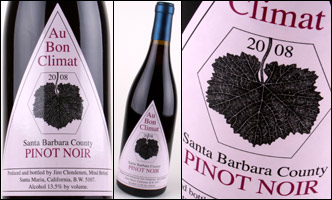
The aromas from this pinot noir are sharp and focused, at least that’s how I visualize it when I take a whiff. Sometimes aromas trigger aural analogues in my mind when I smell them and sometimes they trigger visual analogues. In this case, it’s more visual. It’s spicy with cinnamon, cherries, berries and floral aromas. The palate has outstanding acidity with cranberry, raspberry and strawberry flavors. It finishes with bright acidic fruit flavors and tea-like tannins.
This pinot noir definitely gets a thumbs up.
Wine: Au Bon Climat Santa Barbara County
Variety: Pinot Noir
Vintage: 2008
Alcohol: 13.5%
Rating: 87
Price: $17.99
Find Au Bon Climat Santa Barbara County Pinot Noir with Snooth
We recently returned from the European Wine Bloggers Conference (EWBC) in Vienna, Austria and over the next few weeks I’ll be sharing some insights and discoveries from that conference. The EWBC is an event where wine writers from around the world converge to discuss their craft, share ideas, improve their wine knowledge and discover some new wines.
The conference was, as they always are, very insightful and I have several discoveries I want to share with our readers. So many, that I’ve struggled to decide where to start. But I have to start somewhere, and so it’s going to be by introducing you, my friends, to a beautiful gem from Austria called blaufränkisch.
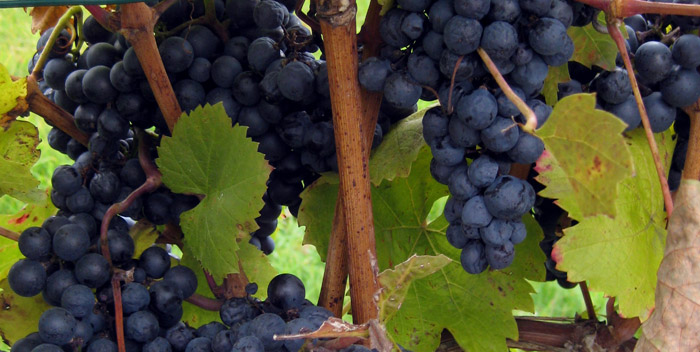
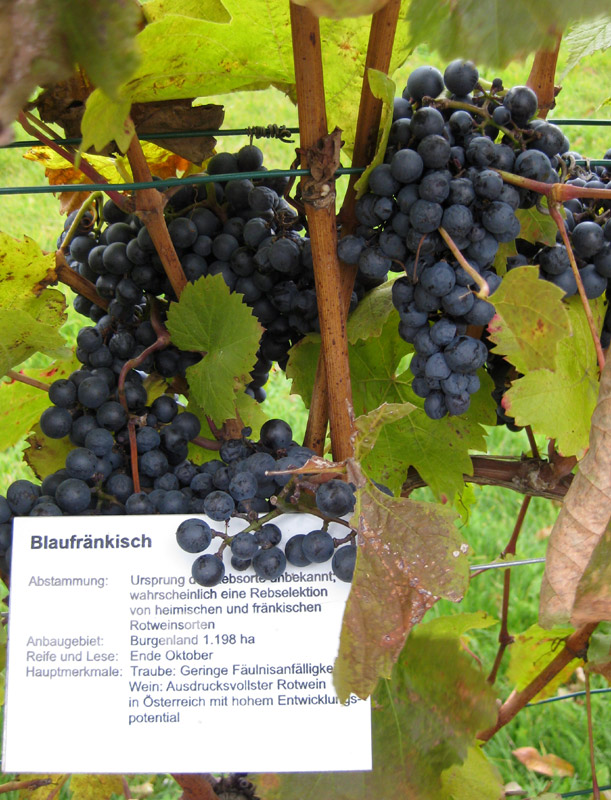
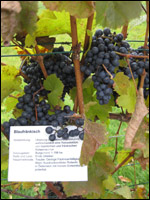 Blaufränkisch is a red wine variety found in central Europe and is particularly important in Austria, where it’s the second most-planted red grape variety. Zweigelt is more planted in Austria, but to many vintners blaufränkisch is more important. It can be found throughout Burgenland, where this variety is flourishing. Some call it the pinot noir of Central Europe. I expect that over the next few years the demand for blaufränkisch will continue to grow, spreading to the United states — and Burgenland will be the prized region for this wine.
I call blaufränkisch a gem, because it is truly beautiful. It’s not just the deep red color that makes it beautiful, but the complex spiciness, luscious fruit flavors, outstanding structure and earthy mineral notes. While younger blaufränkisch is certainly approachable, nearly every one I tasted had the structure for at least a few years of aging — and the few aged examples I was able to taste were phenomenal. This isn’t a wine I’ll be tucking away for 25 years, but a few years will be good.
If you’re someone who likes to bring a different wine to a party to wow your friends, this is one type of wine you may want to check out. Unfortunately, blaufränkisch is a wine that I haven’t come across at very many US wine shops, but I hope that changes—and I expect it will. If fact, if any US importers are interested in recommendations of some blaufränkisch producers to pursue, then read on… and feel free to contact me for more details.
DAC Classifications
The most impressive blaufränkisch I tasted came from three different DAC (Districtus Austriae Controllatus) regions: Eisenberg, Mittelburgenland and Leithaberg. Each of these regions have a DAC system to classify those wines that best represent the fruit and spice qualities that winemakers in the area have agreed to be varietally correct.
For Eisenberg DAC and Mittelburgenland DAC there is both a “classic” and a “reserve” DAC classification. Classic wines from both DACs are available to consumers in the fall the year following the harvest and have little-to-no noticeable oak and an alcohol level between 12.5 – 13%. Classic wines tend to be a little less expensive—although, arguably, less elegant—than those with the Reserve classification. Reserve wines are available in March the second year following the harvest, are aged in large oak casks or small oak barrels and have a minimum alcohol level of 13%.
Mittelburgenland also has a DAC Riede classification, which are sourced from a single vineyard, and labeled with that vineyard. Mittleburgenland DAC Riede is must have an alcohol level between 13 -13.5% and must be matured in large oak casks or used barriques — but may only exhibit light oak characteristics. These wines may be released to consumers October 1 following the year of harvest.
For Leithaberg DAC there is only one level to the DAC classification and these wines are released to consumers in the fall of the second year following the harvest, but they have little or no use of oak.
I did notice what I perceived as an apprehension to use oak throughout Burgenland. But as I explored this a little further I learned that this is really a correction from an overzealous use of oak in years past. The pendulum is currently swinging away from oak in Austria as winemakers are seeking to produce more elegant wines. At the same time there are some producers who were being more adventurous—yet thoughtful—with their use of oak and getting phenomenal results. I was particularly impressed with Hans Igler in this vein.
My Recommendations
Even though our readers in the US may have a hard time finding these wines, I want to share some of my top picks from this trip to Austria. Those readers located in Europe will probably have better luck finding these wines. Due to limited time at these tastings, I did not do my typical ratings but rather captured tasting notes of those that stood out. Here are the highlights of what I tasted.
Eisenberg DAC
The Eisenberg DAC is the southernmost DAC region in Burgenland, or more specifically, in Südburgenland (South Burgenland). The best value will be found from wines with the classic DAC designation. These are younger, more fruit-forward wines but still have the mineral and spice characteristics for which blaufränkisch is known. A couple wines with this classification that stood out for me were:
- Weinbau Jalits 2009 Blaufränkisch Eisenberg – The nose is very spicy and floral. On the palate it’s all about red berry flavors and tannins that are almost chewy. The finish is long and filled with fruit and spice.
- Weingut Poller 2009 Blaufränkisch Eisenberg – The color is a deep, deep purple. Lively fruit aromas erupt from this wine. The fruit is a little more restrained on the palate, but nice. Strawberry and apple peel flavors stand out. The acidity and tannins are both spot on.
The Eisenberg DAC Reserve wines are aged for at least two years in oak. These wines are generally more expensive than their classic brethren, but I found a couple value-priced examples worth noting.
- Weingut Rennhofer 2008 Blaufränkisch Eisenberg Reserve – This is a very well balanced and approachable wine with cherry and iron notes. The finish is nice and spicy.
- Weingut Poller “Kokomandl” 2008 Blaufränkisch Eisenberg Reserve – With fresh blueberry and cinnamon aromas, this made me think of a blueberry muffin. The intensity of the nose is outstanding too. The flavors are tart blackberry and blueberry with gripping tannins and outstanding acidity.
Mittelburgenland
OK, this may be a little confusing but bear with me. You can generally think of Mittelburgenland as a region (i.e. middle Burgenland), but technically it’s a classification. Wines produced in this area have to be submitted (and approved) for DAC status in order to market them as “Mittelburgenland” wine. But there are wines produced in this region, and sold without the Mittelburgenland name. The first wine from this region I want to tell you about is one such wine.
- Hans Igler 2007 C4 Blaufränkisch – Hands down, this was my favorite blaufränkisch that I tasted throughout Burgenland, and ironically it doesn’t have a DAC classification. The nose has incredible intensity, with aromas of licorice, tar, caramel, red currant and mineral. The palate is equally outstanding, with herbal dark berry flavors and black licorice with exceptional concentration. It has great structure and could easily age 10-12 years or more. This is absolutely a superb wine!
There was one wine I tasted with the Mittelburgenland DAC Classic designation that caught my attention:
- Weinbau Reinfeld 2008 Mittelburgenland DAC Classic – Red is the theme with this wine. Deep red color. Red currant aromas on the nose. Cherry and raspberry flavors with good concentration. The tannins and acidity are spot on. The finish brings spicy fruit and mineral.
In the Mittelburgenland DAC Riede classification, there were a number of wines that caught my fancy. But this is where I wish I had time to photograph each bottle that I tasted because in my post-tasting research I’m having a hard time identifying these particular wines. You see, the Mittelburgenland DAC Riede classification includes a specific vineyard in the name of the wine, and those locations weren’t listed on the tasting sheet I was provided. As I look up the specific vineyards for the wine that I liked I’m finding that some of the producers have multiple wines with the DAC Riede classification and unfortunately I’m not sure which ones I tasted. Therefore, I’m not listing those that are unclear and I’m left with only a couple recommendations.
- Hans Igler 2008 Blaufränkisch Hochberg Mittelburgenland DAC – Medium red in color, this blaufränkisch has spicy aromas with allspice, soft red fruit and a slightly smoky quality. The palate is brought to life by a bright acidity and flavors of rhubarb and raspberry. The tannins are perfect. The finish is shows soft red fruit flavors and mineral.
- Weingut Hufnagel Blaufränkisch 2008 Mittelburgenland DAC Riede Neuberg – This wine has a deep purple color. It’s lively on the nose with sharp spice and smoke aromas. It’s very well balanced and has both red and darker fruit on the palate. It’s slightly tannic on the finish, but still a very nice wine.
Leithaberg DAC
As I already mentioned, with the Leithaberg DAC there is not a classic or reserve designation but only one set of DAC standards for red wine. There are a few white wine varieties that can have a Leithaberg DAC classification, but with red wine it’s only blaufränkisch. The wines I tasted with this classification were all very good. These wines are from the Neusiedlersee-Hügelland region in nothern Burgenland, west of Lake Neusiedl. Here are a few of the blaufränkisch from this region that particularly stood out.
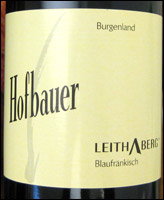 Hofbauer 2008 Leithaberg DAC Blaufränkisch – The jewel-red color of this wine is beautiful in the glass. The nose is filled with lively, fresh fruit aromas, mineral and nutmeg. It tastes like a light raspberry sauce with a touch of nutmeg. It’s very approachable up front and spicy on the finish, with a lingering ripe raspberry flavor. This is an exceptional wine.
- Birgit Braunstein 2008 Leithaberg DAC Blaufränkisch – This light red wine is not one that I would tuck away in the cellar, but is perfect for enjoying immediately. The nose is filled with fresh red berry and light spice, while the palate has black cherry and strawberry flavors. The acidity makes it crisp. And it has a nice, long and fruity finish.
- Wagentristl 2008 Leithaberg DAC Blaufränkisch – The nose on this blaufränkisch is a little tight, but has an interesting herbal quality, it’s somewhat mint-like. There’s also some plum on the nose. In the mouth it has blueberry flavors with heavy tannins. It finishes with iron and berry flavors. I expect this would be a good bottle to age a few years and will be even more interesting then.
- Weingut Welkovits – 2008 Leithaberg DAC Blaufränkisch – This wine is bursting with nutmeg, cherry and floral black pepper aromas. It has really nice fruit flavors, like raspberry and cherry. Some nutmeg and mineral flavors add complexity to the palate. It finishes with plenty of spicy black pepper and mineral.
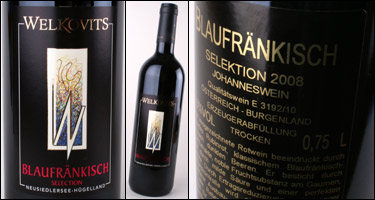
One other wine that I enjoyed from the Neusiedlersee-Hügelland region, but is not classified as Leithaberg DAC, also came from Welkovits. This is a small, family winery with very limited distribution. I highly doubt you’ll find this anywhere in the US at the time I’m writing this, but I hope that some ambitious importer seeks it out… and stocks it in my neighborhood.
- Weingut Welkovits 2008 Blaufränkisch Selektion “Johannes” – Deep red in color, this wine has a ton of complexity and loads of fruit. On the nose it has soft blueberry, strawberry, cherry, black pepper and nutmeg. A hint of oak is also detectable. The palate is full and fruity with blueberry and wild cherry spiced with nutmeg. It has crisp acidity and good overall structure. It finishes with black pepper and cherry flavors.
Sources
Thanks to Julia Sevenich for clarifying the Mittelburgenland DAC specifications for me. Be sure to read her stuff at julia7ich.com.
Disclosure
While I did pay to attend the conference and paid for my own travel expenses, there are sponsors to the event that add significant value to the event. Some of those sponsors took me, and a number of other attendees, on a two-day press junket to Burgenland after the conference. The reason I’m telling you that is because the FTC requires me to disclose any affiliation, compensation, gifts, etc that I receive related to writings here. I have no issues with providing that transparency, but I don’t it to come off like I’m bragging, “hey, I’m cool… I went on a wine press junket.” It’s not like that at all. While it might sound like a big party, everyone who attended took it very seriously and was there to learn about and discover the wine. I hope we’ve helped you discover a new wine too.
If you’re a motorcycle buff, you might buy this wine just because it features an illustration of a rider on a Vincent Black Lightning on the label. And if you’re a cheap wine buff you might just buy this wine because it’s a bargain.
This is yet another wine from Panther Rock Wine Company, a relatively young wine company owned and run by members of the Franzia family — which has no relation to the Franzia wine brand.
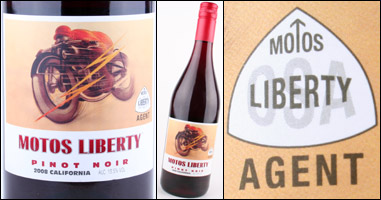
This one is a little bit tight on the nose, but still pleasant with soft violet and cherry aromas. There isn’t much complexity beyond that. And on the palate it’s also fairly simple, but nice with cherry and cranberry flavors, plus a touch of spice. The acidity is nearly perfect. I often find with cheap Pinot Noir that I get a metallic aftertaste, but I don’t get any of that from this wine. Instead, the finish is solid cherry with a wee bit of chocolate. Not bad for nine bucks… and a cool label to boot.
Wine: Motos Liberty
Variety: Pinot Noir
Vintage: 2008
Alcohol: 13.5%
Rating: 84
Price: $8.99
Find Motos Liberty Pinot Noir with Snooth
Disclosure: This wine was received as a sample.
We’ve not had the opportunity to taste very much wine from Oregon, but if this is indicative of the quality of their wines we hope to taste more.
Acrobat comes from the King Estate winery, located southeast of Eugene, Oregon. They’ve been around since 1991 and have 470 acres of certified organic vineyards. Their Acrobat brand was just established with the 2008 vintage, and while they have reportedly released the 2009 vintage we’re still finding 2008 on the shelves and so, that’s what we’ll review.
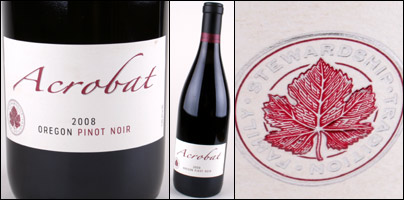
This pinot noir is bright and lively on the nose with cola, sweet berries, vanilla and spice. The intensity of those aromas is just right too. The palate abounds with ripe cherry flavors, a touch of caramel and a hint of rhubarb. The finish brings a pleasant note of pepper. It’s a beautiful pinot noir, with outstanding complexity, intensity and concentration, all for under $20. Fabulous.
Wine: King Estate – Acrobat
Variety: Pinot Noir
Vintage: 2008
Alcohol: 13%
Rating: 81
Price: $17.00
Find Acrobat Pinot Noir with Snooth
Almost one year ago, to the day, we reviewed the 2008 Forest Glen Pinot Noir and we were pretty much floored by quality of it at such a cheap price. This is a bargain-brand wine that is mass produced by mega-wine-producer Bronco Wine Company.
It’s not a wine that at a glance you expect to be as good as the 2008 was. But today we’re checking out the next vintage, 2009. And while the 2008 got two thumbs up, the 2009 is a little less stunning.
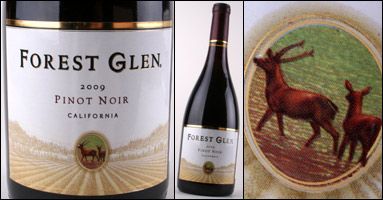
Oak, oak and more oak is the story here. It smells like oak and tastes like a wet board. Yes, I exaggerate a little bit to make a point — and that point is the fact that there’s too much oak on this wine. But there are other characteristics too. Once you get past the oak, the palate shows black cherry, vanilla and allspice aromas. The palate is filled with black cherry flavors. The tannins are soft, but noticeable. It could use a touch more acidity. To be honest, I expect that most cheap wine consumers would be OK with this wine (unless you hate oak), but this wine isn’t making my list of QPR stars this year.
Wine: Forest Glen
Variety: Pinot Noir
Vintage: 2009
Alcohol: 12.8%
Rating: 81
Price: $11.00
Find Forest Glen Pinot Noir with Snooth
Disclosure: This wine was received as a sample.
If there’s one thing you can’t accuse Masked Rider wines of doing, it’s marketing with the same old clichés that so many others use. This is one name and label that’s easy to remember, because it’s unique in the wine world. No regal designed labels, no family names, no critters — unless you consider the horse a critter, but in my book that doesn’t count. None of that stuff you typically see on a wine label is found here. Instead, it’s 1950’s style western art, and a little bit campy too. How fun is that?
This is from a relatively young wine company, Panther Rock Wine, which is owned by the next generation of a family that’s been in the wine business for ages, the Franzia family. This is one of a few different brands they’ve put out over the past year or so.
Although it’s labeled as Pinot Noir, there’s more than that in this bottle. It’s made with 76% pinot noir, 10% merlot, 10% arinarnoa, and 4% primitivo, although as a Californian wine I don’t know why they call the last grape primitivo when that’s just the Italian name for zinfandel.
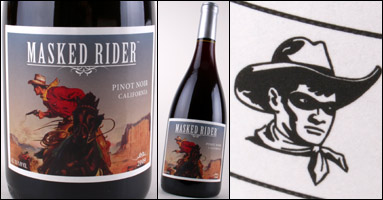
Cherry cola with a little bit of spice and a little bit of violet is the best way to describe the nose of this wine. It also has a touch of bacon fat aroma. Actually, bacon would probably be pretty good with this wine. BLT anyone? The nose has good intensity too. The palate is a bit of a fruit monster, with loads of ripe cherry and plum flavors. The tannins and the acidity are both soft, a touch more of each would make this wine more lively and improve the mouthfeel, but it’s not horribly off. This is a simple, fruity and approachable pinot noir… and good for enjoying with a BLT.
Wine: Masked Rider Sagebrush Pinot Noir
Variety: Pinot Noir
Vintage: 2009
Alcohol: 13.5%
Rating: 83
Price: $11.99
Disclosure: This wine was received as a sample.
We’ve recently reviewed a couple Chilean pinot noirs from the Casablanca Valley, which were pretty tasty, and today we’re tasting wine from a region a little further south than Casablanca Valley, called Leyda Valley. This is a specific DOC within San Antonio Valley, and was just formally recognized as a DOC in 2002. Viña Leyda was established a few years prior to this, in 1997. But, it is still a relatively young wine brand.
The Leyda Valley is the largest and southernmost part of San Antonio Valley. This region has a strong maritime influence with a moderate climate that includes mist in the morning and winds in the afternoons. These cool-climate conditions are great for chardonnay and pinot noir, which are the most grown grapes in this region.
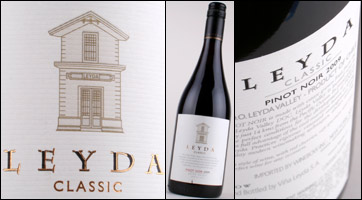
OK, so this isn’t going to sound good but the first thing that came to mind when I smelled this wine was, “sweaty, old leather shoe.” Yep, there are definitely some earthy tones to this wine. As it opens up, the aromas evolve into something more like dried grass, cured meat and tree bark. You’ll notice no mention of fruit there, that’s because I’m really picking up on any distinct fruit on the nose. I’m kind of torn on the likeability here. At first it was slightly off-putting, but interesting nonetheless. And it’s growing on me.
There’s definitely a lot going on with it and it’s not a boring, average wine. But it’s not brimming with fruit, if that’s what you’re looking for from your pinot noir. The palate is slightly tart, with cranberry and cherry flavors. The tartness is particularly intense for a couple seconds on the mid-palate. It finishes with cherry and cured meat flavors. If you like exploring interesting wines, this is worth checking out.
Wine: Leyda Classic
Variety: Pinot Noir
Vintage: 2009
Alcohol: 14%
Rating: 85
Price: $11.00
Find Leyda Classic Pinot Noir with Snooth
Disclosure: This wine was received as a sample.
I have to admit that while I’ve tasted a lot of pinot noir, I haven’t tasted much from New Zealand. It’s not that I have anything against the region, I just haven’t come across a lot of NZ pinot noir at tastings I’ve attended. And it’s unfortunate that I haven’t had much, as New Zealand is known to create some intriguing wines from this grape.
There are numerous variations in climate and soils throughout New Zealand, which result in varying characteristics in the pinot noir produced there. Some of the most highly acclaimed come from the Martinborough region, where loam over gravel soils produce pinot noir with concentrated plum flavors.
But this Dashwood pinot noir comes from the Marlborough region, known for producing fruit-filled pinot noir with loads of cherry and plum flavors. The cool conditions in this area are perfect for pinot noir.
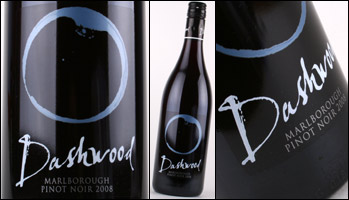
This is a nice, light colored pinot noir with intense aromatics. It’s a little bit spicy on the nose with plenty of cherry and raspberry aromas complementing that spice. There’s a hint of grilled meat and leather on the nose too. Soft cherry flavors make up the bulk of the palate, and while it’s relatively simple it’s also very enjoyable. There is a spice note that hits the mid palate and adds some interest. The acidity is nearly perfect. The finish brings a cranberry flavor, which dissapates quickly making for a relatively short finish. Nonetheless, I’m not disappointed in this wine. For the price, this is a very nice—and recommended—pinot noir.
Wine: Dashwood
Variety: Pinot Noir
Vintage: 2008
Alcohol: 13%
Rating: 86
Price: $13.99
Find Dashwood Pinot Noir with Snooth
Disclosure: This wine was received as a sample.
One of the exciting parts of being a wine writer is the seemingly endless variety of places, styles and types of wine you can find. Despite the fact that California, France, Australia, Italy, Chile and Spain seem to dominate the wine shelves in the US, there is wine produced in every corner of the globe. If you just buy your wine from the end-caps at the grocery store, you’re just scratching the surface of what’s available. This is one of those wines that I find and I’m excited to taste something from a wine region I don’t come across everyday. In this case, it’s Patagonia, Argentina — one of the world’s most southern wine regions.
Although I don’t come across it everyday, and can’t recall any Patagonian wines that I’ve had an opportunity to taste before this, this isn’t a new winery. Humberto Canale has been producing wines for over a century. I wasn’t quite sure what to expect from a Patagonian pinot noir, but I was pleased with what I found.
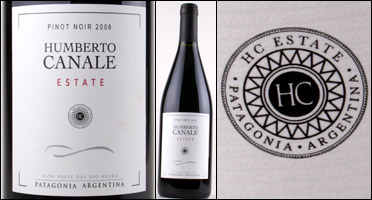
This is a little darker in color than your typical Californian pinot noir. And the aromas are a little darker too, with dark plums, cherry, bacon fat, tar and truffle on the nose. Not only is the complexity good on the nose, the intensity is great too. In the mouth this is a real tongue-coater, with a velvety mouth feel. The flavors are cherry, raspberry and bacon. The finish is exceptionally long and fantastic.
I might recommend this as a good pinot noir to pair with a BLT. Regardless of what you eat with it, the value is simply outstanding.
Wine: Humberto Canale Estate
Variety: Pinot Noir
Vintage: 2008
Alcohol: 14%
Rating: 88
Price: $11.49
Find Humberto Canale Estate Pinot Noir with Snooth

 Prev
Prev