As a guy who is into value wines, I’ve found that there are a few regions you can count on for consistent values. Chile and Spain are two regions that are on that list, but one that I don’t see enough of is Portugal. There are some incredible bargains to be found in Portuguese wines, but unfortunately I don’t find many of them on the shelves in my region. Distribution seems to be spotty, unless you’re in New York City.
Given the fact that I don’t come across many Portuguese wines, I was glad for the opportunity to taste these. I was glad, and also slightly challenged. One of the things that makes these wines interesting is that they are produced using grape varieties that are unique to Portugal. But that also puts me in a position where I’m reviewing wines made with varieties I’m unfamiliar with. An important factor I kept in mind when evaluating these wines is that stylistically, these are “old world” wines, so I evaluated them as such. With all of that said, take my notes and scores on these with a grain of salt as I’m admittedly in new territory with these wines.
Both of these wines come from the Alentejo region of Portugal. This is a region in the south of Portugal with a Mediterranean climate and over 22,000 hectares of vineyards.
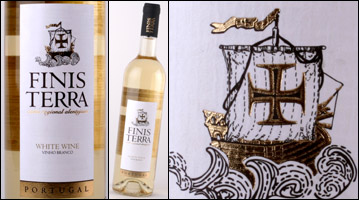
Finisterra Vinho Branco
This is a white blend made with grapes I’ve never heard of, much less tasted. These include Antão Vaz, Síria, Rabo de Ovelha and Perrum. The wine is fermented in stainless steel vats and hasn’t seen any oak.
This wine has a pleasant nose, with aromas of honeydew melon, lime, mild stone fruits and a touch of mineral. Based on the nose I thought this would be a pretty nice wine. But it didn’t quite carry through on the palate. It does have good flavors of melon, apple and citrus, but it’s a bit flabby. That is to say it lacks acidity, making the palate a bit dull. It’s not horribly flabby, but that’s where it gets dinged a bit. However, let’s keep things in perspective, this is only a $7.00 bottle of wine and that’s “suggested” retail, so you’ll probably find it for less. It also has some varieties you’ve probably never tasted before. Even though it may not “blow you away” it’s worth checking out for the adventure, if nothing else.
Wine: Finisterra Vinho Branco
Variety: White Blend
Vintage: 2009
Alcohol: 13%
Rating: 81
Price: $6.99
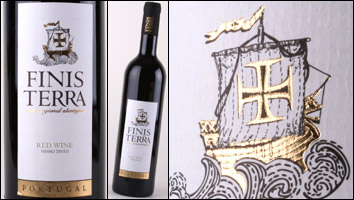
Finisterra Vinho Tinto
This one is a red blend, and again has some grape varieties that may be new to you, including Aragonez, Castelão and Trincadeira. Like the white blend, this was fermented in stainless steel.
This wine is an old world style wine, and as such isn’t necessarily a wine for everyone. It’s very different from the inexpensive, fruit-forward wines many people drink. The nose doesn’t have much intensity and is rather earthy, with aromas of chocolate, sage, tree bark and a very soft blackberry. The palate is also fairly earthy, with a slight bitterness. There is some fruit on the palate, which I would describe as plum and wild cherry (differentiated from non-wild by a touch of bitter and sour). It’s fairly tannic on the palate and into the finish, which has a tea tannin quallity to it. This is more of a food wine than a sipping wine.
Again, similar to the white wine I think this one is worth checking out for the adventure. But be prepared for something different from your typical cheap juice. Keep an open mind and you may find that you like it.
Wine: Finisterra Vinho Tinto
Variety: Red Blend
Vintage: 2009
Alcohol: 14%
Rating: 80
Price: $6.99
Disclosure: These wines were received as a sample.
When you look at the picture on the label of a bottle of Tesch wine it may conjure up images in your mind of an old German winemaker continuing the traditions from previous generations of winemakers. But that impression would be far from the reality.
The man pictured on these labels is the great grandfather of Dr. Martin Tesch, a relatively young winemaker who has been running Weingut Tesch since 1996. And while the vineyard has been family run since 1723, Tesch isn’t really continuing the traditions of the past — he’s reinventing Weingut Tesch with a rock & roll sensibility.
Since taking over, Dr. Martin Tesch has done away several under-performing wine varieties and now produces mostly riesling. And when it comes to riesling, he boldly shunned the sweet rieslings they were previously known for in favor of drier riesling. The initial response when he did so was harsh criticism and a 40% drop in sales. But he quickly found a new audience for his wines and hasn’t looked back. His reinvention was ultimately a huge success.
Dr. Tesch has even written a book on riesling and rock & roll called Riesling People Volume 1. OK, “written” might be an exaggeration, since the book is mostly pictures.
The vineyard is in the Nahe region of Germany. Which, of course, is along the Nahe river.
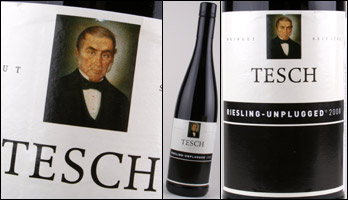
Tesch has several different rieslings available and Unplugged is the entry level. This is a fairly subtle riesling with aromas of flinty mineral, bath salts, lime and orange blossom — which is what I like most about it. The palate has restrained fruit, lime and green apple, and pronounced mineral characteristics. The finish has a citrus and lingering saltiness. This is a very dry riesling, and as dry rieslings go it’s a good value.
Wine: Weingut Tesch Riesling Unplugged
Variety: Riesling
Vintage: 2008
Alcohol: 11.5%
Rating: 86
Price: $15.00
Find Weingut Tesch Riesling Unplugged with Snooth
Disclosure: This wine was received as a sample.
Running a restaurant in the United States, and more specifically, in the mid-west, I’ve had to become extremely familiar with the Chardonnay varietal. In fact, I’d say that beyond Sangiovese (it’s an Italian restaurant), I’d say that chardonnay ranks second in total volume of wines I’ve tasted. I’d bet that I’ve tasted more chardonnay than all of the other white varietals combined. I’ve tasted buttery, oaky, fruit forward as well as very complex chardonnays. I’ve tasted very inexpensive chards and some of the most exotic. And after all those chardonnay experiences I can honestly say one thing……..I’m tired of chardonnay. And I don’t think I’m alone.
It’s not that I don’t like chardonnay; on the contrary, some of the chardonnay’s I’ve tasted represent some of my most memorable wine experiences. Chardonnays like Beringer Private Reserve and Kistler have left indelible impressions on me, and are partly responsible for creating the wine enthusiast that I’ve become. But it’s the myriad of inexpensive, and arguably overpriced chardonnays, conforming to a monotone style of acid-killing malolactic fermentation and fruit killing, over-toasted oak that has turned me off of the king of white wines. So along comes another value-priced chardonnay from Chile, Apaltagua’s Reserva. I’m finding it hard to get excited. But what’s this? It’s unoaked! Yep, it says it right here on the label, in big and bold font, “Unoaked”. My interest has been instantly perked.
Twist the screw cap on this Chilean and the first thing you notice is fruit, pure unadulterated fruit. In the glass, the nose opens up in full force to a powerful honey-tinged lemon drop, with apple and a hint of bell pepper. The nose would shame most wines twice the Apaltagua’s price.
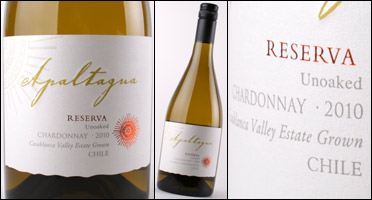
The color of the wine is much lighter than what you would expect from a chard. It has a bright crisp color, not unlike a Sauvignon Blanc from New Zealand. But don’t let the appearance fool you. On the palate the wine offers lush apple, and right about where you’d be expecting the oak to introduce itself, a rich layer of acid guides you on to the finish. The wine is also very well balanced.
I was very impressed with this wine, but more importantly, I actually enjoyed a bottle of chardonnay without having to break the bank for something that avoids the stereotypical style. Credit the winemakers at Apaltagua for crafting a unique and quality wine experience, and a great value. But it leaves one very big question: will chard lovers embrace this style? If you favor the soft buttery style that many California chards are offering, you probably need not apply. But if you call yourself a chardonnay lover, you really owe it to yourself to try this wine. If it doesn’t sell you, it will at the very least provide you with a reminder of what the chardonnay grape is capable of.
A Salute!
Wine: Apaltagua
Variety: Chardonnay
Vintage: 2010
Alcohol: 14%
Rating: 90
Price: $11.00
Find Apaltagua Reserva Chardonnay with Snooth
Disclosure: This wine was received as a sample.
Tonight we’re continuing our look at riesling, and heading back to Germany. This one from Weingut Josef Leitz is from the Rheingau region of Germany. Rheingau basically translates to mean “Rhine region” and this region is situated along the banks of the Rhine river. Riesling is also the dominant grape here, accounting for nearly 80% of wine grapes grown in this region.
Like many winemaking families in Germany, the Leitz family has a long history of winemaking — dating back to 1744. But there have been some disruptions to that tradition over the years and it hasn’t always been a primary focus of the family. But since 1985 it has been, when Johannes Leitz took over the winery. And within the past 10 years, the winery has grown dramatically.
One thing that can be a bit challenging with this wine is the name. It’s not atypical for German wines to have ridiculously long names. But as bad as this one looks, it’s not that hard to say. Try it. Weingut Josef Leitz Rüdesheimer Rosengarten Kabinett.
This riesling is also a little more expensive than our typical wines here, with a suggested retail of $22.00. But with that as the “suggested” price, there’s a good chance that it actually sells for under 20 bucks.
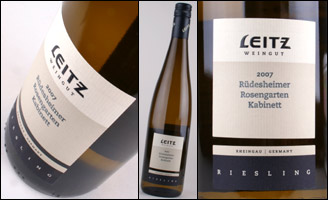
A glance at the alcohol level might have you suspecting this to be a sweet riesling, but you’d be wrong. Wines with a “Kabinett” designation are the lightest wines you’ll find from Germany, and they are typically semi-sweet, but can be dry or off dry. This one is off dry.
The aromas are light, with characteristics of soft honeysuckle, citrus and salts. It has a slight, but very well balanced sweetness on the palate. The flavors are green apple and grapefruit up front with a finish that’s a blend of salty minerals and citrus. It’s an outstanding, light and refreshing wine.
Wine: Weingut Josef Leitz Rüdesheimer Rosengarten Kabinett
Variety: Riesling
Vintage: 2007
Alcohol: 8.5%
Rating: 90
Price: $22.00
Find Weingut Josef Leitz Rüdesheimer Rosengarten Kabinett with Snooth
Disclosure: This wine was received as a sample.
I’ve commented before on how riesling gets a bad rap in the US, particularly domestic riesling. I’ve also commented that it’s often a misunderstood wine in the US. Consumers might taste an overly-sweet, poorly made domestic riesling and they slander the varietal as a whole. This is unfortunate, but I think the tide is turning thanks to producers who do understand riesling and are working hard to make high-quality domestic riesling — and to change the reputation of this wine.
Many of the best domestic rieslings I’ve tasted in the past few years have come from Washington State, and Pacific Rim is one brand that’s on this list. I only see this trend growing, too. With more consumers not only discovering riesling, but discovering Washington State wines as well.
Pacific Rim is one company that is really standing out when it comes to riesling. It’s their specialty. It’s not all they do, but it’s most of what they do. Pacific Rim Dry Riesling was first released in 1992 by Bonny Doon Vineyard, but in 2006 a group of former Bonny Doon folks opened Pacific Rim as it’s own winery.
One of the things I really appreciate about Pacific Rim, besides the fact that they make some killer riesling, is that their wine labels not only include the percent of alcohol, but also the residual sugar. I think this is a smart move to help educate consumers about the different styles of riesling. And while it’s particularly useful with riesling, I wish other producers would do this with other varietals too. It would help consumers make more well-informed decisions when they purchase wine.
Pacific Rim offers a good variety of riesling too, ranging from bone dry to medium dry to medium sweet to sweet. In the dry category, they have five different rieslings. But I’ve only had the opportunity to taste a couple. Both were outstanding.
Pacific Rim Dry Riesling, Columbia Valley 2007
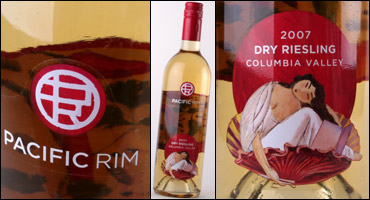
This wine has a nice powerful nose, particularly for such an inexpensive dry riesling. Intense floral aromas, with pear and orange peel notes adding layers of complexity. The palate has outstanding concentration, outstanding acidity and outstanding flavors, like grapefruit, pear and mineral. The finish is also loaded with pear flavors — but it’s still dry, not sweet. Simply put, this is a phenomenal riesling for the price.
Wine: Pacific Rim Columbia Valley Dry Riesling
Variety: Riesling
Vintage: 2007
Alcohol: 12.5%
Rating: 90
Price: $11.00
Find Pacific Rim 2007 Columbia Valley Dry Riesling with Snooth
Pacific Rim Wallula Vineyard Riesling 2007
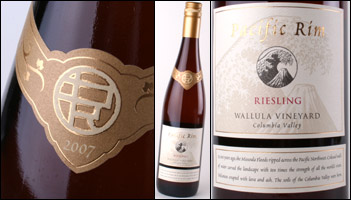
Aromas of cold cream (yes, I’m serious and no, it’s not a turn off), honeysuckle, herbs and grapefruit aromas make this a really interesting wine. The palate of this one is centered in grapefruit flavors. It also has some apple, some pear and some mineral, but the grapefruit makes it sing. The acidity is perfect. The finish still has plenty of grapefruit, but apple flavors emerge with more intensity and good length. This is a few bucks more than the Columbia Valley Dry Riesling, but it’s still a very good wine.
Wine: Pacific Rim Wallula Vineyard Riesling
Variety: Riesling
Vintage: 2007
Alcohol: 12.3%
Rating: 89
Price: $19.00
Find Pacific Rim 2007 Wallula Vineyard Riesling with Snooth
This weekend is the 21st Cincinnati International Wine Festival, and if you’re in the area I highly recommend checking it out. It’s your chance to sample hundreds of different wines, all in one place. They have tastings on Friday evening, Saturday afternoon and Saturday evening. If you want the bargain price, and the smaller crowds, go for the Saturday afternoon tasting.
This afternoon I met up with winemaker Sue Hofmann, from DFV Wines, and previewed some of her wines that she’ll be pouring at the festival. Although it’s not all she does, Sue’s specialty is zinfandel. And she produces zinfandel for a few different labels. If you don’t recognize the DFV Wines name, don’t be alarmed. That’s the name of the parent company and you’re much more likely to recognize their brands: Bota Box, Twisted, Gnarly Head and Brazin to name a few.
While talking with Sue today she shared that zinfandel producers are really refining their craft in the recent years to produce better and better zin. And the wines Sue is creating are a great example of that. She spends time with the growers, and her experience — focused on zinfandel — has enabled her to really understand what each plot and grower is capable of producing. She selects the grapes for each wine to create different styles of zinfandel, each with their own unique nuances.
The wines she and DFV are producing are also value-focused — which makes us like them that much more. Most of their wines are in the $5 to $15 per bottle price range.
Here are a few that I tasted today. I should note that I’m not scoring these wines, as I didn’t taste them in my normal environment with my normal processes. Yes, I’m very strict about that. I don’t just pull a number out of the air when I score it, but I evaluate each wine against 16 qualitative measures. It’s a tedious process and I just didn’t have time to do it today. And I normally like to taste blind, which I didn’t do today. All that said, I would expect all of these wines to end up in the low to mid 80’s, if not 90ish for the Brazin.
Bota Box 2009 Old Vine Zinfandel
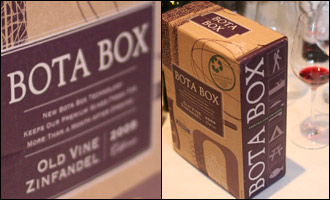
This wine is a light red color. When I first smelled it, there was slight fish smell to it, which was a bit of a turn off, but it dissipated as the wine opened up. And once it did open up it showed dusty blackberry and soft plum aromas. The palate is on the lighter side for a zinfandel, but it still offered plenty of jammy red fruit. In a way I’d describe this as a “light and lively” zinfandel. It’s certainly not my top shelf zinfandel, but it’s enjoyable and a steal of a deal at $20 a box — that’s the equivalent of $5.00 per bottle.
Gnarly Head 2009 Old Vine Zin
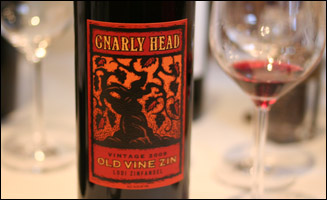
We recently reviewed the 2008 Gnarly Head Old Vine Zin and liked it a lot. So I was glad to get a chance to taste the 2009. The nose came right to life on this wine, with plenty of oak — most notably presenting itself with a strong vanilla note. Sue informed me that the oak in this is from staves, not barrels, which are basically oak sticks that are soaked in the wine. Some snobs may turn their nose at them, but they are much less expensive than barrels — which saves us consumers money while still imparting oak qualities to the wine. And as Sue described it, being able to use different staves provides the winemaker with a “spice cabinet” to work with.
In addition to the oak on the nose, this wine also shows a cherry cola aroma. That cola also comes through on the palate and make for a fun zinfandel. It’s a full and juicy palate too, with gobs of cherry and blackberry flavors in addition to the cola. It’s a nice wine for about $10.00.
Brazin 2008 Old Vine Zin

This is another wine that we’ve tasted before, at least a previous vintage. We gave the 2007 Brazin Old Vine Zin a solid 88 points. I’m sure the 2008 would hold up to that, if not do a little better.
The garnet color to this wine is just beautiful. The nose is smoky with raspberry, cherry and cured meat aromas, all with outstanding intensity. Likewise, the palate offers exceptional concentration to the flavors of black cherry, plum, cola and nice nutmeg spice. The finish is long and beautiful. The oak in this one does come from barreling, not staves, for those of you who are uptight about those things. This is a great wine and a great value at about $15.00.
If you do go to the Cincinnati Wine Festival this weekend you can taste these and other wines from Sue Hofmann and DFV at the “Zin Nation” booth.
Disclosure: These wines were provided as a sample.
Last week we reviewed a nice — and very affordable — German riesling from the Rheinhessen region, Fritz’s Riesling. And tonight we’re checking out another riesling from the Rheinhessen region.
The Weingut Groebe estate was established way back in 1625, so these folks have been making riesling for more than a few years. You might notice that the labels on these wines say 1763, and that is the year the family started bearing the coat of arms — which is also on their labels. I’ve always wanted a coat of arms, but no luck for me there. Oh sure, I’ve gotten the random junk mail trying to sell me my “official” family coat of arms, but I’m not that gullible. In the case of Groebe, the coat of arms is legit. And it includes the cross of St. Andrew’s in it, which is an old Christian symbol for wine.
But moving beyond the coat of arms, I know you’re interested in the wine. And this particular one is good. Really good. OK, it’s excellent!
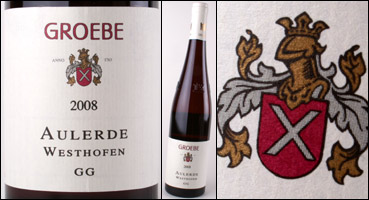
There’s a lot of complexity on the nose of this riesling. It’s a little bit floral, a little bit mineral and a little bit lemon/lime. It’s very well balanced and interesting to smell (yes, I’m nerdy in that way). The palate is dry and presents a crisp acidity with a myriad of apple, citrus and mineral flavors. The concentration of the flavors is just right too. The finish is exceptionally long with a tangy citrus aftertaste that is just delightful.
This wine is a couple bucks more expensive than the Fritz’s we reviewed last week, but it’s still under $20. And I’d say it’s worth the splurge.
Wine: Groebe Aulerde Westhofen
Variety: Riesling
Vintage: 2008
Alcohol: 13%
Rating: 91
Price: $17.00
Disclosure: This wine was received as a sample.
You know what they say about first impressions. That’s right, they’re very hard to change. And the Viña Don Royo red makes a really nice first impression, which I think benefited the wine as I reviewed it. Pop the cork on this vino tinto and it offers up a rich and robust nose, with ripe raspberry, hints of fig and marmalade, with singed toast. I was eager to see what the wine would offer up on the palate. If it delivered half as much complexity and intensity at it teased up in aroma and bouquet, then surely we would have a winner on our hands.
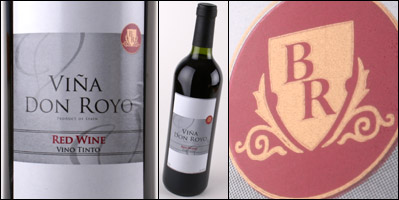
So, excited for what I was about to experience with this wine that had so quickly captured my admiration, I diligently sipped a small amount to acclimate my palate. The wine’s rich fruit quickly activated the taste buds on the tip and edges of my tongue. It offered an intriguing sour-ish tang that further built up the excitement. I was eager to begin a thorough examination of what appeared to be an impressive wine. It seemed this Spanish charmer had made an impression on my palate as well. However, in my enamored state, I failed to notice that this wine made very little to no impression at all on the finish. I’m sure I simply dismissed it, assuming that I was distracted by what was going on in the front of my mouth. I tasted again. And again a burst of raspberry, plum and acid tantalized my tongue, smoothly transitioning through to the mid-palate and finish. And again, as the wine finished, my mind was still focused on the initial impression the wine was imparting on my tongue. I was enamored. This wine had seduced me. It had tricked me. I continued, taking another sip….and then another.
Now I was catching on. That first impression was beginning to flicker, and it was allowing me to come to my senses. The lack of finish was now becoming the most prominent element. Lack of finish may be putting it kindly. The Don Royo’s finish seemingly drops off a shelf, and flat goes away, leaving the wine a bit unbalanced. I checked the bottle for the alcohol content, expecting 12.5 – 13%……..not even close. This wine is 11% alcohol by volume, not enough, in my opinion, to provide any real amplification to the complex fruit the wine was offering. But the first impression persisted, and I still found myself enjoying this more elegant style of Spanish Grenache, despite missing an important aspect of a quality flavor profile. You know what they say about first impressions….…..they’re very hard to change.
A Salute!
Wine: Viña Don Royo
Variety: Grenache
Vintage: NV
Alcohol: 11%
Rating: 84
Price: $4.50
Disclosure: This wine was received as a sample.
One of the things that bums me out about the US wine scene (for lack of a better term) is how so many people dislike riesling — or at least think they dislike it. But it’s really a wine that’s not well understood by many people, particularly in the US. I too have been guilty of this in the past. I attribute this misunderstanding mostly to domestic riesling. There are some good domestic rieslings, so I don’t want to paint in totally broad strokes, but there are plenty that leave something to be desired.
I’ve heard many consumers complain about American riesling being too sweet. But this is just an example of how many consumers don’t understand riesling. The problem isn’t necessarily the sweetness, it’s the fact that that sweetness isn’t balanced with acid. And let’s be clear, not all rieslings are sweet. Rieslings from any region can run the gamut from bone dry to syrupy sweet.
In my opinion, if you want to understand and appreciate riesling, you should really start with old world rieslings from Germany, Austria and the Alsace region of France. They just tend to be more consistently well balanced than many of their American counterparts. While some of these old world rieslings can get pricey, there are still plenty of great deals to be found. And that takes us to a German riesling called Fritz’s Riesling.
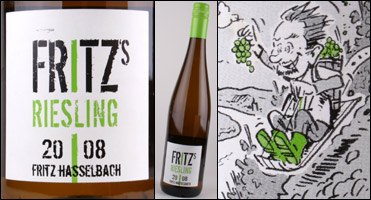
Fritz’s is a brand that produces one thing, riesling. And they offer just one riesling, Fritz’s Riesling. There aren’t six different versions of riesling available from Fritz’s, just one. And that’s all you need.
The color is light straw and it’s crystal clear. On the nose this wine has aromas of lemon, green apple, honeysuckle and flint. The floral honeysuckle and the flint are what really make this wine interesting. In the mouth it’s like a tart apple. It has a touch of sour and a touch of sweet at the same time. Apple flavors are the most prominent, but there’s also a touch of citrus and a touch of pear. The finish is clean and has a decent length. And most importantly, it’s well balanced.
This isn’t a riesling to tuck away in the cellar and age, but one to enjoy now. It may not be the absolute best old world riesling you’ll find, but it’s a very good one. And for the price, it’s even better. I would definitely recommend checking out this wine. In the coming days I’ll highlight some other good riesling to try.
Wine: Fritz’s
Variety: Riesling
Vintage: 2008
Alcohol: 10.5%
Rating: 88
Price: $13.00
Disclosure: This wine was received as a sample.
We’ve recently reviewed Tercos’ Bonardo and were pleasantly surprised by what Tercos is doing with this little know variety. So here’s the more traditional offering from Tercos, their 2008 Malbec. For a little more information on this winery and some background on Tercos Malbec, check out our review of the 2007.
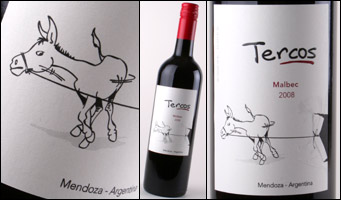
With the 2008, Tercos continues to impress with a well-crafted malbec, offering ripe cherry and blackberry along with vanilla, nutmeg and a hint of malt. On the palate the wine serves up ripe cherry and lush, well integrated tannins. So it would seem that Tercos is making some progress with this wine, and judging from the Bonardo, 2008 may have provided more to work with than 2007. Keep a close eye on Tercos.
A Salute!
Wine: Tercos
Variety: Malbec
Vintage: 2008
Alcohol: 13.8%
Rating: 87
Price: $12.00
Find Tercos 2008 Malbec with Snooth
Disclosure: This wine was received as a sample.

 Prev
Prev