If you aren’t familiar with carménère, that’s ok. You’re probably not alone. For a varietal that has spent much of the latter part of the 20th century in obscurity, and often confused for Merlot, it’s making a nice comeback in some rather familiar places. To get you caught up on who is doing some nice work with this classic old world varietal, and to get some further background on carménère, check out last year’s carménère round up.
The first thing you notice about Apaltagua’s latest offering is the dark, rich plum color, that is indicative of the varietal……and rather indicative of highly extracted Cabernet Sauvignon and Merlot. Indeed this value priced Chilean seems rich and heavily extracted in both appearance and nose. The alcohol volume is relatively high compared to old-world examples of carménère. At 14%, the wine isn’t lacking in power and structure. Apaltagua sources their carménère from the Apalta Valley in Colchagua. As we’ve stated here before, if you haven’t committed Colchagua to memory yet, we recommend that you add it to your list of trusted appellations.
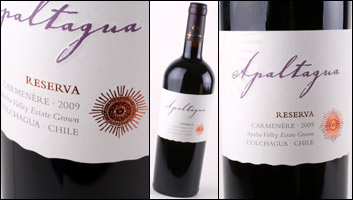
On the nose, the wine offers up green tea and cedar with hints of dark berry and plum. The nose is appealing and hardy, but does hint at being tannic and acidic, as the cedary notes can overwhelm the nasal cavity. On the palate the wine starts out a bit earthy and herbaceous, like an old world claret, but soon the tannins and alcohol take over.
This wine has a wonderful mouth-feel in the mid-palate, one that I really enjoyed, but the finish disappoints a bit. It feels a bit overwrought with the tannins in the finish, in particular, leaving a lingering, yet slightly astringent aftertaste. Makes me wonder what a little more experience with this grape will bring Apaltagua, and what their blends utilizing carménère have in store. The fruit is certainly there, but it gets masked a bit, and can leave the wine seeming somewhat angular and unripened.
For the money, you won’t find many wines with this level of power, extraction and complexity. The wine offers a lot of character, but some of it’s traits can be off-putting, and aren’t for the faint of heart. I enjoyed the wine, but then I can appreciate the style. I offered a glass to my wife, the ultimate acid-test, and she did not care for it. If you have some experience with carménère, and you like a heartier full-bodied style, I recommend that you try the Apaltagua Reserva, particularly with something grilled!
A Salute!
Wine: Apaltagua
Variety: Carménère
Vintage: 2009
Alcohol: 14%
Rating: 87
Price: $11.00
Find Apaltagua Carménère Reserva with Snooth
Disclosure: This wine was received as a sample.
When you think of wine from Australia you probably think of Shiraz first, as well you should. Shiraz is Australia’s most planted variety, and it ranks second to France in shiraz/syrah in vines under cultivation. But I’d be willing to bet that when Australian wine gets mentioned, the last varietal that you think of is pinot noir. I mean, when was the last time you had a pinot noir from Australia?
The challenge of growing pinot outside of Burgundy has been well published, and Australia is no exception. The southern portions of the country are very well suited to hardier varieties, such as cabernet sauvignon and the aforementioned shiraz, that aren’t as picky about climatic conditions as pinot is. But Aussie wine-makers are becoming a little more adventurous with this variety, particularly in the cooler, southern portions of Victoria, like Yarra Valley and Mornington Penninsula.
But The Little Penguin is not sourcing their pinot grapes from these regions. You have to head a little west from Victoria to the state of South Australia to locate their plantings. The real estate there may not be as prestigious as in southern Victoria, but the conditions are similar, and I’m sure the lower rent helps The Little Penguin keep such an attractive price. We’ve reviewed their 2006 offering, and while we weren’t that enamored with the 2006, the 2010 vintage came recommended by one of the trusted wine shops I frequent.

The nose of this wine is actually quite pleasant, if a bit jammy for a pinot. It’s a far cry from the 2006, and that’s a great start. The nose offers rich ripe strawberry and rhubarb, with hints of vanilla and allspice. While I wouldn’t exactly say that The Little Penguin hits the mark in varietal character, it is certainly an enjoyable nose. On the palate the wine offers light, yet smooth strawberry fruit. Through the mid-palate the wine maintains it’s soft fruit and transitions abruptly to rich acidity, bordering on actually being slightly sour in the finish. But it doesn’t upset the balance or the experience.
Overall, I enjoyed this simpler expression of pinot noir, even if it isn’t the most complex of wines. But to be fair, at this price point, you would be hard pressed to find a better value in pinot, in my opinion. So give this pinot-on-a-budget example a try.
A Salute!
Wine: The Little Penguin
Variety: Pinot Noir
Vintage: 2010
Alcohol: 12%
Rating: 85
Price: $5.99
Find The Little Penguin Pinot Noir with Snooth
I really want to like this wine. The overall look of the packaging is clean and simple but the blazoned red “181” on the black label is striking. I also like the choice of tapered meritage-glass for the bottle. It looks premium and very up-market. As I review the wine, I find myself taking a few extra sips, as if I’m waiting for the wine to suddenly unleash a torrent of fruit and complexity. But it never really comes.
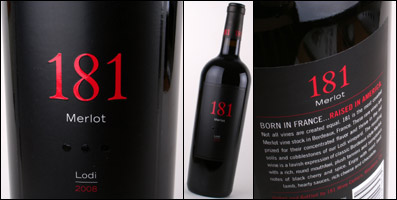
I still really want to like this wine. 181 takes a more austere approach to crafting this Merlot from Lodi. It’s a more muscular style of merlot one that I’m rather partial to. 181 claims the clones used trace their roots back to Pomerol in Bordeaux, and that they are quite suitable for the red clay soils of clay station vineyards in Lodi, which are similar to Pomerol. The color in the glass is more ruby, and more transparent than you’d expect from a more muscular merlot. On the nose, the wine offers sweet plum laced with raspberry, but with mineral qualities like salt and chalk. The tannins are active but remain relatively pleasant, sometimes bordering on lush, particularly in the finish.
I applaud this more muscular style of merlot. It represents a truer Bordeaux style, and a nice departure from the overly jammy-style that I believe has flooded the market. But I have to admit, I’d prefer just a little more fruit on the mid palate. I still like this wine, though.
A Salute!
Wine: 181
Variety: Merlot
Vintage: 2008
Alcohol: 14%
Rating: 86
Price:$12.99
Find 181 Merlot with Snooth
Here’s what some others thought of the 2008 181 Merlot:
Disclosure: This wine was received as a sample.
Someone once told me that richness in life shouldn’t be measured by how much stuff you accumulate, but by how many of your days are memorable. Too often we get stuck in our daily routines and don’t get out to adventure. And if you’re into wine, exploring wine country is an awesome way to add to your wealth of experiences.
It’s also a great way to increase your knowledge about wine. If you’re really into wine and want to learn more about it, I would say that visiting wine country is a requirement! You can read volumes of wine writing and gain a decent understanding, but you’ll learn far more when you visit the vineyards, meet the people making the wine and see the winery in production.
When you feel the fog, the hot sun and the cool breezes it’s an educational experience. When you see the shale, the loam, the chalk and the limestone that make up the soils it gives you a better understanding of the wine. You begin to experience what makes the wines from the region unique — and how that happens. And all that you’ve read about the wine makes more sense. You start to understand terroir.
The people are a big part of the terroir too. Meeting them and visiting their vineyards brings the wines to life. When you’re just pouring wine from a bottle and not meeting the faces behind the wine it can be impersonal and seem like a factory made product — and admittedly, sometimes it is. But tasting a wine made by someone you’ve met builds a connection that makes that wine more relevant to you.
Many folks advocate tasting wines blind, and we do plenty of that here. But wine is an experiential thing, and meeting the winemaker behind a bottle adds context to your experience every time you taste a wine made by that individual. Their story and your personal connection to them become part of your enjoyment of that wine.
When thinking of California’s wine country, Napa and Sonoma are all that come to mind for a lot of folks. I’ve been to both and they’re nice, but there’s more to wine country than just Napa and Sonoma. Recently, I was fortunate enough to visit Paso Robles, an up and coming wine region — and one definitely worth checking out.
By no means is Paso Robles an unknown wine region, but it’s less familiar to some wine consumers than some other regions. It’s seen a lot of growth in the past 10 years or so and has yet to reach its fullest potential. And for me, this is appealing for a couple reasons: 1) authenticity and 2) value.
Making Paso Robles Wine Unique
The authenticity in Paso Robles comes from the people here. There’s a bit of a cowboy feel to Paso Robles. The folks involved in wine here have grit, and a playful curiosity. Many of the producers are small, family operations with a lot of passion for their wine and an appetite for the hard work it takes to create it. They’re excited about wine and despite the work, producing it is fun for them. They’re experimental, working with numerous different varieties, terrains, soils and climatic conditions to discover what the land is capable of producing.
During my visit to Paso Robles I met with a few winemakers from the area, including Brian Benson from Brian Benson Cellars. I asked him what he wants to do that he hasn’t done yet. “I want to make a Tempranillo blend,” he said without hesitating. “I’m producing 1,500 cases a year — pretty much by myself. So there’s only so much I can do right now. But there are so many varieties that do well around here.” He went on to list half a dozen other varieties he wants to work with and I could tell that he’s having a blast experimenting with wine.
Paso Robles is a treasure trove for winemakers who want to work with a variety of grapes — and consumers who want to taste them. Rhone varieties and zinfandel seem to do particularly well in Paso, but there are plenty of others doing well too. “Cabernet sauvignon is Paso’s grape,” Gary Eberle commented over a glass of J. Lohr Paso Robles Cabernet Sauvignon. And while he’s excited about cabernet, Eberle has also been a pioneer when it comes to syrah. “Before I started planting syrah, there were only 18 vines of it in California at UC Davis,” he shared. And now, vines propagated from Eberle’s syrah are found throughout Paso Robles and other parts of California.
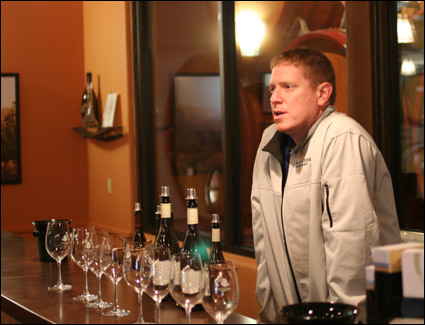
The folks at Tablas Creek have also been instrumental in bringing Rhone varieties to Paso Robles, which apparently is not as easy as it sounds. I learned from Jason Haas, General Manager at Tablas Creek, that when they bring vines over from Europe they’re only allowed to bring six cuttings of each clone. Those cuttings then need to go into a USDA quarantine for at least two years to ensure they are free of diseases. It can take much longer than two years too. In 2004, they brought seven Chateaunuef-du-Pape varieties into quarantine and have only gotten two of them out so far.
Once vines are out of quarantine they can be propagated to eventually create thousands of vines from those cuttings. Tablas Creek has a nursery on site which they use to propagate vines for their vineyard and they’ve partnered with NovaVine in Sonoma County to propagate their vines for sale to other vineyards. As a result, hundreds of thousands of Tablas Creek vines can be found in vineyards throughout the US.
Diversity is a theme throughout Paso Robles. “Some people think Paso Robles is just a small place,” Janell Dusi of J. Dusi Wines commented to me, “but the AVA covers a broad area with a lot of variation.” And Paso Robles plans to capitalize on the nuances throughout the region by creating eleven sub-AVAs within Paso Robles, however these will be secondary and any wines labeled with these sub-AVAs will have Paso Robles listed as the main AVA.
One of the things that makes Paso Robles unique is the long growing season. Several winemakers commented to me about this. The growing season here is a few weeks longer than in Napa or Sonoma. Altogether, the harvest season lasts about ten weeks in Paso. The fruit that ripens early is harvested first while the other fruit is left to hang until full ripeness. I’d say the long growing season is not just an advantage for them, it’s a luxury! In other regions it can be a gamble to let the fruit hang, as the weather can turn against you. That’s less of a risk here.
The conditions in Paso allow the winemakers to produce some unique, and incredibly tasty wine. When the fruit is harvested at the perfect level of ripeness, they’re able to create wines with minimal intervention from the winemaker. Allowing a true expression of the fruit. This makes the wines in Paso Robles stand out.
Finding Value
When it comes to value, Paso Robles has plenty to offer too. I wouldn’t necessarily say that visiting wine country is cheap, unless it’s just a short drive for you, but you can “get your money’s worth” in Paso Robles. And those who work in the wine industry here seem really appreciative of visitors and make an extra effort to make their experience special — which adds value in its own way.
While Paso is home to some rather pricey, premium wines, there are also plenty of good, affordable wines to be found here. Although, when visiting wine country I think it’s important to keep pricing in perspective. Many of the bargains we find on our local wine shelves are from big producers who find economy in scale. They often buy grapes in bulk and manipulate the juice in the winemaking process to create a consistent (although sometimes uninteresting) product. For the most part, that’s not what you’re going to find in Paso Robles.
Many of the producers in Paso Robles are small. In many cases, they don’t have national distribution and in some cases they sell all of their wine directly to consumers (i.e. none to distributors or restaurants). Something interesting I heard over and over from several producers is that they aren’t interested in manipulating the juice in the winery to make the wines taste identical from one year to the next. They want to work with each vintage to showcase the unique characteristics of that vintage.
Given the small production and significant overhead costs, I know that most of the producers here can’t sell their wines for $10 or $15 a bottle (although you will find some in that price range). I grew up on a small apple orchard and I know that a lot of money goes into producing the product at a small venture — not to mention the labor. So, I’m willing to pay a little bit more for a bottle of wine from a small, family-owned winery. When I know that their margin is, well… marginal, I’m OK with the fact that they may have to charge $25 or so per bottle. Admittedly, I’m not going to spend that for a bottle every day. But if it’s something special I’m OK with it, particularly after meeting the producer and feeling a more personal connection to the wine.
So, do seek out and taste some of the inexpensive wines from Paso. But if you really want to discover what this region has to offer, try some wines that are a little more expensive than you may typically spend. Most producers offer a range of wines from entry-level to premium. When visiting them it’s a great opportunity to taste the full range, experience the difference and find where you personally find the right quality to price ratio.
What to Do In Paso Robles
The choices are seemingly endless when planning which wineries to visit in Paso Robles. You definitely want to get out of town, where you can see the vineyards up close. But I’d also suggest planning a day to spend in town. There are about twenty different wineries that have tasting rooms in downtown Paso Robles. You can stroll around from one to the next, without having to drive. Make this a casual day. Don’t rush yourself. Make time to spend at each tasting room so you can talk with them and learn about the wines. Ask questions. Get to know the people behind the counter.
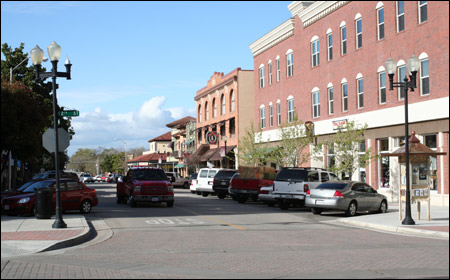
While wine tourism is burgeoning in the area, Paso Robles doesn’t feel at all “touristy”. Walking around downtown Paso Robles instantly makes you feel comfortable and at home. There’s a nice, open park downtown, where there was a farmer’s market taking place when I arrived, with about a dozen local farmers selling their goods. There are also plenty of small shops and some amazing restaurants showcasing the fresh, local produce — and the local wine, of course.
Once you get out of downtown, things are spread out. The Paso Robles AVA is a pretty big area. If you’re driving, plan your route and bring a paper copy of your map as mobile phone coverage is spotty once you get out of town. And don’t plan on seeing everything. Pick a handful of wineries that interest you and leave it at that. I spent two very full days in Paso and I barely scratched the surface in terms of what’s available to visit. A good place to read up on the different vineyards is at pasowine.com.
There are a lot of small producers in Paso Robles, but there are some larger ones too. You should try to visit producers of different sizes. A number of the producers have beautiful tasting rooms, you might even say some are extravagant. But they don’t have an elitist vibe. Everyone I met in Paso was warm and welcoming. And the wine community is truly a community, with producers helping each other out. This is small town America meets wine country. In some ways the friendly, small town ambience reminded me of small towns near where I grew up.
If it seems like the options here are endless, you’re right. So, you could make it easy on yourself and let someone else plan your visit — and let them get you around. Coy Barnes runs a wine tour company called The Wine Wrangler with a fleet of different vehicles and a number of experienced guides. They can plan a tasting tour for you, based on your tastes and budget.
This can make a world of difference for your vacation. While I enjoy traveling, I hate, hate, hate all the planning that goes into it. I’ve not gone on trips several times because I just get too overwhelmed and annoyed with the planning part. In my opinion, paying someone like The Wine Wrangler to do that planning is money well spent. Then, you not only don’t need to worry about planning the trip, but you can sit back and relax while The Wine Wrangler team chauffeurs you around.
But even if you do have someone like The Wine Wrangler plan your trip, you should still do plenty of reading ahead of time though to get to know the producers before you visit them. It will make your visit more productive and you’ll be glad you did. But having someone send you an agenda in advance will narrow the focus of the homework you need to do.
Other things to do when visiting Paso Robles:
- Visit Hearst Castle. I didn’t. So, now I need to go back. Hearst Castle is only a short drive from downtown Paso Robles.
- Taste Rhone-style wines. Paso Robles is well known for these wines. If you’re not familiar with them, don’t pass up the opportunity.
- Taste some local olive oil. In addition to wine, there are a few olive oil producers in the area. I visited Pasolivo, where I tasted a few different oils, and it was an eye-opening experience.
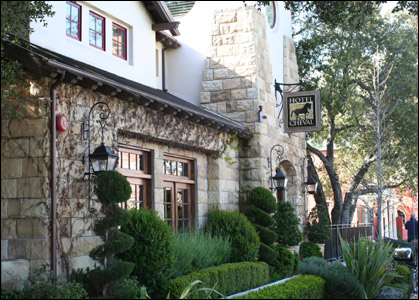
- Stay at the Hotel Cheval. One of the reasons I seek out bargains in my wine is so that I can splurge on other things, like nice hotels. The Hotel Cheval is a small, luxury hotel in downtown Paso Robles that’s inspired by European hotels. It’s relatively new, very clean and very comfortable. In addition to the plush rooms, they have a nice wine bar and a courtyard with outdoor fire pits where you can relax in the evening.
- Relax and enjoy yourself. Visiting wine country isn’t a time to run around like mad, trying to do it all. Take your time. Soak it in and relax.
Disclosure: I visited Paso Robles on a press junket with the Paso Robles Wine Country Alliance. My travel and accommodations where covered as a part of this trip. I was not required or even directly asked to write about Paso Robles. The opinions expressed here are 100% my own.
I have often dissed sauvignon blanc from California. I’ve called it bland, boring, lifeless. I’m guilty of badmouthing the whole category based on a few underwhelming experiences. But truthfully, California can produce exceptional sauvignon blanc. And this bottle from St. Supery proves me wrong for all the bad things I’ve said about Californian sauvignon blanc in the past.
Based in Napa Valley, St. Supery has been around since 1989. It’s owned by Robert Skalli, a third generation winemaker from Southern France. In addition to St. Supery, the Skalli family still owned vineyards in Southern France, where Robert has pioneered varietally-labeled wines versus the appellation-based designations that have been the tradition in France for ages.
Despite Skalli’s French heritage, the St. Supery Sauvignon Blanc is a very “new world” style wine with lively tropical fruit flavors.
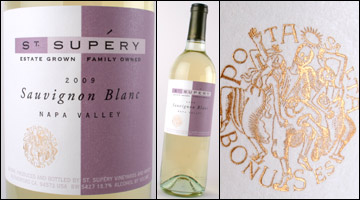
The nose is exceptionally powerful on this wine and has aromas of tomato leaf, cut grass, grapefruit, celery and flint. The flavors are predominently citrus, like grapefruit and lime, but there’s also some honeydew melon — which comes out even more on the finish. The finish also shows a touch of saltiness. The acidity is sufficient, but a wee bit more would be nice. Still, this is an excellent sauvignon blanc.
Wine: St. Supéry
Variety: Sauvignon Blanc
Vintage: 2009
Alcohol: 13.7%
Rating: 90
Price: $14.99
Find St. Supéry Sauvignon Blanc with Snooth
It’s been close to 3 years since we’ve reviewed Twisted’s 2005 Old Vine Zinfandel. It represented a great value back then at it’s $6.99 price tag, but it didn’t get our nod for top zinfandel under $20. Recently, on one of my routine trips to one of my favorite wine shops, I ran across the 2009 vintage. So I picked up a bottle. I was very curious to see if the Twisted’s great value proposition had changed. One thing that hasn’t changed is the great price – $6.99! But as this wine lover will certainly attest, there is definitely more to the value proposition than merely price.
I don’t have enough fingers and toes to count the number of value priced wines that I’ve tasted and enjoyed in their early vintages, only to see their value propositions diminish in subsequent vintages, either due to inflating prices or watered down quality. Not to digress to far here, but this is actually a peeve of mine. I really enjoy finding gems at great prices, and I enjoy being able to share those gems with friends even more. But when a winery decides to either make drastic moves up-market with a wine, or worse, dilute the wine’s quality, I lose trust in the brand.
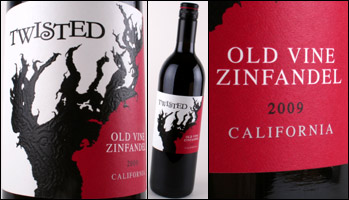
So has Twisted’s Old Vine Zin lost me? Rest assured they haven’t. In fact, I’d say Twisted’s Old Vine Zinfandel now represents an even better value. 3 years later and the wine has still retained it’s great price. That alone is noteworthy. But how about the quality?
The first thing you might notice about the 2009 Twisted is it’s translucence, which is unlike most zin’s, particularly old vine zin’s, and more like a pinot. The wine lacks the rich sheen that zinfandel usually has, but no matter. The wine is not short of intensity. The nose is quite complex, offering strawberry and rhubarb, along with a jammy bubble-gum edge. There are additional hints of white pepper and plum that show up as well. On the palate, there’s a nice balance of acid and fruit. If there is one flaw, I’d say it’s the mid-palate. The wine is nice and jammy on the front palate and shows good acid on the finish, but this bookend intensity leaves the mid-palate a bit inconspicuous. I call that a good problem to have.
If you’ve yet to try Twisted’s Old Vine Zinfandel, it would be hard for me not to recommend this wine, even if you weren’t fond of jammy wines, particularly zin. And at $6.99, you can certainly try it more often. Let’s hope Twisted doesn’t let us down anytime soon.
A Salute!
Wine: Twisted
Variety: Zinfandel
Vintage: 2009
Alcohol: 14%
Rating: 87
Price: $6.99
Find Twisted Old Vine Zinfandel with Snooth
Continuing the theme of our last review, today we’re checking out a couple more sauvignon blancs from the Casablanca Valley region of Chile. Both of these come from Quintay, which is a brand that was started by a group of Chilean wine producers all focused on cool climate wines. Wine from Quintay come from the Casablanca and Leyda valleys, but these two both come from Casablanca.
The cool climate of Casablanca Valley helps these wines create lively tropical fruit flavors with crisp acidity. The mineral characteristics also add to the complexity of these wines.
Quintay Clava Sauvignon Blanc 2009
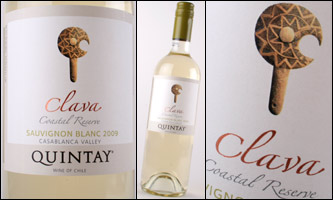
Tropical fruit aromas abound from this wine, with plenty of grapefruit, lemon and mango. It also has some of the classic cut grass that sauvignon blanc is often known for. The palate offers exceptional acidity, with green apple, grapefruit and melon flavors. It finishes with a salty minerality and crisp green apple acidity. This is a very nice sauvignon blanc.
Wine: Quintay Clava
Variety: Sauvignon Blanc
Vintage: 2009
Alcohol: 12.5%
Rating: 88
Price: $11.99
Find Quintay Clava Sauvignon Blanc with Snooth
Quintay Q Sauvignon Blanc 2009
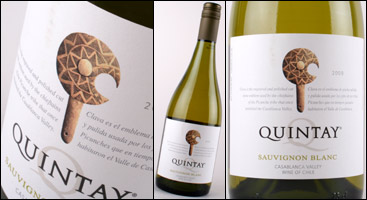
This is an exciting and tropical sauvignon blanc on the nose, with loads of grapefruit, pineapple and a good bit of cut grass. The acidity is exceptional and gives a real zing to the palate, which offers a whole mess of grapefruit flavor along with some apple and melon. The mouthfeel is also very nice with this wine. If you like a lively, tropical sauvignon blanc this one is outstanding.
Wine: Quintay Q
Variety: Sauvignon Blanc
Vintage: 2009
Alcohol: 12.5%
Rating: 91
Price: $15.99
Disclosure: These wines were received as a sample.
This is the third year in a row that we’ve had the opportunity to review the Veramonte Sauvignon Blanc and after reviewing this wine on multiple occasions, a few things have become evident.
First of all, it’s clear that Veramonte consistently makes a really good sauvignon blanc. They’ve become my “go to” brand for SB.
Second, Casablanca Valley is a world class cool climate region. It’s generally cooler than California but warmer than Marlborough, New Zealand. Some may say it’s the best of both worlds. Warm enough to bring the fruit to full ripeness, yet cool enough to preserve the acidity. The wine that these conditions create has a flavor profile some describe as between New Zealand and California — which is right where I want it to be. However, I would more accurately describe it as better than New Zealand and California.
Finally, it’s become evident that vintage does make a difference. I’ve been beating on this drum for years, but heard others try to say the vintage doesn’t matter in inexpensive wines. I disagree. I always want to know the vintage of the juice in the bottle. In the case of Veramonte Sauvignon Blanc, while it has been consistently good we’ve seen some variation from one vintage to the next. While some vintages are good, others are outstanding! And 2010 is an example of outstanding.
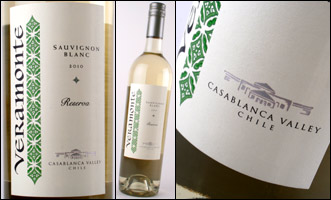
I tasted this wine blind in a lineup of Californian and Chilean sauvignon blanc. The Veramonte stood out from the others as something really special. In fact, it blew me away!
Wowee, this is a nice sauvignon blanc! It has great intensity on the nose. The aromas are complex and beautiful, with a bit of peach, some melon, lime juice, cut grass and flint. And all of that is perfectly balanced. The palate is full of ripe fruit, with peach, apple and citrus flavors. The acidity is near perfect. It finishes with a salted green apple and peach flavor, with reasonable length. This is an exceptional sauvignon blanc. I would say it’s the best vintage yet for Veramonte and perhaps the best sauvignon blanc I’ve ever tasted.
Wine: Veramonte
Variety: Sauvignon Blanc
Vintage: 2010
Alcohol: 13.5%
Rating: 92
Price: $12.00
Find Veramonte Reserva Sauvignon Blanc with Snooth
Disclosure: This wine was received as a sample.
We’re back to another box today, or an Octavin to be more precise. This is a cabernet sauvignon from the Central Coast of California. When a wine is labeled as coming from the Central Coast, that usually means that the fruit came from a couple different sources because Central Coast is a broad region (or AVA). Within the Central Coast AVA there are several smaller appellations, which are typically known for higher quality fruit and wines are often labeled with those smaller appellations versus using Central Coast. In the case of Monthaven, most of the juice is from Paso Robles and Monterey.
Although it’s in a box, it’s a serious wine. The quality of the juice is respectable and the wine is barrel aged, which is a process usually reserved for more expensive wines. Despite the varietal on the label, it’s not all cabernet sauvignon grapes in this wine. It has 75% Cabernet Sauvignon, 5% Petite Sirah, 4% Carignan, 4% Tempranillo, 4% Petit Verdot, 3% Zinfandel, 2% Merlot and 1% Mourvèdre. But with 75% cabernet sauvignon they are able to label it as such.
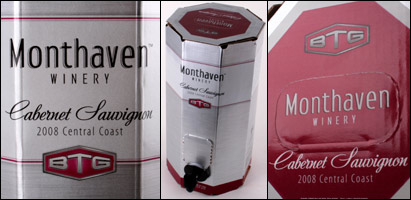
The luscious dark fruit aromas that you expect from a cabernet sauvignon are definitely found in this wine, along with a dusty herbal characteristic that distinguishes it. The palate is all about the fruit, with plenty of black cherry and black currant flavors. There’s a bit of oak flavor on the palate too. The tannins aren’t bitter, but deliver a pronounced dryness in the mouth. Overall, it’s a decent cabernet — although I wouldn’t call it elegant.
Wine: Monthaven Cabernet Sauvignon
Variety: Cabernet Sauvignon
Vintage: 2008
Alcohol: 13.5%
Rating: 85
Price: $24.00 for 3 liters (equivalent to 4 bottles)
Find Monthaven Cabernet Sauvignon with Snooth
Disclosure: This wine was received as a sample.
Muscat, also know as muscatel or moscatel, is a varietal that is produced in many of the major wine growing regions around the world. In Italy the varietal is know as Moscato, and can be produced in either a still or sparkling (frizzante) style. Moscato is used predominantly to make sweet dessert wines that can be crafted to compliment dolci (sweets) or served as dessert itself, or as a milder alternative to other after-dinner liqueurs. In many cases the wine is fortified with additional levels of alcohol to enhance the wine’s intensity.
I’m actually a big fan of Moscato, both in still and frizzante forms, and recently I had the opportunity to taste a couple of new world offerings from Jacob’s Creek (Australia) and Motos Liberty (California).
Jacob’s Creek
The Jacob’s Creek is a frizzante, or sparkling style, but compared to other sparkling wines the Jacob’s creek would be considered mildly ‘spritzed’. The color of the Jacob’s Creek was very light and from a distance, the wine could easily be confused for something other than wine (like water) once it’s fizz dissipates.
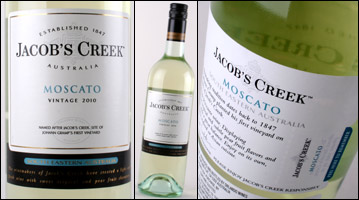
The nose offers traditional hints of honey, peach and pear, along with mild mineral and slightly metallic notes; although, I would consider the nose of this wine to be a touch faint. On the palate the wine offers a very nice balance of effervescence and acid, along with honey and pear.
I sampled both of these wines by themselves, as well as with some dessert – it just so happened to be my mother’s birthday so we had some homemade New York style lemon cheese cake and some very delicious Smores Cupcakes after dinner. Both desserts offered some very rich and challenging flavors for a dessert wine to tackle, but the Jacob’s Creek was certainly up to the challenge. In fact, I preferred the Jacob’s Creek with dessert. At 8% alcohol and with the well-crafted acid levels, that’s exactly what this wine was designed to do.
Wine: Jacob’s Creek
Variety: Moscato
Vintage: 2010
Alcohol: 8%
Rating: 84
Price: $8.00
Find Jacob’s Creek Moscato with Snooth
Motos Liberty
The Motos Liberty is a still, or non-sparkling Moscato. Where the Jacob’s Creek may have lacked in forward fruit, the Motos Liberty offered up a rich caramel and honey. The Motos has a bit more alcohol at 10%, which undoubtedly helped in intensifying the nose and front palate. However, where the Jacob’s Creek excelled in structure and acid, the Motos fell flat, literally. But, again, this is by design. The Motos is really meant to stand-alone. That said, it’s caramel and honey flavors were a nice complement to the Smores cupcakes, with its blend of graham cracker and marshmallow.
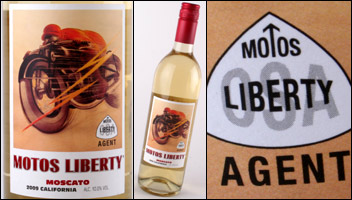
So what you have here are two examples of an old world varietal produced in the new world, but achieving very different results. I couldn’t help to think that together they would have made the perfect dessert wine. While I prefer the fresher effervescent style of the Jacob’s Creek, both wines are worthy of consideration for your next dessert wine pairing.
A Salute!
Wine: Motos Liberty
Variety: Moscato
Vintage: 2009
Alcohol: 10%
Rating: 84
Price: $10.99
Find Motos Liberty Moscato with Snooth
Disclosure: These wines were received as a sample.

 Prev
Prev