In the last few years I’ve been fortunate enough to visit a number of different wine regions and I always look forward to discovering new wines in new places. When I recently had the opportunity to explore wines in the country of Georgia, I jumped at the chance.
It’s interesting to see how places compare to our preconceived notions. And the same is true about tasting new wines. We often have an expectation of the wine, but the reality doesn’t always match those expectations.
The Place and the People
Honestly, I didn’t know what to expect when going to Georgia. To me, Georgia was a very distant and remote country. I knew that they had been occupied by the Bolsheviks and as recently as 2008 had been attacked by Russia. I expected to see a war torn, beaten-down country filled with people who were tired and bitter. I was wrong.
What I found in Georgia was a beautiful landscape, fabulous architecture and warm, caring people who are proud of their heritage. Sure, some things are old and worn down. Most of the roads were kind of rough. But Tbilisi, the capital, is a beautiful city with a fascinating blend of old, historic buildings mixed with artistic, contemporary architecture. And the people there celebrate their life and culture in a way that makes me envious.

Tbilisi has all of the charm and character you would want of a European city, without the crowds of tourists—making now the perfect time to visit. I expect that Tbilisi will grow as a tourist destination over the next several years as more people discover it. And there are clearly significant investments being made by global hotel chains in the city, which adds additional evidence to the theory that tourism will increase here.
If there’s one thing I’d say you should add to your bucket list, it’s having a meal with Georgian people. Not only is the food and wine excellent, the traditions that take place at the dinner table are fascinating, entertaining and moving. You’ll find that there’s always a “toast master” at the table who offers thoughtful and poetic toasts every few minutes. The themes of the toasts seem to be pretty consistent, they include god, wine, family, peace and women.
But most fascinating at the dinner table is the Georgian polyphonic singing, which rather than trying to describe, I’ll share via video.
[youtube=http://www.youtube.com/watch?v=EgDX9o30Uq8]
The Wine
Similar to having unclear expectation about Georgia in general, I didn’t know what I would find with the wines. I don’t come across Georgian wines in my local wine shops and I don’t recall having any opportunities to taste it when I’ve traveled. Friends who had been there before told me that the wines are amazing. But my expectations still weren’t that high. I was wrong again… way wrong.
Georgia has a long history of winemaking. A history that is so long that they claim to be the birthplace of wine. There are actually a couple different countries that make this claim, Turkey being another. The evidence does point to the general vicinity of Turkey and Georgia, but it’s difficult to say definitively exactly where the first wine was produced.
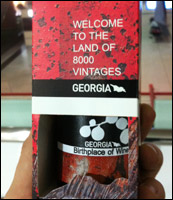 There is archaeological evidence of this history, including an 8,000 year old wine cask that has been found in Georgia. And with this evidence, they call Georgia “the land of 8,000 vintages.” They celebrate their history with wine too. When you go through passport control to enter the country, they check your passport and then hand you a bottle of wine. Seriously! What a way to welcome you to the country.
Georgia is also a place with countless grape varieties you’ve probably never heard of. You won’t find much merlot or chardonnay here. Instead they favor native Georgian varieties, like Rkatsiteli and Saperavi, and they do extensive research on the different varieties found in the country. We visited one research center that had rows and rows of different grape varieties growing. It appeared to be in the hundreds.
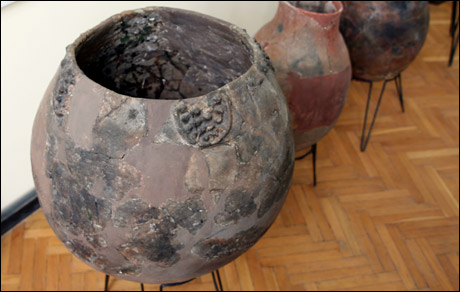
It was early in the morning when we arrived in Tbilisi, so I didn’t taste that first bottle of wine right away. We got to the hotel at around 3AM and went straight to bed. The next morning we visited a museum to see the archaeological evidence of Georgian winemaking, including that 8,000 year old wine cask. And after exploring the city we had our first taste of Georgian wine with lunch.
When we sat down, I was hungry and ready for a glass of wine. I thought the wines would be decent. After all, when someone invites you to their country to taste their wines it’s unlikely that they’re going to pour a bad wine into your glass. But I wasn’t prepared for what I was about to taste. It blew my mind.

The first wine we tasted was a 2011 Tsolikouri, a white wine from Kera Wine. The aromatics were wonderful, offering beautiful herbs, apple, cucumber and lemon aromatics. The palate had perfect acidity with lemon and mineral flavors. And it had a looooong finish, filled with citrus and salty mineral.
Most of the subsequent wines at that lunch were just as good, if not better—although there was one that seemed a little off. The other wines that impressed me included a 2010 Rkatsiteli, another white wine for which I could hardly read the name on the label, but I think it was from Darsavelidze (at least that was written on the bottle somewhere… regardless of the name, I don’t think you can find this one in the US). It had a smoky nose with butterscotch aromas. The palate had nice tannins and good acidity with lemon and granny smith apple flavors. The finish was somewhat short, but crisp with citrus and mineral flavors.
Rkatsiteli is one of the more popular white wine varieties in Georgia. And the grand majority of them that I tasted were very good to exceptional.
And finally we had a Saperavi, which is the most common red wine in Georgia. This one was from Jakeli Wines and was their 2008 Khashmi Saperavi. The complexity and elegance of this wine was mind blowing. The nose was overflowing with currant, plum, mint, tobacco and beautiful spice aromatics. It had a luscious mouthfeel with plenty of blackberry, plum and raspberry flavors. The acidity was perfect. And it finished long with raspberry, mineral and spice. This is an absolutely outstanding wine.
As much as I’m gushing over these wines, I have to say that the entire experience at lunch that day was amazing. We were introduced to Georgian wine, food, culture and song in a way that was nothing short of moving. And given the fact that wine is an experiential thing, the overall experience at lunch could have influenced how much I enjoyed those wines. I will have to hunt down some of these wines and taste them again, in my own home, to see if they hold up to be just as amazing outside of that environment.
But I can say that throughout my time in Georgia, I was continually impressed by the wines. Especially those made in qvevris.
The Qvevris
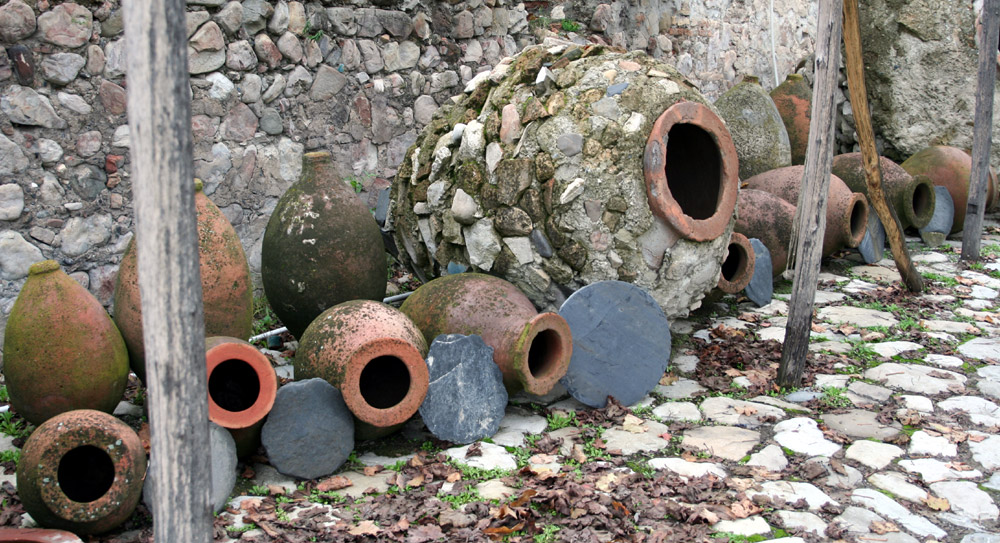
When you start to explore Georgian wine, one of the things you’ll quickly learn about is the qvevri (pronounced QUEH-vree). Qvevris are earthenware casks used for winemaking, ranging in size from very small to over 3,000 liters. They’re buried in the ground and the grapes, stems and all, are put down into them. They are then covered with cloth during maceration, to allow the CO2 to escape, and subsequently covered with a large slate stone to rest for a number of months.
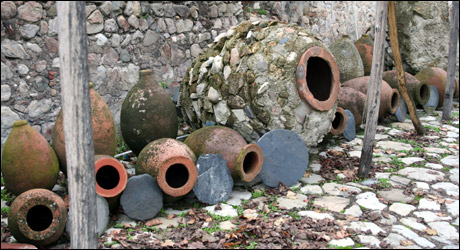
This is a traditional winemaking technique in Georgia, but it’s not without controversy. Some modern winemakers question the cleanliness of this approach, but hygiene is certainly a top priority for Georgian producers using qvevris. These vessels are also lined with beeswax as a protective coating.
I don’t know much about the science behind qvevris, but I can attest that wines produced using this technique are noticeably different, in a good way. The quevri wines I tasted had exceptional structure, balance and elegance compared to their non-qvevri counterparts. All of the wines listed above were qvevri wines.
But Can I Find The Wines Here?
While I was absolutely amazed by these wines, I had two questions floating around in the back of my head while I tasted.
- Will I ever be able to find these wines in the US?
- If I do find them, will they be affordable? Certainly wines this good are going to sell at a premium, right? Wrong!
I have good news for both of those questions. While you won’t come across Georgian wines in every wine shop, there are some available in the US. Some good ones. And I’ve found some that are amazingly affordable. In my next post I’ll share some delicious Georgian wines that I know to be available in the US, at very reasonable prices.
Disclosure: I tasted the wines of Georgia as a part of a sponsored blogger tour of the region, organized by Georgian Wine Association. My travel and accommodations were provided by the sponsor.
One trend I’ve noticed over the past few years is the growing popularity of zinfandel-based blends. It seems to be a style of wine that appeals to the collective taste of American wine drinkers. We like them too.
As a result of the growing popularity of this style, more and more producers are coming 0ut with their own zinfandel blend. This one from Francis Coppola is a tasty addition to the mix. This one is a blend of zinfandel, syrah, petite sirah, cabernet sauvignon & merlot.
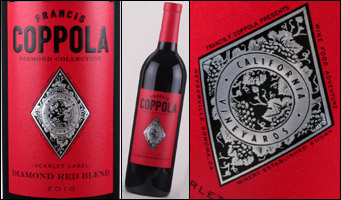
The nose is dark and mysterious with aromas like chocolate, cola, plum, vanilla and blackberry. The palate isn’t nearly as heavy as I thought it would be, but it’s good. It offers flavors like blackberry, blueberry and cherry. A touch of black licorice comes in on the finish. This is an interesting wine… and more importantly an enjoyable wine.
Wine: Francis Coppola Scarlet Label Diamond Red Blend
Variety: Red Blend
Vintage: 2010
Alcohol: 13.5%
Rating: 86
Price: $18.00
Find Francis Coppola Scarlet Label Diamond Red Blend with Snooth
Disclosure: This wine was received as a media sample.
In the past I’ve accused Banfi of being generally overpriced with their wines. But recently this $9.00 Banfi wine showed up for me to sample. I think they’re trying to prove me wrong. Well played, Banfi… well played.
Some might classify this wine as a “Super Tuscan” although that classification is technically an unofficial designation — and purposefully so. Super Tuscans were originally born as a category of wines that were breaking away from restrictions of the Chianti DOC, which winemakers found to hinder their ability to create quality wines. The rules of Chianti have changed to address the issues winemakers had but the Super Tuscan category stuck.
This particular wine comes from grapes grown in the Montalcino region of Italy. The name translates to “Stony Hill” which is descriptive of the terrain where the grapes are grown.
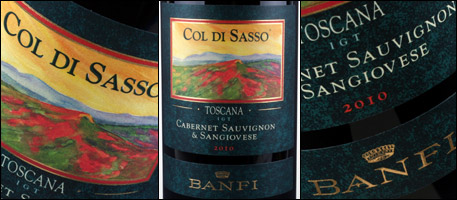
The nose of this wine is dominated by “high pitch” aromatics like cherry, raspberry and spices. The palate has a bright acidity and offers ripe cherry, raspberry and plum flavors with moderate concentration. The tannins are soft, but noticeable. The finish is medium in length and offers tangy cherry flavors. For nine bucks, this is not a bad wine.
Wine: Banfi Col di Sasso
Variety: Cabernet Sauvignon & Sangiovese
Vintage: 2010
Alcohol: 13%
Rating: 85
Price: $9.00
Find Banfi Col di Sasso Cabernet Sauvignon Sangiovese with Snooth
Disclosure: This wine was received as a media sample.
When I was younger and my wine budget was even tighter than it is today, Bolla Valpolicella was one of my “go to” wines. I never thought of it as an outstanding wine, but it was good enough and it was cheap. And I didn’t know a whole lot about wine at that time, so my standards were low. When this bottle showed up, it had been several years since the last time I’ve tasted this wine. So I was curious what I would think about it, being much more experienced at tasting/evaluating wines now… and much more picky.
I have to admit, I was skeptical about this wine. In the years since I stopped drinking it, I had developed a prejudice against it. “That was a cheap wine for when I was younger. I’ve moved on to better wines,” I would say to myself when I saw this wine.
I mentioned I was going to be tasting this wine to a wine writer friend of mine, Elisabetta Tosi, who lives in the Valpolicella region and she exclaimed, “Nooooooo, not Bolla!”
But, I was pleasantly surprised. It was good. It wasn’t spectacular, but it was good. And when I told Elisabetta it was good, she conceded that when she’s visited Bolla and tasted their Valpolicella it was good. But I assume that for her, Bolla is the bulk wine producer that lacks character and depth—much like we might think of a producer like Gallo in the US.
Yes, you can find smaller producers of Valpolicella, with single-vineyard production that evokes elegance, if not magic, out of the wine. But you’re going to pay a premium for that. If you want a dirt-cheap introduction to Valpolicella, then Bolla isn’t a bad option.
As is common in Italy, the name, Valpolicella, refers to the region, Verona, and style of the wine. The grapes include 60% Corvina and Corvinone, 30% Rondinella and 10% other regional grapes from Verona. Corvina is considered to be the best grape, while Rondinella is a “lesser” grape.
I’ve been told that many producers in the region are making less Valpolicella than they used to, due to the higher profits that can be made from Amarone and Ripasso which are made from the same types of grapes in the same region.
Valpolicella is a light red wine and should be served slightly chilled. I typically serve it between 50-55° F.

It’s pleasant on the nose, although not to powerful. It offers aromas such as apple peel, raspberry, licorice and cola. In the mouth it’s a light-bodied wine with fresh blackberry and black cherry flavors. The acidity is enough to bring life to the fruit and the tannins are soft, but add a touch of texture. It finishes with cherry and vanilla flavors and medium length. Overall, this is a great wine for the price.
Wine: Bolla Valpolicella
Variety: Red Blend
Vintage: 2011
Alcohol: 12%
Rating: 86
Price: $8.00
Find Bolla Valpolicella with Snooth
Disclosure: This wine was received as a media sample.
A few weeks ago I was invited to join a #winechat about Austrian red wines. For those who don’t know, #winechat is an organized Twitter event where a group of folks jump onto Twitter to chat about wine. Often times those participating all taste the same wines and that was the case on this evening when we tasted both a zweigelt and a blaufränkisch. Both wines were good, but I was particularly fond of the blaufränkisch and it reminded me of my appreciation for the variety.
Blaufränkisch, or blue franc, is a wine that has everything I love from a wine when it’s well made. It has a complex spiciness, rich berry flavors harmoniously intertwined with earthy qualities, good structure, good acidity and an elegant mouthfeel. And it’s a fun wine, which is something that I think is sometimes overlooked with wine.
But it’s also a wine that has a few different faces, depending on where it’s grown and the winemaking techniques used. Of course in Austria one can expect to find systems designed to ensure precision and wine is no exception to that rule. They have created a DAC system to designate specific regions and production guidelines within those regions in order to create consistency. This wine from Iby, however, is not labeled as a DAC wine. I was provided with a tech sheet on this wine that says it’s Mittelburgenland DAC, but there’s nothing on the bottle to state that. When I asked about that I was told that it was “streamlined labeling for lower tier wines” but I’m not sure what they mean by that. Regardless, DAC is just a classification and it’s the taste that matters most. In that area, this wine delivers.
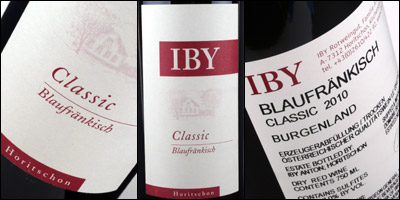
Appropriately, this blaufränkisch smells ummmm…. blue. Like blue violets that is. It’s very floral on the nose and, dare I say, delightful. The floral aromatics are backed up with spicy berries. In the mouth, it’s a nice, medium-bodied wine, offering raspberry, white pepper and plum flavors. It has a touch of tannin, giving some texture to the mouthfeel. The finish is medium in length with berry, mushroom and salty mineral flavors. This is a very fun wine.
For more thoughts on blaufräkisch, check out Exlporing Blaufränkisch in Burgenland.
Wine: Iby Classic Blaufrankisch
Variety: Blaufrankisch
Vintage: 2010
Alcohol: 13%
Rating: 87
Price: $17.99
Find Iby Classic Blaufrankisch with Snooth
Disclosure: This wine was received as a media sample.
Let’s be honest, Chianti is a mess. By that I don’t mean that Chianti wines are bad. In fact, I love a good Chianti. I say that Chianti is a mess because there are so many variations of “Chianti” that most consumers don’t really know one from another, or even know what Chianti means. The region is littered with several different, overlapping DOC and DOCG regions. You have Chianti, seven sub-zones of Chianti and then there’s Chianti Classico. Most wine consumers I know, at least the ones who aren’t total wine geeks like me, just think of all of them as one type of wine: Chianti.
While I certainly understand the distinctions from a winemaker’s perspective, I empathize with those who might get confused with all the different versions of Chianti. While I can’t solve that problem, I can try to make sense of where this wine fits into that complex world.
Chianti as a general term is the broad region within which all wines labeled as Chianti are created. This particular wine is a Chianti Rúfina, which is probably the most widely known sub-region designation other than Chianti Classico (which is more than a just a sub-region). The Rúfina region is in the Arno river valley, which is the river that runs through Florence, Italy. The producer of this wine, Frescobaldi, is one of the two major producers who own most of the vineyards of Rúfina.
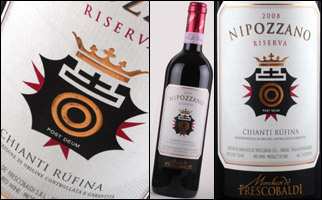
The nose of this wine is absolutely beautiful, with moderately intense aromas of black licorice, cherry, raspberry and tobacco. The palate is also quite nice, offering cherry, plum and raspberry flavors. The acidity is perfect and the tannins are just heavy enough to give the wine some texture without becoming too astringent. It’s well balanced and a very good food wine. Delicious!
Wine: Frescobaldi Nipozzano Chianti Rúfina
Variety: Red blend
Vintage: 2008
Alcohol: 13.5%
Rating: 89
Price: $20.00
Find Frescobaldi Nipozzano Chianti Rúfina with Snooth
Disclosure: This wine was received as a media sample.
I’ve admitted it before, and I’ll do so again… I have a prejudice against Californian sauvignon blanc. Why? I’ve just had too much of it that is weak, flavorless and disappointing. But when I find one that’s good, I have to give them credit.
Tin Barn Vineyards is the most recent producer to impress me with their Californian sauvignon blanc. This one comes from their Hi Vista Vineyard in Carneros. This is a part of Sonoma that provides a cool growing season.
While most sauvignon blanc is fermented exclusively in stainless steel, Tin Barn Vineyards ferments a small portion of this wine in barrels to add some texture to the mouthfeel.
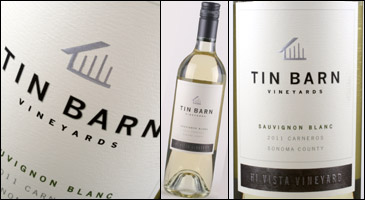
Lemon, grapefruit, honeydew melon and celery aromas give this wine a very nice nose. On the palate, it’s well balanced and offers grapefruit, apple and subtle peach flavors that are super tasty. The acidity is spot on and the mouthfeel is fantastic. The finish is medium in length and offers more apple and citrus flavors, plus some mineral. This is a solid sauvignon blanc.
Wine: Tin Barn Vineyards Sauvignon Blanc
Variety: Sauvignon Blanc
Vintage: 2011
Alcohol: 13.7%
Rating: 87
Price: $18.00
Find Tin Barn Vineyards Sauvignon Blanc with Snooth
Disclosure: This wine was received as a media sample.
I keep waiting for the world to suddenly realize how awesome rosé can be, but it just hasn’t happened yet. I know… it’s often not as interesting as a complex white wine or as rich as a deep red wine. But rosé has its place and too many wine connoisseurs overlook it.
It’s not like I have anything to gain financially from an increased prominence of rosé. However, there is a potential for the riches of indulgence when more winemakers start turning their attention to rosé — thus creating more and more stellar rosés. Fortunately there are some folks who aren’t waiting for the gold rush on rosé. And they are blessing us with the tasty goodness of well-crafted rosé now. Not because it’s popular. Just because it’s good.
Joon is one such syrah. It’s created by Tin Barn Vineyards and it’s the first rosé they’ve created. And based on how successful they were with the first, I can’t wait to taste the second.
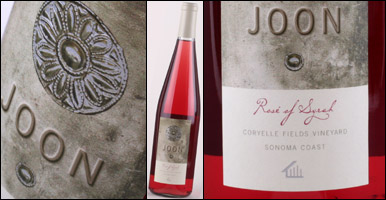
The nose is a little soft, but quite nice with floral aromas alongside cirtrus and salty minerals. The palate is bright and delicious, offering tangy lime, strawberry flavors (but not strawberry sweetness) and peach showing up on the mid-palate. The acidity is outstanding, giving a nice vibrancy to this wine. The finish is plenty long, with cranberry and lime flavors, plus a touch of salt. This is a delicious wine!
Add this one to your Thanksgiving shopping list.
Wine: Joon – Rose of Syrah
Variety: Syrah
Vintage: 2011
Alcohol: 14.1%
Rating: 88
Price: $22.00
Disclosure: This wine was received as a media sample.
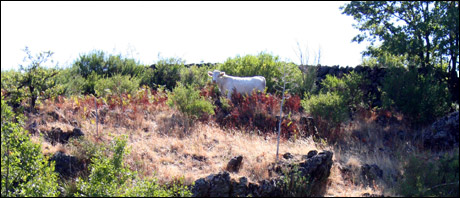
We got off the jeep and there she was staring at me. “A vineyard pest!” Alberto Graci commented, “We had problems with cows getting past our fences and eating our grapes this year.”
I can imagine that was frustrating for Alberto, as this is no simple vineyard to maintain. Contrada Barbabecchi – Solicchiata was the name of the vineyard at quota mille or “altitude 1,000.” The vineyard is 1,000 meters above sea level and in a fairly remote part of the Mt. Etna region. In order to get to the vineyard we had to take jeeps up a worn, lava stone path. At points I was sure the jeep was going to get stuck or bottom out, but our driver knew how to navigate the rugged path.

When we finally made it to the top, I was awestruck. Not by the cow, but by the wild beauty of the vineyard. The hundred-year-old vines look like little bushes, supported by chestnut stakes. Herbs, olive trees, grasses and apple trees are scattered throughout the vineyard. It almost looks overgrown, but it also reminds me of walking through my grandfather’s orchard when I was a child. A place where nature is allowed to do its thing, with a little nudge here and there, and it thanks you with the most flavorful fruit you can imagine.
Looking further down the mountain I could see another vineyard, perfectly groomed with the vines trellised and jam-packed into the limited space. A tractor was driving through the vineyard to take care of the grapes. I could tell at a glance that I would rather taste the wine from the vineyard where I stood than the sterile, manicured vineyard below. “This is what you pay for with a premium wine” I thought, it’s the time, energy and dedication the winemakers give to create something special.
I wandered off from the group to have a little conversation with that cow. “Why are you here? Why did you eat the grapes?” I asked. “Don’t you know that you’re robbing us of a great wine?” The cow didn’t care. She stared back at me and moo’d, but I couldn’t understand her because it was in Italian.
I could picture that cow earlier in the season, watching the Graci team from afar as they carefully tended to this vineyard. They did all the work in the vineyard by hand. They refused to use herbicides to allow a pure expression of nature to come to life through the grapes. She knew this vineyard was given some love. She knew how tasty the grapes would be. I couldn’t blame her for eating them. In fact, it’s surprising there aren’t more cows in Etna eating the grapes.
I wondered for a moment if she were a dairy cow. That certainly could give a new meaning to Etna Bianco. And I’ll bet it would be some tasty milk.
I kept thinking of this cow when I got home, and then I realized I know why a cow would eat the grapes: Because cows don’t drink wine.
Disclosure: I tasted the wines of Etna and met this cow as a part of a sponsored blogger tour of the region, organized by Consorzio Tutela Vini Etna D.O.C.. My travel and accommodations were provided by the sponsor.
Some wine names come with a bit of cachet, and Barons de Rothschild Lafite is one of those names. This is thanks to the fact that they have consistently been the producer of one of the world’s most expensive red wines. A bottle of 1787 Chateau Lafite that was thought to have been owned by Thomas Jefferson once sold for $156,000 at auction.
Now, I don’t believe in paying that much for wine. And fortunately I can still enjoy wine from Barons de Rothschild Lafite without paying an arm and a leg. Although they are best known for their high-end wines, they also produce plenty of wine for commoners like me. This white from Bordeaux has an average retail price of about $14 and can be found for as little as $11, possibly less.
Of course, this lower-priced wine doesn’t come from the same top-tier vineyards as their high-end wines. This is part of their DBR Collection and the grapes are sourced from different parts of Bordeaux. The blend of this white is 60 % Sémillon and 40 % Sauvignon.
But, is it any good?
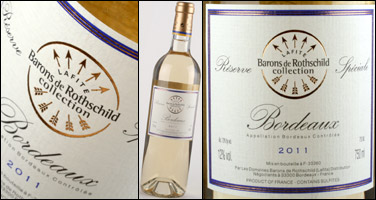
The nose is soft and well balanced offering aromas of lemon, melon, flowers and mineral. The floral aspect on the nose gives this wine a wow factor. It’s quite dry on the palate and the flavors are all lemon and mineral. The fruit is restrained, in other words this isn’t an in-your-face, tropical-fruit-laden wine. It has nice acidity and a tart mineral finish.
Wine: Barons de Rothschild Lafite Reserve Speciale Blanc
Variety: White Blend
Vintage: 2011
Alcohol: 12%
Rating: 87
Price: $14.00
Find Barons de Rothschild Lafite Reserve Speciale Blanc with Snooth
Disclosure: This wine was received as a media sample.


 Prev
Prev