Ah, yes. It’s another French rosé. It’s still summer, so we need to celebrate good summer wines.
This one is 100% syrah and it’s labeled as a Vin de Pays d’Oc, which means it’s a French “country wine” (i.e. Vin de Pays) from Languedoc (i.e. d’Oc). Vin de Pays is considered a step up from Vin de Table or “table wine” but a step below AOC labeled wines. Regardless of its classification, this is a nice wine.

This rosé shows mostly mineral aromas on the nose, there is also some cherry & raspberry but it’s subtle. The palate shows some strawberry and raspberry flavors, but it’s not an “in your face” kind of fruit. It’s subtle… it’s nice. This is a dry rosé with no sweetness to speak of. The acidity is sufficient. It finishes with mineral and a hint of tart berries.
Wine: Le Jaja de Jau
Variety: Syrah
Vintage: 2010
Alcohol: 13%
Rating: 86
Price: $10.00
Find Le Jaja de Jau Syrah Rosé with Snooth
Disclosure: This wine was received as a sample.
Yes, it’s another rosé we’re reviewing today. And it’s another wine with Rhone varietals. This one also comes from a place not too far from the Rhone — Corbières in the Languedoc. This is a region in the south of France, bordering the Mediterranean Sea. This is a great area for value wines too. I’m often curious about wines from this region.
This rosé is a blend of 40% syrah, 40% grenache and 20% cinsault. If you’re familiar with Rhone wines, then syrah and grenache are certainly familiar grape varieties to you, but you may not be as familiar with cinsault. Cinsault is another red grape variety, but it’s also a very useful grape for rosé and is commonly found in rosé from Corbières.

The nose of this wine is soft and by that I don’t mean it’s faint, but rather the aromas delicately caress your nose. I know it sounds weird, but I get a satin-like sensation from smelling this wine. Maybe I’m in a weird mood today. Regardless, it’s nice. The fragrances are also pleasant, with red raspberry, strawberry Jello and honeysuckle aromas. The palate is off dry, with some slightly sweet cherry and raspberry flavors. It becomes more tart on the midpalate, where the acidity steps in. I’d actually prefer a touch more acidity, but I wouldn’t call it flabby. The mouthfeel is soft and somewhat creamy. This is a decent rose.
Wine: Les Deux Rives Corbières Rosé
Variety: 40% syrah, 40% grenache, 20% cinsault
Vintage: 2010
Alcohol: 12.5%
Rating: 85
Price: $10.00
Find Les Deux Rives Corbières Rosé with Snooth
Want another opinion? Here’s what some other reviewers thought of the 2010 Les Deux Rives Corbières Rosé:
Disclosure: This wine was received as a sample.
Today, I’m continuing a few themes from other recent posts. 1) It’s soooo hot outside, I have to focus on good wines for summer sipping. 2) Rhone varietals. We’ve been talking a lot about Rhone varietals lately, and mourvèdre is yet another one. Although it’s more typically found in red Rhone blends, while this is a rosé. And I think this may be the first mourvèdre rosé I’ve had the opportunity to taste, but I hope it’s not the last. 3) Cline Cellars. We’ve had a few other reviews on Cline wines recently. I give them credit for putting out some unique wines that caught our attention.
This mourvèdre rosé come from Contra Costa County in California. The vines are 100+ year vines and it’s dry farmed. But what does that mean and why should you care???
Well, older grape vines produce less fruit than younger ones and that fruit has more concentrated flavors. That’s why many producers will promote the fact that certain wines come from “old vines.”
Dry farming is a technique of farming the vineyard without using irrigation. The only water the vines get is that which falls from the sky. There are a couple different spins on why this is good. Some like it just due to the water conservation aspect. But some producers feel that they get better quality grapes from the practice. Dry farming trains the roots of the vines to search deep into the soil for water, which creates a stronger root system. Some producers assert that this results in better grapes, and thus better wine.
Whether it’s the old vines, the dry farming, the winemaking techniques, or something else, Cline got it right with this rosé.

This wine has a lovely, pink color that just glistens in your glass. The nose is soft, but has enough intensity that I won’t call it “tight.” The aromas are pomegranate, pear and citrus. The palate has soft pomegranate and cranberry flavors, with perfect acidity and just a touch of sweetness. But don’t get me wrong, it’s not a sweet wine… it just has a touch of sweetness, which is harmoniously balanced with crisp tartness. Really, it’s a lovely, very drinkable wine. And it has a surprisingly long finish.
Wine: Cline Mourvèdre Rosé
Variety: Mourvèdre
Vintage: 2010
Alcohol: 13.5%
Rating: 88
Price: $15.99
Want another opinion? Here’s what some other reviewers thought of the 2010 Cline Mourvèdre Rosé:
If you’ve had it, let us know what you think too.
Disclosure: This wine was received as a sample.
Last weekend I attended the North American Wine Bloggers Conference, which was held in Charlottesville, Virginia this year. I came back with a nasty summer cold, which is why I haven’t written anything in a week, but I’m feeling much better now. I also came back with an appreciation for Virginian wine. While I had heard good things about it, I just don’t come across much of it. In fact, I can’t recall ever seeing a bottle of Virginia wine on shelves in my area. And that’s a shame, as there are some really good producers there making some exceptional wine.
But, alas, this review is not about a Virginian wine. It’s about another Californian wine. Let’s face it, they just produce more and have better distribution. But I will relate this back to Virginia for a moment, just to say that this review is about a varietal that performs quite well in Virginia, viognier. If you have an opportunity to taste a Virginian viognier, I’d say get on top of it!
Before I left for the conference, I had done a review about Cline Marsanne Roussanne, highlighting a couple nice Rhone varietals being produced outside of the Rhone. This viognier is also a Rhone varietal, but a much more common one to be found in US vineyards. It’s a varietal known for creating highly aromatic wines, with floral fragrances. It’s also a good pick for spicy food, like Thai. This particular one comes from the North Coast region in California.

This viognier from Cline Cellars smells pretty much like I expect a viognier to smell, but it lacks a bit of intensity — not that extreme intensity is something I expect. It has a nice floral aroma, with citrus and wet stone undertones. The palate has really nice fruit flavors, with peach being the most prominent but I’d also say it’s got a pineapple aspect to it as well as a lime flavor that shows up in the mid-palate and into the finish. The mouth feel is soft and slightly oily, which isn’t uncommon for a viognier. The acidity is sufficient. While not mind-blowingly good, this is still a decent viognier at a nice price.
Wine: Cline Viognier
Variety: Viognier
Vintage: 2010
Alcohol: 14%
Rating: 84
Price: $11.99
Find Cline Viognier with Snooth
Want another opinion? Here’s what some other reviewers thought of the 2010 Cline Viognier:
Disclosure: This wine was received as a sample.
It’s the second day of the 2011 Wine Bloggers Conference and the second round of live blogging. Yesterday, it was all white and rose’ wines in the tasting and today it’s all red wines. Let’s go.
The first wine is a 2006 Lovingston Pinotage, a wine from South Africa. The nose of this wine is a blueberry & chocolate thing, not terribly unlike a zinfandel. On the palate it’s a bit lighter than most zinfandel would typically be. It’s a little bit rustic and a little bit fruity. The mouthfeel is nice, as is the acidity. I’ll be honest, I’m not typically a fan of pinotage, but this is a decent wine. It retails for $24. **Correction: While pinotage hails from South Africa, this wine is from Virginia!**
The next wine is an Italian wine, a 2004 Sagrantino from Tabarrini. It’s a deep dark wine in color, and the aromas are deep and dark too. It’s loaded with chocolate and dark berry aromas on the nose. The tannins are dense on this wine. I’d like to have this in the cellar a few more years before tasting, but it’s good. It’s a BIG wine and sells for about $55. Tasty stuff, if your into big, tannic, acidic wines.
The next one is a 2007 Cab Franc from the Williamsburg Winery. It’s blended with 15% merlot and 5% petit verdot. At first it strikes me as a bit angular. It has some nice herbal notes, but they don’t seem integrated at first. It may just be my nose at the moment. It tastes good, a bit of plum and cherry. The finish has a nice mineral characteristic.
The fourth wine is a pinot noir from King Estate. This is one of the most aromatic pinot noirs I’ve tasted recently. It’s the 2008 vintage and comes from Eugene, Oregon. The acidity is nice on the palate, and it’s a lighter wine. While it is a very nice pinot noir, it’s also $60… so, it’s a bit steep for most of our readers.
Next up is a 2007 Napa Cabernet Sauvignon from Cornerstone Cellars. We’ve reviewed some of the value line from this producer before, named Stepping Stone. This cabernet has a bright, exciting nose that just sings… and harmoniously. The mouthfeel is absolutely velvety and beautiful. The flavors are beautiful too. It has a touch of a bitter tea characteristic on the finish, but I’m not complaining about it. It’s an outstanding wine… but another pricey one at $75.
Now we’re moving on to a TetraPak boxed wine called CalNaturale. It’s a 2008 Cabernet Sauvignon from Paso Robles, California. It’s also an organic wine. I feel bad for this producer to be right behind the Cornerstone Cellars, as that was an exceptional cabernet. This one is a disjointed on the nose, with a cooked berry aroma. And that cooked berry flavor comes through on the palate too. The acidity is a bit harsh. It’s drinkable, but not exceptional.
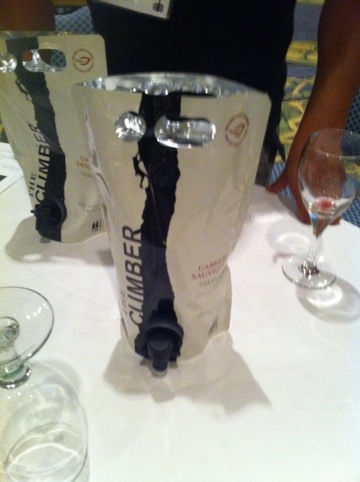
Moving from a box, we’re not tasting wine from a bag or a “pouch” as they call it. It’s the Climber Cabernet Sauvignon, non-vintage. It’s a cool package, but the wine isn’t grabbing me. It’s really tight on the nose, I’m not getting much at all from it other than a little bit of cherry. It tastes a bit better though. It’s definitely a drinkable wine, but again, not exceptional.
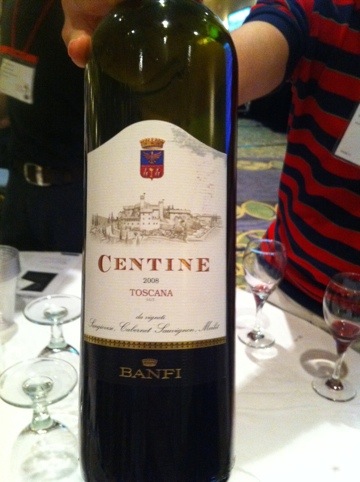
Going back to bottled wine, this is the 2008 Centine by Banfi. It’s a Tuscan blend, based on sangiovese. It’s in the $10-12 price range, so we’re back in our neighborhood. The nose on the wine doesn’t scream “sangiovese” to me, but it’s still pleasant. The palate has nice bright acidity and some tasty fruit. It’s not bad at all for a bargain-priced Italian red.
2008 WillaKenzie Pinot Noir is the next wine. It’s a really vibrant wine on the nose with bright red berry aromas. The palate is also really vibrant, with outstanding acidity and plenty of fruit. This is a tasty, tasty wine. We’re moving so quickly that I don’t have time to dwell on it. It retails for $41 and come from Oregon.
Now I’m tasting my firs Virginia wine of this tasting. It’s a wine called Engagement from Mountfair and it’s the 2009 vintage. It’s a red blend of Merlot, cabernet franc, cabernet sauvignon and petit verdot. It sells for $25. The nose is really interesting on this wine, with plenty of vanilla and spicy red berries. The oak seems a little out of balance on the palate to me (too heavy), but it’s still a nice wine. It has a nice mouthfeel.
Here’s another Virginian wine called CasaNoVa from Tarara Winery, and it’s also a blend. The nose has a nice blend of red berry and herbal aromas. This wine has a nice, silky feel in the mouth with rich berry flavors. It’s a very tasty wine and retails for $50.
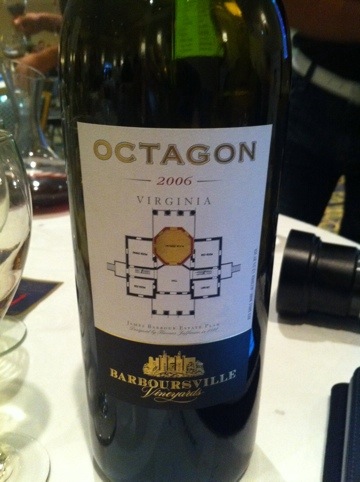
The final for me in this tasting is the 2006 Octagon from Barboursville Winery and it’s a Bordeaux style blend. This is one of my favorite wines I’ve tasted in Virginia and I’d have to say, one of the best all-around producers in the area, based on what I’ve tasted while here. It’s a very elegant wine with a beautiful, harmonious nose. The palate is silky and delicious. With very good depth and structure. The owners of this winery also own a number of vineyards in Italy. It’s a superb wine! Ciao ciao.
Today I am at the 2011 North American Wine Bloggers Conference in Charlottesville, Virginia. And you may be asking yourself, “Why the hell is there a wine bloggers conference in Virginia?” Well, there is actually some very tasty wine made here… it doesn’t all come from California. I haven’t had a chance to taste much Virginian wine yet, but I’ve had some. In fact, this morning I tasted Virginian viognier, cabernet franc and even a nebbiolo that were really nice, all from Barboursville Winery. And we’re about to taste more wine from Virginia and other regions.
Live blogging at these conferences is like a speed dating version of wine tasting. A producer comes to our table and gives us a sample of their wine, tells us about it and we can write about it, all within a couple minutes. It’s really fast. This is my third year doing it and the first year I took it really seriously and tried to get detailed notes on all the wines, but now I know better and I just have fun with it. I’ll highlight a couple wines that stand out.
We are actually doing two live blogging sessions, one today and one tomorrow. The one today is all white, rose’ and sparkling wines.
So far we’ve already had a couple sessions. Jancis Robinson gave the keynote to get the event rolling, and she had great advice for aspiring wine writers, as one would expect from her. Here’s a picture of the scene for that.

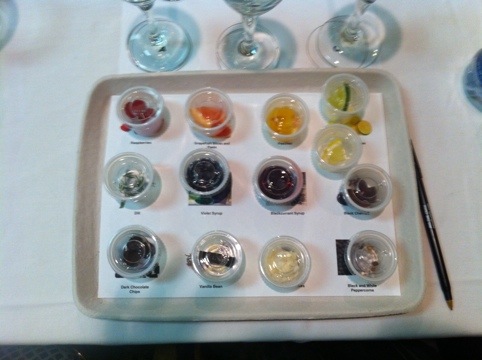
After that, I attended a session on aromas in wine wherein we practiced our craft of detecting aromas in wine with six wines and a tray full of comparative aromas. This is always a fun exercise and something you can’t practice too much, if you want to better your wine assessment abilities. Here’s a picture of the aroma tray.
Alright… so bring on the live blogging! I’ll be updating this post as the tasting goes on.
First up, is wine from Texas! WTF?! It’s the 2009 Viviana from Llano Estacado Winery, which is mad from a blend of gewurztraminer, riesling, viognier and muscat canelli. It’s very aromatic with a touch of honey, lychee and herbal aromatics. It smells like it would be sweet, but it is a dry wine. The flavor profile is focused on citrus. It’s crisp and refreshing and much better than you’d expect from a hot, dry place like Texas. Nice job! The suggested retail price is $22.95.
The next wine is a rose’. (Note: I’m typing this on my iPad and it takes too long to dig out the special character for the ‘ over the e). This wine is from Chateau Morrisette. It has a nice delicate, lime and mineral aroma. The flavors bring a hint of strawberry, but it’s dry not sweet, along with apple and citrus. This one is from Virginia. It’s another nice wine.
Next up is the Boxwood Estate Rose’ which is made from juice pulled off from their red wines. This one is another lime and mineral story on the nose. In the mouth it’s a touch of apricot, a touch of pear and a touch of citrus. Nothing too intense. This one comes from Middleburg, Virginia.
Back to the white wines, this is a viognier from Baboursville Vineyards. I actually tasted this wine earlier today and it’s a really nice one. Viognier does very nicely in the Virginia area. This is a nice aromatic wine with good floral characteristics as well as some citrus. On the palate, it’s very citrusy. Sometimes viognier can be a bit oily in mouthfeel and sometimes a bit more crisp, this one is on the crisp side. It’s great. I love it!
Tabarrini Adarmando is the next wine, and it’s Italian. So, we’re leaving the country now. This is a deep golden color. It has a nice deep aroma with notes of petrol and hay and other herbal aromatics. The palate brings some cooked pear flavors and citrus, with nice intensity. It’s a fun wine.
Now we’re coming back to Virginia for another viognier from Michael Shaps. The aromas are floral in nature (of course) and I’d say, lanolin. The palate has a really nice crispness with great acidity and citrus flavors. This particular wine comes from a bottle, but the producer says they are also doing a bag-in-box wine that retails for the equivalent of $7.50 a bottle! I can say that the one from this bottle is great. I’d like to try the one in the box too.
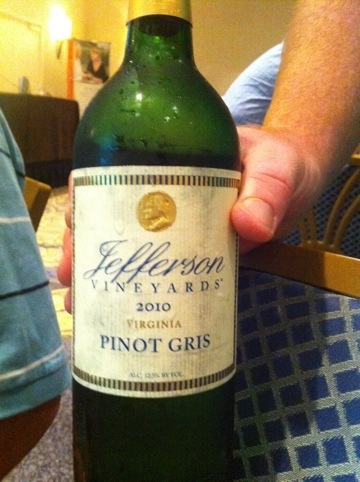
Jefferson Vineyards brings the next wine, a Pinot Gris. It’s grown on land that was at one time owned by Thomas Jefferson. It smells nice a crisp with lime aromas, and it tastes crisp too, with lime and mineral flavors. It retails for $18.95.
OK, so we’re tasting some California wine while we’re here. This is a sauvignon blanc from Sivas-Sonoma, which is part of the Sabastiani family. This is a nice, grassy and grapefruit smelling sauvignon blanc which has outstanding aromatics. The palate is grapefruit, apple and mineral. It’s very nice. Much better than many Californian sauvignon blanks that I’ve tasted.
The next wine is from Maycas, and it’s a chardonnay from the Limari region in Chile. This is an oaken chardonnay, in French oak. It’s a very crisp chardonnay, with nice citrus flavors making it apparent that it didn’t undergo malolactic fermentation. A+
Coming back to Virginia, the next wine is the 2010 Verdejo from Keswick Vineyards – which is the only Virginian verdejo you can buy. It’s a delicate wine on the nose, with soft citrus aromas. On the palate, it’s crisp with delicate citrus and mineral flavors.
Tarara Winery in Leesburg presented the next wine, which is a blend of chardonnay and viognier. This vineyard is right off the Potomac River and they try to show that terroir in this wine. It has very herbal aroma. The acidity in this wine is bright. There’s an herbal flavor in this wine too. It’s a big angular, but distinctive and interesting.
The final wine of this tasting is from The Williamsburg Winery, and it’s their 2009 Chardonnay. It’s a burgundian-style chardonnay made with a combination of stainless steel and oak fermentation. The oak aromas are light, definitely not overdone. The palate is approachable and had a nice balance of fruit and earthy flavors. It retails for $14, which is a great deal for this wine. It’s a nice one and a great food wine.
And that’s all for this tasting. Cheers!
I was just going through my tasting notes and I discovered that I still had notes for this wine from the sauvignon blanc series we did earlier this year, but somehow I neglected to publish this review at that time. And since it’s such a hot summer day, sauvignon blanc is the perfect wine to highlight today!
Another unique coincidence with this wine is that it’s from Paso Robles, California, which is the theme in my latest column in Mutineer Magazine — which just hit shelves last week. So there’s another good reason to highlight this wine.
Those who are regular readers here might know that I tend to favor sauvignon blanc from Chile more than that from California. But this one from Tarrica Wine Cellars, while not an overwhelming tropical fruit experience (like some of my favorites from Chile), is still a pretty good wine.

Balance is the story that this wine tells. It shows a nice balance of fruit, acid and mineral — three things that make for a beautiful sauvignon blanc. The aromas from this wine reflect apple, mango, citrus and wet stones. The palate gives good acidity, with apple and lime drenched mango flavors. It finishes with a nice touch of acidity and a cooling mineral characteristic. This is a nice wine.
Wine: Tarrica Wine Cellars Limited Release
Variety: Sauvignon blanc
Vintage: 2009
Alcohol: 13.5%
Rating: 87
Price: $10.66
Find Tarrica Wine Cellars Limited Release Sauvignon Blanc with Snooth
Disclosure: This wine was received as a sample.
I’m really excited by some of the wines coming out of Cline Cellars these days. They’re producing a number of Rhone varietals in California to create unique and very affordable wines. The latest one I’ve tasted from them is this Marsanne Roussanne.
If you’re not a regular consumer of Rhone varietals, you may find yourself wondering, “what the hell is Marsanne Roussanne?” Well, they are two very important white grape varieties in the Northern Rhone Valley and they’re often blended together. But finding wine made from these varieties in California isn’t that common. There are currently less than 250 acres of these two grape varieties combined throughout California. But I think you’ll start seeing more of this stuff coming out of California in the coming years.
As wine consumers venture out and try new wines, I think that marsanne and roussanne could become rising stars. They’ll never be as popular as chardonnay, but I think they’re prominence should grow on US wine shelves. I know that some of you are viognier fans and if you like viognier, then marsanne and roussanne are two varietals you should also explore. And if you’re cutting edge, you’re already drinking this stuff.

This wine is a blend of 71% marsanne and 29% roussanne. The marsanne comes from a vineyard in Carneros and the roussane comes from a vineyard in the Petaluma Gap. Both vineyards are within the Sonoma AVA. The wine was not oaked at all.
The nose on this wine presents an earthy fusion of mineral, herbal and floral aromas. The palate is vibrant and tangy, with lemon, lime and melon flavors. It finishes with lingering melon, peach and mineral flavors. This is a fun wine, but be warned that it’s quite different from other Californian white wines that you may be used to, like chardonnay or sauvignon blanc. This wine is less about the fruit and more about mineral and crisp acidity.
Wine: Cline Marsanne Roussanne
Variety: Marsanne (71%), roussanne (29%)
Vintage: 2010
Alcohol: 13.5%
Rating: 86
Price: $15.99
Find Cline Marsanne Roussanne with Snooth
Disclosure: This wine was received as a sample.
I haven’t done a roundup article in a while, so I thought it was time to give you a quick summary of the recent series we did on zinfandel.
For those who are new to zinfandel, think bold, spicy and fruity wines. These aren’t subtle wines — although some are more elegant than others. And by elegant I mean some are less “in your face” with the spice and big fruit, making an approachable wine that will pair well with a broader range of foods. The bigger, bolder zinfandels are your barbecue wines. They pair well with strong flavored foods, like grilled burgers.
No matter what style of zin you like, there are plenty of tasty options under $20. Here are some of our favorites.
Top Picks – Brazin Old Vine Zin & 7 Deadly Zins

There’s nothing subtle about Brazin Old Vine Zin. It has intense aromas, teaming with smoky fruit fragrances. The palate is equally intense, with big plum and black cherry fruit flavors, plus a bit of nutmeg-like spice. At $15, this is a great deal!

Right up there with Brazin is 7 Deadly Zins as another top pick. This wine features darker fruit, compared to the Brazin, and dark chocolate nuances to boot. It’s also a spicy zin, with a nice pepper note on the finish.
Best Value – Twisted Old Vine Zinfandel

While it’s a bit lighter than the others, Twisted Old Vine Zinfandel still offers plenty of ripe fruit flavors, good acidity and a touch of white pepper-like spice. And at under $7.00, it’s a steal!
Here’s the full lineup of our zinfandel recommendations:
Issue number 18 of Mutineer Magazine hits shelves today and my column in the magazine this month includes an overview of some great values to be found in Paso Robles—including this chardonnay from Stillwaters Vineyards.
When I visited Stillwaters Vineyards back in March, I not only appreciated their wines, but got a little insight from one of the owners, Paul Hoover, that I found perfect for readers of our website. He shared an example of how pruning techniques impact both the cost and the quality of wines.
When you prune grape vines, the number of buds you leave on each cane will directly impact how many grapes the vine produces. For those who don’t know, a cane is basically a branch on the vine. Each bud produces a cluster of grapes. Therefore, if you leave one bud on a cane, that cane will produce one cluster of grapes. Pruning this way intensifies the flavor in the grapes, but it also lowers crop yields. Leaving 2 buds per cane is more economical, but it lowers the quality of the grapes. Leaving 3 buds or more is pushing the vines too far and significantly lowers the quality.

Many of the more expensive wines are produced using a one bud pruning technique, while more economical wines use a two bud technique. To be clear, there are many other factors that impact the cost and quality of a wine. But I found this to be an interesting one that would be highly relevant to our readers.
I also found this particular chardonnay to be interesting. While chardonnay is still a very popular wine, I’ve noticed a trend over the past few years where more and more wine consumers are turned off by the classic Californian oaky and buttery chardonnays. The oakiness, obviously, comes from oaking, and the butteriness comes from malolactic fermentation. But more and more consumers, myself included, are turning toward “naked” chardonnays that have no oak or malolactic fermentation for a brighter, fruitier style. But another option lies somewhere between these styles. And that’s what Hoover has strived to achieve with this chardonnay.

The Stillwaters Vineyards chardonnay is oaked, but did not go through malolactic fermentation. The result is a wine that smells much like a traditional Californian chardonnay up front, with oak on the nose, but has crisp, fresh fruit flavors on the palate, with vibrant acidity.
This wine has a really nice vanilla fragrance on the nose (from the oak), along with a touch of banana. The palate comes alive with good acidity and bright fruit flavors like mango, banana, and pear. The lingering finish shows pear, light peach and touch of mineral.
It’s really a nice wine, but you’re not likely to find it in your local wine shop or restaurant, as Stillwaters sells most of their wine direct to consumers through their wine club.
Wine: Stillwaters Vineyards
Variety: Chardonnay
Vintage: 2010
Alcohol: 13.9%
Rating: 87
Price: $20.00
Disclosure: This wine was received as a sample. The author also visited the vineyard as a part of a press junket with the Paso Robles Wine Country Alliance.

 Prev
Prev