Do you know when Sauvignon Blanc Day is? Well, it’s not today. It actually happened a week ago, on June 21. I was planning on reviewing a sauvignon blanc on that day, but some last minute travel threw off my publishing schedule.
But since I’m back, why not celebrate Sauvignon Blanc Day today? After all, I don’t really need a special holiday to drink sauvignon blanc. And since my travel last week was to France, why not celebrate Sauvignon Blanc Day (a week late) with a French sauvignon blanc? And hey, it also happens to be my mom’s birthday today… so there’s another reason to celebrate! Happy birthday, mom!
This wine comes from the Loire Valley, and it’s actually a sauvignon blanc that we’ve reviewed in a previous vintage.
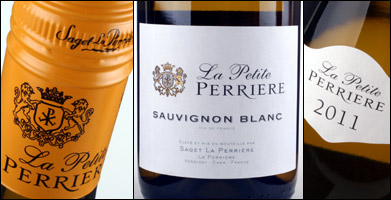
Stylistically, you’ll find that this sauvignon blanc is well balanced and refined. You might say it’s restrained if you’re comparing it to the bold, in-your-face tropical fruit explosion offered by new world sauvignon blanc. The nose is soft and subtle, offering aromas like melon, apple, citrus and mineral. There’s the slightest bit of cat pee aroma too. The palate brings peach, apple and grapefruit flavors, backed by stellar acidity. The finish is all peach and citrus flavors, which linger on and on, plus a touch of mineral.
Wine: La Petite Perriere
Variety: Sauvignon Blanc
Vintage: 2011
Alcohol: 12.5%
Rating: 86
Price: $11.00
Find La Petite Perriere Sauvignon Blanc with Snooth
Disclosure: This wine was received as a media sample.
In my last riesling review for Louis Riesling I mentioned how seeking rieslings from Germany would increase the likelihood that the riesling you buy is good. Well, within German wines Mosel is a region you’ll see often. It’s the third largest region in the country, but seems to be the most prominent region internationally. It’s best known for its riesling, which tends to be high in acidity and typically offers pronounced floral aromas. And if you know anything about German geography, you can probably guess that the region runs along the Moselle river.
Coming from a region that has a long history with winemaking, and a region where many wine producers have a heritage spanning centuries, Clean Slate seems rather contemporary. Its positioning has nothing to do with a long-standing family history. Instead it has been given a name that is a fun and rather modern play on words. The label design also stands out from other German riesling as being a bit more modern. But that break from tradition doesn’t mean they’ve sacrificed at all on quality.
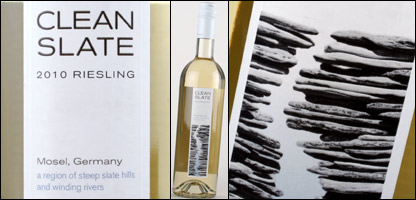
The nose on this riesling is quite nice. It offers aromas like lemon, bath salts and rose with moderate intensity. And when I say bath salts, I don’t mean some crazy drug that makes you eat someone’s face off, I mean the stuff you put in your bath. It’s a combination of mineral and floral fragrances.
The palate brings even more excitement with a vibrant tart-yet-slightly-sweet flavor profile. It features tart apple, peach and lime flavors with outstanding acidity. It finishes with a touch of salt, a touch of lime and a touch of peach. This is a solid wine and an exceptional bargain!
Wine: Clean Slate Riesling
Variety: Riesling
Vintage: 2010
Alcohol: 10.5%
Rating: 89
Price: $10.00
Find Clean Slate Riesling with Snooth
Disclosure: This wine was received as a media sample.
It amazes me how many times I’ve heard people say “I don’t like riesling” because whenever I hear that, I think “you haven’t tried the right riesling.” This is truly a misunderstood wine and one where you can find as many bad ones as good ones. And so, I can understand why it has a bad rap with some people.
But if you want to reduce the likelihood that the riesling you’re going to taste is a bad one, there are a few things you can do. One of those things is to buy a German riesling. Of all the rieslings I’ve tasted in my life, there are very few German ones I’ve tasted that I haven’t liked. That’s not to say that there aren’t any duds coming from Germany, but proportionally the majority are good… really good. And this riesling from Louis Guntrum is no exception.
The Louis Guntrum estate lies on the banks of the Rhine river in Rheinhessen between Oppenheimer and Nierstein. Like many European winemaking families, the history of the Guntrum family’s involvement with wine goes back for generations. All the way back to 1648. But, of course, they’ve also modernized their techniques and processes over the years.
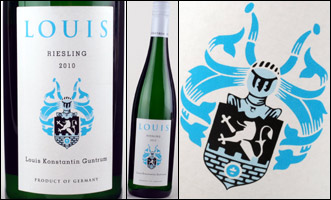
This wine is subtle, but pleasant on the nose with soft floral, citrus and mineral aromas. The palate is semi sweet, yet tart at the same time, with perfect acidity. It offers citrus-drenched apple flavors that linger into a long finish. This wine is bright, lively and downright delicious—which is, perhaps, the most important quality a wine can have.
Wine: Louis Konstantin Guntrum – Louis Riesling
Variety: Riesling
Vintage: 2010
Alcohol: 9.5%
Rating: 89
Price: $13.00
Disclosure: This wine was received as a media sample.
Perhaps it’s just my yearning to be unique, but I really enjoy checking out wines that are atypical. Let’s face it, it’s fun. And it’s a great way to learn about different wines, as well as different regions. After all, what’s atypical in a Cincinnati supermarket may be an everyday occurrence elsewhere, like Germany.
And that, I suspect, is the case with Silvaner. It’s a wine that most of my friends have never heard of, but it’s pretty common in Germany. This one from Graf von Schönborn comes from Franken area of Germany, which is really known for it’s Silvaner as it’s considered the most noble grape of the region. It’s a productive grape in this region too. Although it’s sensitive to frost, it is an early ripening variety and a good match for the climate in Franken.
The wines made from Silvaner are mostly known for their naturally high acidity. And if you’ve been reading this site for long, you probably know that we love a wine with good, crisp acidity.
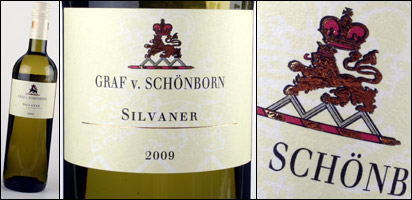
This wine has a rather simple but elegant nose. The aromas are clean and refreshing with characteristics like pear, honeysuckle, melon and mineral. The palate is equally elegant, featuring peach, melon and pear flavors. It also has a nice salty aspect to it. The acidity is spot on and the finish is quite long with salty peach flavors.
All told, this is a great example of a Silvaner and a reasonably-priced way to try something unique… well, unique if you don’t live in Franken.
Wine: Graf von Schönborn
Variety: Silvaner
Vintage: 2009
Alcohol: 12%
Rating: 88
Price: $16.00
Find Graf von Schönborn Silvaner with Snooth
Disclosure: This wine was received as a media sample.
Cremant is a name given to French sparkling wines that don’t come from Champagne. And that’s what this wine is, a Cremant d’Alsace (from Alsace).
Not only am I a fan of cremant, because you can often find much better values in cremant than Champagne, but I’m also a big fan of Alsacian wines. Alsace is on the eastern side of France, bordering Germany, and was at one time a part of Germany. The region is best known for crisp white wines, including aromatic riesling and gewürztraminer, but they also produce some fantastic cremant… and this one is no exception.
The grapes in this one are 80% Pinot Blanc and 20% Pinot Noir and come from different vineyards in both northern and southern Alsace.
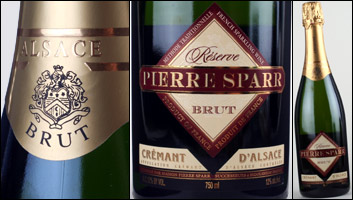
The aromas aren’t very powerful on this wine, but it does show some apple, yeast and mineral characteristics. The palate, however, has plenty of intensity and outstanding flavors, like lime, apple, yeast and mineral. The acidity is perfect and the mouthfeel is superb. Some sparkling wines are more bubbly than others and this one is super bubbly. The finish is long with tart citrus flavors and a touch of saltiness.
While I’ve listed the price here as $20, I’ve seen it retail for as little as $16.
Wine: Pierre Sparr Réserve Brut
Variety: Cremant d’Alsace
Vintage: non-vintage
Alcohol: 12%
Rating: 90
Price: $19.99
Disclosure: This wine was received as a media sample.
Tonight it’s time for a double-header review from one of my favorite new small winery discoveries, SPELLwine. Both wines are red blends from Napa Valley, both are super tasty and both have crazy-fun labels.
The woman behind this wine, Kristen Spelletich, told me that she only sells her wine through retail and direct. She said that restaurant buyers have told her that “they can’t have a bottle that looks like that sitting on the table.” Really? I think she’s talking to the wrong restaurants. I’d love to dine at a place that’s un-stuffy enough to put these on the wine list. I mean, how fun would it be to have a fancy dinner with a bottle called Severed Head Red on the table?
Seriously, I think the labels are bright and eye-catching but their not offensive. Would you be turned off seeing this sitting on your table at a restaurant?
Regardless of the design, the juice that’s in these wines is superb. Both are from the 2006 vintage too, so you get a wine that has a few years of maturity to it and is tasty now, but they both certainly have a number of years left in them if you want to tuck a bottle away for a while.
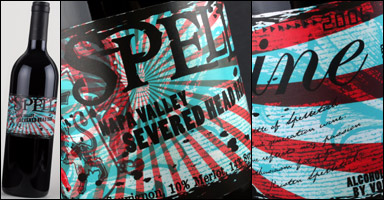
SPELLwine Severed Head Red
This one is a blend of 76% cabernet sauvignon, 10% merlot and 14% syrah. Wowee does this show a lot of spice on the nose. It offers nutmeg, allspice and cedar aromas with intensity that’s intense! There is also plenty of blackberry and cherry mixed in with that. There’s nothing subtle about the palate either. It has big, concentrated flavors like blackberry, cherry and plum. And while it’s big, and aggressive, it’s not jammy or offensive. It’s harmonious and delicious. I say, well done!
Wine: SPELLwine Severed Head Red
Variety: Red blend
Vintage: 2006
Alcohol: 14.8%
Rating: 91
Price: $18.00
Find SPELLwine Severed Head Red with Snooth
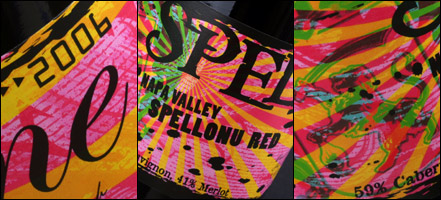
SPELLwine Spellonu Red
This one is 59% cabernet sauvignon and 41% merlot. The nose on this wine is rather aggressive, with strong toasted oak, black currant, cherry and spice aromas. The palate is a bit more tame, and delicious, with loads of ripe cherry, blackberry and plum flavors. It also offers a nice, spicy kick on the palate. The mouth feel is fantastic, with tannins that grab a hold of the roof of your mouth. The finish is quite long with spicy cherry flavors.
Wine: SPELLwine Spellonu Red
Variety: Red blend
Vintage: 2006
Alcohol: 14.6%
Rating: 88
Price: $15.00
Find SPELLwine Spellonu Red with Snooth
Disclosure: These wines were received as a media sample.
One of the things that makes wine such a fun beverage (besides the obvious) is the vast variety of option out there. It’s always fun to try something new, or as in this case, try a varietal you’ve tasted before vinified in a totally different way.
Carmenere is the lost grape of Bordeaux that was rediscovered in Chile. It is typically used to create tasty, dark red wines. But here’s a fun rosé version of this varietal that is actually quite awesome!
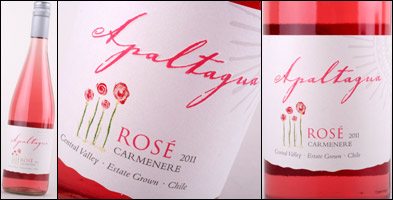
Cherry and mineral aromas blend harmoniously on the nose of this rosé carmenere. The palate is lively, with plenty of acidity providing a solid backbone to the fruit. It starts out with tart lime and apple flavors up front, but evolves into cherry flavors on the finish, which is exceptionally long. The wine also has a little bit of spice on the palate, which makes this wine even more enjoyable. This would be a fabulous salad wine.
Wine: Apaltagua Rosé Carmenere
Variety: Carmenere
Vintage: 2011
Alcohol: 13.5%
Rating: 88
Price: $11.00
Disclosure: This wine was received as a media sample.
More rosé. Yay!
This one comes from Rioja, Spain, which is probably the most well-known Spanish wine region in the US. It’s a region that lies at the confluence of the Pacific, Mediterranean and continental climate influences in Spain.
The wine from El Coto is made from 50% Garnacha from an estate named “Los Almendros” Ausejo (Rioja Baja) and 50% Tempranillo from Rioja Alavesa. The “Los Almendros” estate is land that was previously used for almond groves, hence the name.
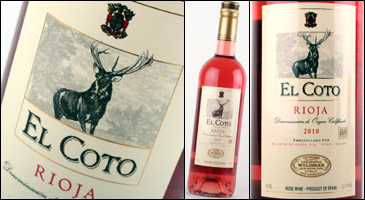
The nose on this wine has a spectacular rose aroma, along with raspberry and strawberry. The palate is quite tasty too, offering strawberry and ripe black cherry flavors up front, evolving into a squeeze of lime and a dash of pepper on the finish. The acidity is sufficient, and the mouth feel is good. This would go beautifully with spicy Thai food.
Not only is this a very tasty rosé, but it’s also a great value, with a price of only ten bucks!
Wine: El Coto Rosé
Variety: Rosé blend
Vintage: 2010
Alcohol: 13%
Rating: 88
Price: $10.00
Find El Coto Rosé with Snooth
Disclosure: This wine was received as a media sample.
We’ve been reviewing a lot of sparkling rosé wines lately, but rosé can also be a great wine in still form. This one from Calcu comes from the Colchagua Valley in Chile, one of my favorite wine regions when it comes to finding great values.
If you closed your eyes and smelled this wine you might guess it to be a sauvignon blanc, due to the intense tropical fruit aromas. But this wine is 55% malbec, 35% syrah, and 10% petit verdot — varietals much more associated with deep, dark, rich wines than a dry, acidic and tropical rosé.
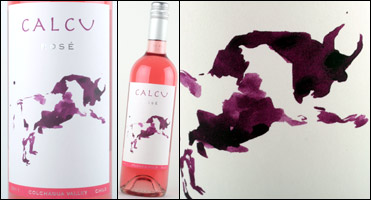
The nose is dominated by deep peach, grapefruit, pomegranate and floral aromas. The palate also offers plenty of peach, along with green apple, lime and mineral flavors. The acidity is sufficient, although a touch more would have made it even better. It finishes with a tart apple and pomegranate flavor. This is a cool wine.
Wine: Calcu Rosé
Variety: Rosé blend
Vintage: 2011
Alcohol: 12%
Rating: 87
Price: $13.00
Find Calcu Rosé with Snooth
Disclosure: This wine was received as a media sample.
All of the sparkling rosé wines we’ve reviewed recently have been on the dry side. Brut, to be precise. But not every bubbly wine drinker is into the dry wines, so let’s check out one that’s off dry (i.e. slightly sweet).
The Martini Sparkling Rosé is an Italian sparkler made from a blend of brachetto, malvasia and moscato bianco from Northern Italy.
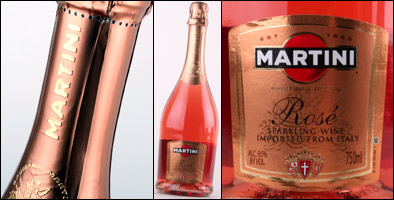
This wine has a pretty interesting bouquet, showing a blend of strawberry, rose and tropical fruit aromas. The brachetto appears to be the dominant grape in the blend, adding the strawberry characteristics. The palate is slightly sweet and brimming with ripe berry and peach flavors. I would have liked a touch more acidity to balance the sweetness, but I think many who prefer sweeter wines will enjoy this one.
For food pairings, go with rich, creamy cheeses. Or try it with fruits like peaches and apricots.
Wine: Martini Sparkling Rosé
Variety: Sparkling Rosé
Vintage: N/V
Alcohol: 9.5%
Rating: 84
Price: $13.99
Find Martini Sparkling Rosé with Snooth
Disclosure: This wine was received as a media sample.

 Prev
Prev