One major wine region that I’ve severely neglected on this site is South Africa. It’s not intentional. There’s just so much good wine from elsewhere that my taste buds have been preoccupied. But it’s time to give South Africa a taste.
I’ve heard from some of my wine-geek friends that South African wines are something to rave about. But I honestly haven’t tasted many of them in my life and don’t know much about the region. So you can learn along with me as I explore South Africa — or help educate me if you’re already a knowledgeable connoisseur of these wines.
The wine I’ve tasting today comes from the Kanonkop estate, a fourth generation family-owned estate that produced its first estate-bottled wine in 1973. It’s located in the Stellenbosch wine region, which is the largest wine region in South Africa. It has a Mediterranean climate and is becoming and a wide range of soils. The region is gaining a reputation for exceptional cabernet sauvignon.
This wine is a blend of 57% pinotage, 26% cabernet sauvignon, 14% merlot and 3% cabernet franc.
The name Kanonkop means “Canon Hill” which come from a time when canons were fired to signal the arrival of Dutch trade ships in the Cape Town harbor. And I think this is the first wine I’ve tasted that features weaponry on the label. Hey, that’s much better than cute critters.
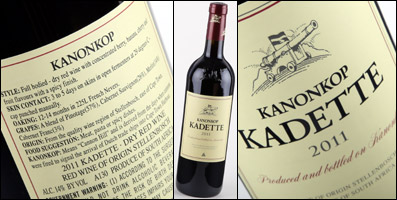
This wine has sultry red berry aromatics with a spicy edge. It’s absolutely beautiful on the nose. The palate is medium-bodied and has a perfect balance of earthiness and fruitiness. It offers spicy red raspberry and cherry flavors, layered with nutmeg and minerals. The acidity is superb and the mouthfeel is nice. The finish is relatively long. Overall, this is a fantastic wine and an extraordinary value!
If this is what I can expect from South African wines, I’ll definitely need to dig deeper into this region.
Wine: Kanonkop Kadette
Variety: 57% pinotage, 26% cabernet sauvignon, 14% merlot, 3% cabernet franc
Vintage: 2011
Alcohol: 14%
Rating: 90
Price: $14.99
Find Kanonkop Kadette with Snooth
Disclosure: This wine was received as a sample.
Our last post was about an outstanding cabernet sauvignon, so let’s check out another.
This one, from BenMarco, comes from the Mendoza region in Argentina.
Every time I taste a wine from Argentina I ponder whether to call it “Argentine” or “Argentinian.” It turns out both are acceptable. Argentinian tends to be used more by Europeans, which of course makes it fancier. And while I appreciate European culture, I’m all about concision. Argentine has two fewer syllables and therefore it gets my vote. I’ve also heard somewhere that the correct usage would be Argentine wine, made by Argentinians.
But we’re not here to debate nuances of language, we’re here to taste wine. And this is a really good one.
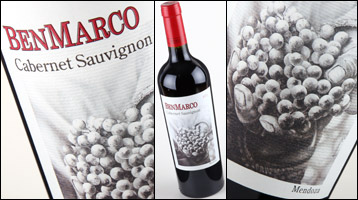
The nose of this wine is just lovely, with powerful vanilla, dusty blackberry and black currant aromatics. It’s quite good on the palate too, offering well-concentrated blackberry, cherry, plum and currant flavors that are harmoniously balanced. The acidity is great too, giving the wine a vibrant liveliness. Soft tannins add a slight texture to the mouthfeel. This is a very tasty and extremely drinkable cabernet.
Wine: BenMarco Cabernet Sauvignon
Variety: 90% cabernet sauvignon, 5% cabernet franc, 5% merlot
Vintage: 2010
Alcohol: 14%
Rating: 90
Price: $20.00
Find BenMarco Cabernet Sauvignon with Snooth
Disclosure: This wine was received as a sample.
It has been a while since I’ve reviewed an Australian cabernet sauvignon, but when I tasted this wine I knew it was time to change that.
This is a delicious wine from the Barossa region in Australia and comes from Château Tanunda, the oldest and largest château in Australia. Its history dates back to 1890 and the estate is responsible for some of the earliest grape vines in the Barossa Valley. But while the château has a long history, it has had its ups and downs. In the past 15 years it has been going through a revival, since John Geber purchased the estate in 1998.
The Château Tanunda brand is part of the Banfi portfolio of wines.
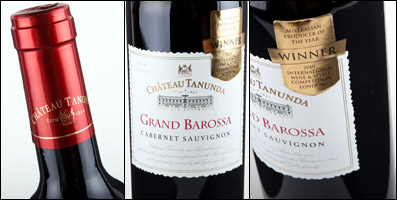
The nose on this wine has just what I would want from a cabernet sauvignon—a harmonious blend of aromas like black currant, black cherry, vanilla, leather and blackberry. All of that comes with just the right amount of intensity. In the mouth this wine is juicy and delicious, with plenty of ripe black currant, blackberry and blueberry flavors and a smooth mouthfeel. There’s just a touch of baking spice flavor too. The finish is quite long, with tasty ripe berry flavors lingering on and on. This is a fantastic wine.
Wine: Chateau Tanunda Grand Barossa
Variety: 90% cabernet sauvignon, 5% cabernet franc, 5% syrah
Vintage: 2010
Alcohol: 13.5%
Rating: 90
Price: $16.00
Find Chateau Tanunda Grand Barossa Cabernet Sauvignon with Snooth
Disclosure: This wine was received as a sample.
I love to try different wines. And this is one of those wines that isn’t totally off the wall, but it’s something you don’t come across every day.
If you’ve ever had a Cotes du Rhone there’s a chance you’ve tasted carignan, but it’s probably less likely that you’ve tasted a wine that is 100% carignan.
This is actually the second vintage of this wine I’ve tasted. Last year I reviewed the 2010 Meli Carignan. As I noted in that review, carignan from young vines can be rather astringent. But the grapes in this wine come from vines that are 60+ years old.
The 2011 vintage brings a bit more spice and floral aromatics than the 2010. And it’s consistent in overall enjoyability.
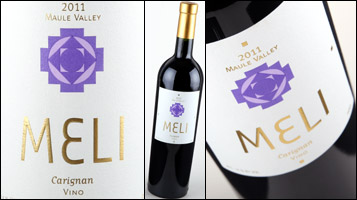
Flower, fruit and spice aromatics make the nose of this wine interesting and enjoyable, offering aromas such as violet, black cherry, plum and coffee. The palate is well balanced and has good fruit flavors such as blackberry, raspberry and plum with a touch of spice. The acidity is good and the tannins are subtle but give a touch of texture to the mouth feel. The finish is medium in length and features cherry and raspberry flavors.
Wine: Meli
Variety: Carignan
Vintage: 2011
Alcohol: 14%
Rating: 86
Price: $15.00
Disclosure: This wine was received as a sample.
My last review was the Banfi Chianti Superiore—a really good value wine. Tonight I’m checking out another Chianti, Cecchi Natio, which is also part of the Banfi portfolio of wines.
This one bears the Chianti DOCG designation, which is the broadest zone and includes all of the sub-zone appellations and then some.
It is also made with organic grapes. And the phrasing of “made with organic grapes” is used versus “organic wine” because sulphites are used in the winemaking process.
As a wine from the broad zone, theoretically you might think that it should be lower quality than the wine from Chianti Superiore. But as they say, don’t judge a wine by its label.
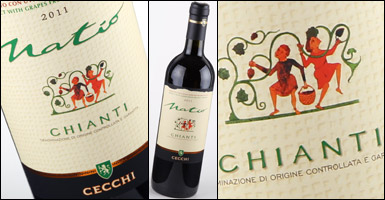
This Chianti is well-balanced and complex. The aromatics are dominated by spicy notes, such as nutmeg and allspice, but there’s also plenty of fruit on the nose, such as cherry and raspberry. In the mouth a vibrant acidity and moderately-rich tannins give a nice mouthfeel and a liveliness to the flavors. It offers flavors like cherry, plum and raspberry. The finish is quite long and very nice. This is a tasty Chianti and a great value.
Wine: Cecchi Natio Chianti
Variety: 90% Sangiovese, 10% Colorino
Vintage: 2011
Alcohol: 13%
Rating: 88
Price: $15.00
Find Cecchi Natio Chianti with Snooth
Disclosure: This wine was received as a media sample.
I love a good Chianti. It’s my “comfort food” wine. If you’re eating simple Italian food, particularly the Americanized versions such as pizza and pasta, you can’t go wrong with a good Chianti.
But, as I’ve said before, Chianti is confusing. There are so many zone and sub-zone classifications that I don’t know how the average consumer is expected to keep it all straight. I deal with wine every day and even I still get confused about what the different classifications mean. And the differences aren’t necessarily indicative of quality anyway.
Let’s face it, most wine consumers couldn’t tell you which is which if they were tasting a Chianti Classico, next to a Chianti Superiore, next to a Chianti Rúfina. Me included. So why does it all matter? Maybe it doesn’t. Although one important factor the designations do indicate is the length of aging the wines experience prior to release. That said, the aging requirements are similar for many different Chianti designations.
If you like Chianti, in general terms, and want to really get to understand it, where do you start? I would say, anywhere you want. Try a few different ones and when you find one that you like, focus on that designation for a while. Then branch out to some other designations.
This one from Banfi is a Chianti Superiore, which means it’s from the zones outside of the Chianti Classico region. It also means that the wine is aged for a minimum of 9 months, with at least 3 in the bottle, before release.
One of the things I like about this wine before I even taste it is the price. Chianti is a fairly popular wine, which results in the price of good ones often being north of $20. But the average retail price for this one is a mere $9.00. That’s a deal… if the wine is any good.
Another thing I like about this wine before I taste it, although it’s nothing unique to this brand, is the paper strip on the neck label. You’ll often see these on Italian wine as a “seal of authenticity” for a specific region. Given that wine is an experiential thing and opening the bottle is part of the experience, I’ve noticed that there’s something about this little paper strip that I like. Does anyone else like these?
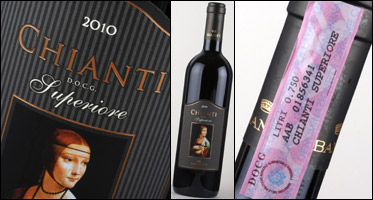
The nose is rather tight, but does reveal some raspberry, tobacco and floral aromas. It’s also fairly light on the palate, offering tart cherry and plum flavors, with a slight peppery kick. The acidity is really good and the tannins are sufficient. It finishes with sour cherry and raspberry tea flavors. As I would expect from a good Chianti, this wine is really food friendly.
Honestly, it’s not the most exciting Chianti I’ve tasted. But it’s good. And for under ten bucks, it’s a steal!
Wine: Banfi Chianti Superiore
Variety: Chiani blend (predominantly sangiovese)
Vintage: 2010
Alcohol: 13.5%
Rating: 85
Price: $9.00
Find Banfi Chianti Superiore with Snooth
Disclosure: This wine was received as a media sample.
I thought it would be interesting to compare two wines from the same producer, same vintage, same grape but from different parts of California and sold at different price points. This could be filed under the “are more expensive wines better?” category. Spoiler alert: In this case the more expensive wine was quite a bit better.
These are two cabernet sauvignons from Robert Mondavi. And certainly these aren’t the only two labels of cabernet sauvignon that Robert Mondavi produces, but it’s a nice comparison of a cheap one with a mid-priced bottle.
The less expensive of the two retails for about $11 and is from the Central Coast region, which is roughly between Santa Cruz (south of San Francisco) and Los Angeles. It’s sold under the “Private Selection” label, which sounds like something that should be premium, after all it’s a “private” label! One point for smart marketing.
The other wine sells for $28 and bears the “Napa Valley” label, hence it comes from the Napa Valley region.
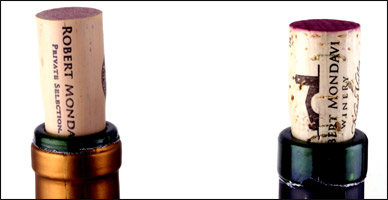
Before I even taste the wines I already have a grudge against the Private Selection due to the cork selection. The Napa Valley label is bottled with a natural cork, which comes with some risk of flaws causing the wine to be corked. But the Private Selection bottle comes with a synthetic, plastic cork. While I know that there is less risk of contamination to the wine from this cork there is an experiential aspect to the plastic corks that really turns me off. I’d rather have a screw cap than this yucky, plastic, pretend-cork thing. I’m not against all synthetics, I’ve come across some from Nomacorc that have a more natural feel. But the one in this Robert Mondavi Private Selection bottle is the kind that makes me cringe. I’m taking back that point I gave for the marketing smarts!
OK, we’re back on an even playing field and it’s now just about the wine.
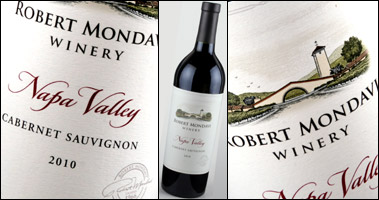
Robert Mondavi Winery, Napa Valley, Cabernet Sauvignon
The aromatics are intense from this wine, offering cedar, black cherry, blackberry, black currant and dusty earth fragrances. The palate is brimming with concentrated blackberry and currant flavors, but the mouth feel is what makes this wine stand out. It is smooooooth. The finish is also exceptionally long. This is a very good cabernet sauvignon.
Wine: Robert Mondavi Winery, Napa Valley
Variety: Cabernet Sauvignon
Vintage: 2010
Alcohol: 14.5%
Rating: 91
Price: $28.00
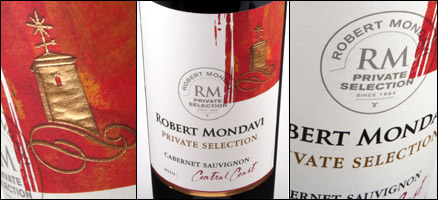
Robert Mondavi, Private Selection, Cabernet Sauvignon
The nose is pleasant, although a touch disjointed/unharmonious/angular, meaning the aromas are all good aromas, but they’re not necessarily synergistic or maybe it’s just a balance thing. It offers a strong black cherry aroma, along with some vanilla and leather (like a new leather wallet). In the mouth the fruit is led by a sour cherry flavor, giving an underipe characteristic. It’s very tangy. Other flavors include a bit of blackberry and plum. I would not describe it as “smooth.” It’s drinkable, but doesn’t compare to its bigger brother from Napa Valley.
Wine: Robert Mondavi, Private Selection
Variety: Cabernet Sauvignon
Vintage: 2010
Alcohol: 13.5%
Rating: 82
Price: $11.00
Find Robert Mondavi, Private Selection, Cabernet Sauvignon with Snooth
So, the more expensive wine is more than twice the price of the Private Selection. But is it twice as good? Not mathematically speaking (based on the scores). But yes, I would say, subjectively, the Napa Valley is twice as good as the Private Selection.
Disclosure: These wines were received as a media sample.
Last night I was invited to a #winechat on Twitter. The theme of was Austrian biodynamic wines. The biodynamic theme is tied to this being the week of Earth Day.
For those who for those who aren’t familiar with biodynamics, it is an approach to farming that incorporates organic techniques plus crop rotation, biodiversity and other holistic farming methods. It also can be a little on the new age side with farming activities based on the moon cycle and practitioners doing things like burying cow horns filled with ground quartz in the vineyards.
An actually I should call it Biodynamic® — in other words with a copyright symbol. It’s not just a practice but it’s a copyrighted designation and producers who want to call themselves biodynamic must pay for a certification from Demeter Association. I’m not against certifications, as it ensures some level of consistency. And I’m not against the idea of biodynamics — I mean, who could be against a holistic approach to agriculture? But something about that copyright symbol just makes it feel like marketing to me.
Ultimately, I think biodynamic is a good thing and I appreciate the practice. But I’m not hung up on it. If a wine tastes great and isn’t biodynamic or organic, I’ll still enjoy that wine.
Getting back to the #winechat. This is an event that happens every Wednesday night, with a different theme each week. This particular event was sponsored by the Austrian Wine USA and they sent out a few wines to a handful of writers like me to taste during the event.
I’ve done a few of these events before and I’m always amused by how seriously other wine peeps take themselves. They talk about soil, and oak, and how the racking of the wine was done, and several other “wine nerd” topics that 99% of wine drinkers couldn’t care less about. But this is wine we’re talking about! Just enjoy it!! So, I try to have fun with these events and typically make a number of sarcastic remarks. But nobody seems to get my humor and I think I may end up just irritating or offending the other participants. Have a drink and lighten up, folks.
But it’s not all fun and games for me. I actually learn some things. For example, last night I learned that 20% of the vineyards in Austria are organic. And that is the largest percentage of any European country.
And I discovered a few new wines that were mighty tasty. Here is an overview of those wines.
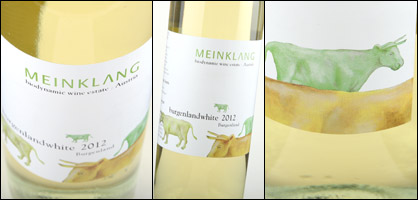
Meinklang Burgenlandwhite
This is a white blend from the Burgenland region in Austria, more specifically Neusiedlersee, and it includes 50% gruner veltliner, 40% welschriesling and 10% muskat.
This wine is a ripe basket full of fruit on the nose, with exciting aromatics like peach, lemon, pineapple and apple. It seems to evolve to new aromas with every sniff. The palate brings a bit of light effervescence and an ever-so-slight touch of sweetness with delicious peach and apple flavors, drizzled with citrus. The finish is looooong, with tangy peach flavors lingering for a near eternity. This is delicious.
Wine: Meinklang Burgenlandwhite
Variety: White Blend
Vintage: 2012
Alcohol: 11.5%
Rating: 88
Price: $15.00
Find Meinklang Burgenlandwhite with Snooth
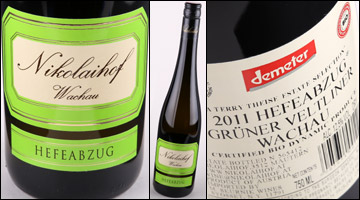
Nikolaihof Hefeabzug Grüner Veltliner
This wine is lively and beautiful on the nose, with pear aromatics leading the way, supported by apple, lemon and a touch of floral. The palate has an acidity that sings and gives vibrancy to the lemon, pear and lime flavors. There’s a bit of minerality that also comes into play on the mid-palate and into the finish. This is a very solid gruner.
Wine: Nikolaihof Hefeabzug
Variety: Grüner Veltliner
Vintage: 2011
Alcohol: 12.5%
Rating: 89
Price: $28.00
Find Nikolaihof Hefeabzug Grüner Veltliner with Snooth
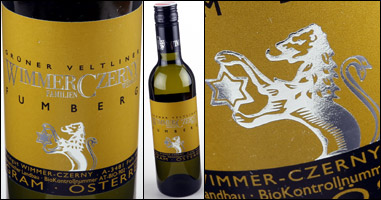
Wimmer-Czerny Fumberg Grüner Veltliner
The nose is soft with light fragrances of apple, mineral and white pepper. It’s slightly leesy too. The palate offers crisp apple and mineral flavors, with good acidity. The finish is quite long with apple peel and subtle yeast flavors.
Wine: Wimmer-Czerny Fumberg
Variety: Grüner Veltliner
Vintage: 2011
Alcohol: 13%
Rating: 88
Price: $17.00
Find Wimmer-Czerny Fumberg Grüner Veltliner with Snooth
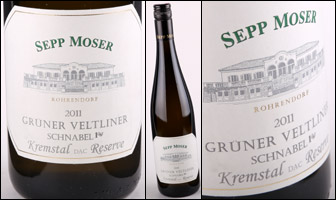
Sepp Moser Schnabel Grüner Veltliner
The minerality stands out on the nose of this wine, along with deep apple and an elegant spiciness. The palate also accentuates the mineral characteristics of the wine, with a chalk and flint quality. There is plenty of citrus too, but it’s as though it has the essence of lemon without the pucker. A touch of white pepper adds some spice to the mid-palate. The finish is all mineral, adding a touch of saltiness. For those who appreciate mineral-centric wines, this one’s a winner.
Wine: Sepp Moser Schnabel
Variety: Grüner Veltliner
Vintage: 2011
Alcohol: 13%
Rating: 90
Price: $27.00
Find Sepp Moser Schnabel Grüner Veltliner with Snooth
Disclosure: These wines were received as a media sample.
Last week, a colleague at my day job started picking my brain about wine. She told me that she recently graduated to pinot noir after years of drinking nothing but Champagne and disgustingly-sweet riesling. OK, I embellished with the “disgustingly-sweet” part, but that’s basically what it sounded like she was drinking. And then she told me about her favorite pinot noir, which I can’t remember the name of but it sounded like something with a cute label and lots of residual sugar—not my cup of tea. But it was a good reminder to me of the perspective of the everyday wine consumer.
As someone who tastes different wines every day and travels the world tasting some of the best wines out there, I have a different perspective than the average wine consumer. But that’s not where I started. When I first started writing about wine I was wowed by fruit-bomb wines, loaded with residual sugar, that tasted good despite being unsophisticated and out of balance. I can still understand the appeal of those wines, and occasionally I’ll still drink them. But I’m not ashamed to admit that I’ve become a wine snob. I often hear wine bloggers say that they’re “taking the snobbery out of wine.” Bullshit! If you critique wine, you’re a snob. Those of us who wax poetic about wine are all wine snobs and we’re all quite ridiculous to make such a fuss about wine.
But most wine consumers aren’t that fussy about their wine. They want something that tastes good to them. They often want to become “more knowledgeable” about wine, but ultimately if a wine tastes good to them it’s good enough.
Getting back to my colleague, she wants to broaden her palate and explore new wines. So she challenged me to find a new pinot noir for her that will be balanced, complex, interesting, tasty and affordable. (Again, I embellished a little bit, she just asked to find her “another pinot noir”).
This wine is my first stab at meeting this challenge. It will be a touch lighter than what she’s used to, but it still has plenty of fruit and some spicy aromatics to make it interesting.
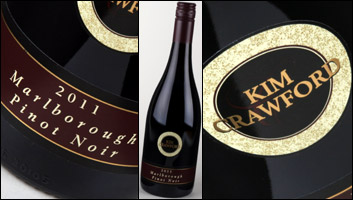
Sometimes when I pour a pinot noir it looks far too dense, but this one is just right with a light red appearance. The nose is well balanced and beautiful offering strawberry, raspberry, nutmeg, cedar and violet aromatics. There’s a lot going on here, but it’s harmoniously balanced. The palate is also quite nice, although a touch more concentration and density would have made it better—and I do mean just a touch. But the flavors are all good, such as cherry, raspberry and cranberry. There is a hint of bitterness on the finish, which I could do without. Good acidity, good mouthfeel. Overall, it’s a good, medium-bodied wine that’s best with food.
Wine: Kim Crawford
Variety: Pinot Noir
Vintage: 2011
Alcohol: 13.5%
Rating: 87
Price: $17.00
Find Kim Crawford Marlborough Pinot Noir with Snooth
Disclosure: This wine was received as a media sample.
Spring is definitely here, bringing warm weather with it. And warm weather means it’s time to enjoy some tasty white and rosé wines.
Rosé is far too often an overlooked wine. This one from the Colchagua Valley region in Chile is a good one to check out if you’re ready to delve into some rosé.

When it comes to the range of colors that can come to life in a rosé, this one is the perfect pink. When I close my eyes and smell this without thinking about the color, I might guess this to be a sauvignon blanc, which is peculiar given the fact that it has no sauvignon blanc in it. It is made from 50% malbec, 40% syrah and 10% petit verdot. But it has tropical fruit aromas similar to those found in sauvignon blanc, like grapefruit, peach and green pepper. It also has a nice wet stone aroma. The longer this wine opens up, the more prominent the peach becomes and the green pepper falls into the background.
The palate is dominated by citrus flavors, primarily lemon and grapefruit, and there’s also some peach flavor. There are some mineral qualities in the mid-palate and into the finish. The peach flavors also come in on the finish. The acidity is perfect and the mouthfeel is good. This is a great rosé.
Wine: Calcu Rosé
Variety: 50% malbec, 40% syrah, 10% petit verdot
Vintage: 2012
Alcohol: 12%
Rating: 89
Price: $14.00
Find Calcu Rosé with Snooth
Disclosure: This wine was received as a media sample.

 Prev
Prev