The Jacob’s Creek wine brand started back in 1976 and was named after a creek in the Barossa Valley, on the banks of which the first commercial vineyard in the region was planted. The grapes in this wine, however, don’t come from the Barossa Valley. Rather, they come from the Coonawarra region, which is south of Barossa Valley and is the southernmost wine region in South Australia. This is a cool region, with a maritime influence, that is known for its cabernet sauvignon.
Coonawarra is also a long ways away from Cincinnati, Ohio (where I’m tasting this wine) and I’m sometimes amazed at the idea that they can ship a bottle of wine from Australia, sell it for about ten bucks and still make a profit. Sometimes the things we take for granted are really pretty amazing when you step back and think about them.
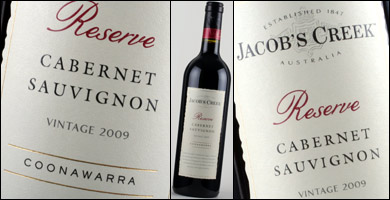
This wine is really bright on the nose, with lively cassis, beet and blackberry aromas. It also has a slight herbal note. The palate is also quite bright, with tangy cherry flavors leading the way and evolving into a plum flavor. The acidity is stellar, making this a wonderful wine to pair with fatty foods. The finish is relatively long and shows cherry and beet flavors. While some cabernet is just big and bold, this one is bright and exciting.
Wine: Jacob’s Creek Coonawarra Reserve
Variety: Cabernet Sauvignon
Vintage: 2009
Alcohol: 13.9%
Rating: 86
Price: $10.99
Disclosure: This wine was received as a media sample.
Huntington is a label that is part of the Hahn family’s portfolio of wines, which includes Hahn Winery, Cycles Gladiator, Hahn SLH Estate, Lucienne, Smith & Hook, Copa Del Rey, and Bin 36. Along with this assortment of wine brands, the Hahn family also owns the Mugie Ranch in northern Kenya, where the Hahns reside for part of the year. The Mugie Ranch is home to a school, a farm and a wildlife preserve. The Hahn family takes the proceeds from the sale of Huntington wines to fund higher education scholarship programs for Kenyan children.
All of Huntington’s wine labels offer artist’s renderings of scenes depicting the Kenyan people. This particular Huntington label showcases the Samburu ladies in blue, in a painting by the family’s own Gaby Hahn. A noble approach to wine making, and a very worthy cause indeed, but it still begs the question: how is the wine?
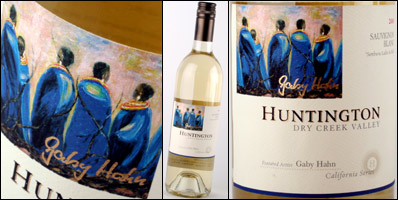
Huntington sources their sauvignon blanc from Dry Creek Valley, in the heart of Sonoma County. The nose of this wine is very fresh and balanced, offering crisp green pepper and citrus, particularly lemon, along with some tropical notes. On the palate the wine showcases a more elegant style of sauvignon blanc, in contrast to more intense styles from New Zealand and Chile. But there is also a distinctly racy backbone of citrus that stands out – a welcome element here that spritzes things up.
The Huntington sauvignon blanc has a relatively high 14.1% alcohol level, but the wine remains balanced through the finish. After tasting this wine for a bit, you’ll notice that it is considerably drier than many other sauvignon blanc’s at this price point. It’s not unpleasant, and I feel it adds some maturity to the character of this wine.
The Huntington should pair well with lighter foods, but it’s certainly enjoyable on its own. And oh by-the-way, it should serve your conscience well too.
A Salute!
Wine: Huntington
Variety: Sauvignon Blanc
Vintage: 2010
Alcohol: 14.1%
Rating: 86
Price: $14.00
Find Huntington Sauvignon Blanc with Snooth
Disclosure: This wine was received as a media sample.
We’ve been reviewing a number of cabernet sauvignons lately, but one wine we’ve come across that we really like is not quite a cabernet sauvignon, but rather is a red blend that is dominant in cabernet sauvignon. Anka is a blend of 57% cabernet sauvignon, 16% merlot, 15% cabernet franc, 7% carmemere, 4% syrah, and 1 % petit verdot. While a number of wines labeled as “cabernet sauvignon” have more than just that grape in them, technically than can be labeled as a single varietal if they have a minimum percentage of that one varietal. In Chile, where this wine is from, the minimum is 75%, so clearly this one is a blend.
Another thing you might notice on the label of this one is that it is “made with organically grown grapes.” It can’t technically be labeled as “organic wine” because they use sulphites in the winemaking process. And actually, as I look at the wording I have to raise an eyebrow. “Made with organically grown grapes” not made “of” or made “from” organically grown grapes. I’m not quite sure what they’re saying. Are there a few organically grown grapes or are they all organically grown? It looks like some careful language to me, but I’m just pondering questions here… I haven’t had the opportunity to talk with them to confirm how they made it.
So, you can label me as a lazy journalist 😉
This is a rather small production wine too, with less than 2,500 cases produced. And regardless of all the stuff written on the label I can tell you one important thing about this wine that’s not on the label. It’s really tasty!
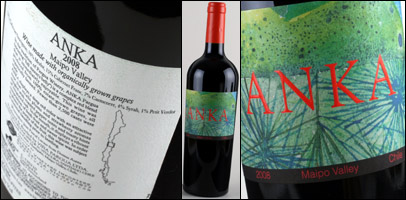
When I first poured this wine, the oak was the only thing that came through on the nose. And it came through like walking into my wood shop. But after letting the wine breath for a moment the fruit came out of its shell and brought together a solid and well balanced nose. Black cherry, blackberry, cassis, chocolate and nutmeg aromas blend beautifully and make smelling this wine really enjoyable. The palate has a silky smooth feel with loads of deeply-concentrated, ripe fruit flavors, such as blackberry, plum, cherry and chocolate. The finish is long and tastes like a chocolate covered cherry. This is a lovely wine.
Wine: Anka
Variety: Red Blend
Vintage: 2008
Alcohol: 14%
Rating: 90
Price: $20.00
Disclosure: This wine was received as a media sample.
While packaging really doesn’t tell you much about the wine inside the bottle, it’s a critically important element for wine producers. The truth is as consumers we often will buy the bottle that we think looks the best. But what do the looks of a bottle really tell us? Regardless of whether the label design is any indication of quality, I’d have to say that I really like the look of this wine. The design is simple, clean and attractive. So, this one scores well on the bottle design… but of course what we really care about is what’s inside the bottle. And fortunately, I was pleased with that too.
The name 337 comes from the name of the grape vines. In Bordeaux and Burgundy, each vine clone is given a unique identification number to help vintners identify how different vines perform. The producers of 337 wines saw something in the 337 vine that they thought would work well in the Bordeaux-like conditions of their Clay Station Vineyard in Lodi, California. Some 15 years ago they planted the vines and now they’re creating some luscious wine from them.
While some cabernet has other varietals blended in to shape the flavor, this wine is 100% cabernet sauvignon and 100% from the 337 vine clone. The wine was barrel aged in a combination of French and American oak, so that does impart some influence on the flavor profile. But other than the spice from the oak, this is all 337.
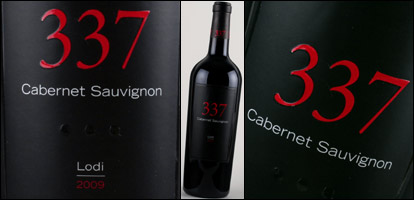
Dark chocolate, cassis and cherry scented pipe tobacco aromas give this wine a delightful nose. In the mouth it brings out cherry and blackberry flavors with vibrant acidity. The tannins are sufficient, adding smoothness to the texture. It finishes long with blackberry, black tea and a touch of spice.
Wine: 337
Variety: Cabernet Sauvignon
Vintage: 2009
Alcohol: 14.5%
Rating: 87
Price: $14.99
Find 337 Cabernet Sauvignon with Snooth
Disclosure: This wine was received as a media sample.
Continuing with the cabernet sauvignon theme, today we’re checking out another Chilean cabernet from the Colchagua Valley region in Chile.
We’ve reviewed a few other Calcu wines, such as their malbec and their red blend, and we’ve found them to be generally decent. They’ve not necessarily knocked our socks off, but they’re still good. And that trend continues with this cabernet.
While this wine is labeled as cabernet sauvignon, it also has 10% carmenere (which adds a touch of Chilean uniqueness to the wine) and 10% petit verdot (which adds a touch of awesomeness to the wine).
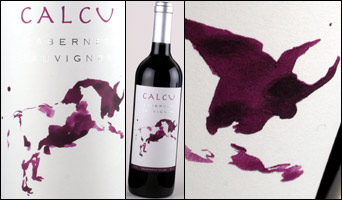
This wine shows some of the classic cassis aromas along with vanilla, plum and a touch of floral. The palate offers scrumpteous blackberry and plum flavors up front, followed by some dark chocolate. The acidity is good and the tannins are sufficient. The finish has an average length and berry flavors. It did take a while for this wine to open up and really shine, so give this one some time and I’d recommend decanting to speed it up.
Wine: Calcu Reserva
Variety: Cabernet Sauvignon
Vintage: 2009
Alcohol: 13.5%
Rating: 85
Price: $14.00
Find Calcu Reserva 2009 Cabernet Sauvignon with Snooth
Disclosure: This wine was received as a media sample.
A lot of the wines that I review seem to have a similar story. A family owns a vineyard for generations and recently renovated their winery, blah, blah, blah. Well, the story behind Maquis has a slightly different twist. Yes, it’s a vineyard that has been owned by the same family for over 100 years. But for most of that time, the family that owns this vineyard only produced grapes for other vintners. It wasn’t until about ten years ago that they decided to make some of their own wine from the grapes they grow.
They built a new “gravity flow” winery to produce their wine. That essentially means that the winery is designed to use gravity to move the wine through the process rather than pumping the wine from place to place. The theory is that it treats the wine more gently, creating a better product. For example, during the initial crush you don’t really want to “crush” the grapes but gently crack them open and let the juice escape. If you were to truly crush the wine, you might also crush the seeds within the grapes adding bitter flavors to the wine.
Since 2005, winemaker Xavier Choné has been consulting with Maquis to help them take better advantage of location within their vineyards in Colchagua Valley. Choné works with vineyards around the world and is associated with some great wines, like Opus One, and Maquis is the only South American vineyard he’s working with.
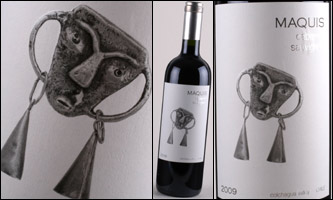
When I first smell a wine to try to judge it, I find myself asking, “Is it varietally correct? Is it balanced? Is it harmonious? Is it interesting? Is it exciting?” And with this wine, the answer to all of those questions is a clear “yes!” Then I start to dig into it, “what do I smell here?” In this case, it starts with chocolate aromas, layered with cassis, plum and cedar. In the mouth, it has a wonderful, smooth and almost creamy texture. It’s loaded with ripe fruit flavors, like black cherry, plum and blackberry. The finish is relatively long and features cherry and black tea flavors. Overall, I’m impressed and definitely recommend this one.
Wine: Maquis
Variety: Cabernet Sauvignon
Vintage: 2009
Alcohol: 14%
Rating: 89
Price: $20.00
Find Maquis 2009 Cabernet Sauvignon with Snooth
Disclosure: This wine was received as a media sample.
The William Cole estate is situated in the Casablanca Valley, near the city of Casablanca. There is also a William Cole Vineyards in St. Helena, California, but the wineries are unrelated. William Cole Vineyards, the Chilean version, is owned and operated by William Cole, while William Cole Vineyards in St. Helena is owned and operated by William Ballentine, along with his family, including a son named Cole. But that’s neither here, nor there.
William Cole Vineyards (the one in Casablanca, Chile) produces an array of traditional varietals, along with Carménére. Their sauvignon blanc is sourced from cooler micro-climates that, William Cole claims, enable the wine to retain a natural acidity. The grapes are destemmed and fermented in stainless steel tanks for a period of 15 days.
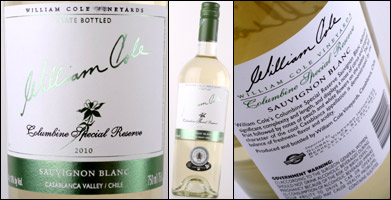
On the nose, the wine offers amazing and complex aromas of green bell pepper, along with an array of fruits, including grapefruit and peach. On the palate the wine initially teases at following through on that robust nose, but the mid-palate and finish mysteriously fade away. It comes in like a lion and out like a lamb. The wine actually turns somewhat creamy, devoid of any real acidity. It gives the sense of being somewhat out of balance.
This is a rather unique wine, offering a rich nose and fruity character, combined with a creamy and slightly mild finish. It’s not as intense as some offerings from New Zealand, but should be considered by those looking for a tastier alternative to California versions of sauvignon blanc. Just make sure you get the Chilean version of William Cole.
A Salute!
Wine: William Cole Vineyards Columbine Special Reserve
Variety: Sauvignon Blanc
Vintage: 2010
Alcohol: 13%
Rating: 85
Price: $15
Disclosure: This wine was received as a sample.
Last week, David did a review of a sauvignon blanc from Robert Mondavi, so I thought I’d work in another Mondavi wine today. This one is a cabernet sauvignon from their “Private Selection” line.
Like David, I haven’t had any negative experiences with any of Mondavi’s wines. I’ve had some that are great, some that are good and some that are mediocre, but I haven’t had any that are bad. Yet I come across some consumers who scoff at the idea of drinking a glass of Robert Mondavi. I suppose that could be due to their omnipresence on wine shelves. It seems that everywhere you go in the US you’ll find some Robert Mondavi wines. Good for them to have such great distribution, but I guess I can see why some consumers would think it’s not that “special” if you can get it anywhere. Nonetheless, it’s often a decent, reliable choice.
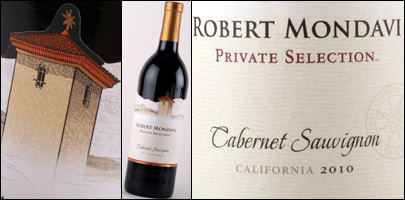
This wine has a nice, spicy nose with tobacco and cedar notes complementing plum and blackberry aromas. The palate is very juicy and offers blackberry and dried plum flavors with good acidity. It has a little bit of a black tea flavor to it, but the feel of the tannins is a little bit light and I would have liked a little more to add some structure to the wine. But still, for eleven bucks this isn’t a bad bottle of wine.
Wine: Robert Mondavi Private Selection
Variety: Cabernet Sauvignon
Vintage: 2010
Alcohol: 13.5%
Rating: 84
Price: $11.00
Find Robert Mondavi Private Selection 2010 Cabernet Sauvignon with Snooth
Disclosure: This wine was received as a sample.
My experience with Robert Mondavi’s various wineries goes back many vintages. And, I can say that I’ve never had a negative experience with any of their wines, whether they were from the main estate, from Woodbridge, or from their joint venture with Baron Philippe de Rothschild, Opus One. Regarding the latter, I’ve been fortunate to enjoy a number of vintages. And, I’m happy to report that the streak is in-tact. While I’ll say up front that Woodbridge’s 2010 California sauvignon blanc would not be my first choice at this price point, because it’s not necessarily my style of sauvignon blanc, it does represent a great value.
The wine is not 100% sauvignon blanc. Woodbridge blends a bit of French colombard and semillon, along with small percentages of a few other obscure white varietals. However, the wine is 76% sauvignon blanc and this, according to California law, enables the wine to be classified as sauvignon blanc.
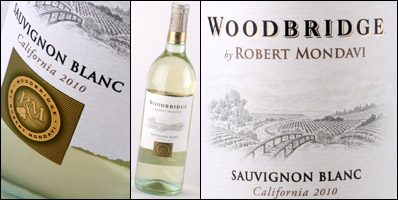
On the nose the wine offers sweet lemon-lime and crisp apple. It’s an aromatic nose, and quite attractive, but it lacks some of the intensity that you might find in a southern hemisphere sauvignon blanc. However, some zingier traits emerge on the nose as the wine opens and warms.
The first taste activates a broad area of the palate. This usually indicates a well-balanced and complex wine. More sour apple and lemon-lime are available on the palate; but, the real story here is the acidity, or I should say the lack-there-of. It’s not that this wine is devoid of acid. There is sufficient acid here to adequately balance the wine. But many value priced sauvignon blancs from alternative geographies are offering more power and intensity at similar price points, and, I believe they are also raising the bar for what consumers will expect out of this varietal. That said, this more elegant style, eschewing acid and intensity for graceful fruit and softer mouth-feel, is indicative of Mondavi’s various interpretations of the varietal. In the tasting notes, Woodbridge claims a zingier style, but my guess is that you will disagree with their claim. 2010 saw mild conditions in Lodi, where the fruit is sourced, along with slightly higher rainfall and cooler temperatures. We will definitely revisit the 2011 to see if the style remains consistent, or Mother Nature has handicapped the 2010.
We’re really mincing details here, mostly because it’s Robert Mondavi’s legacy we’re talking about. This is a good wine for the money and, as mentioned, a great value. If your style is more elegance than intensity, this is your wine.
A Salute!
Wine: Woodbridge by Robert Mondavi
Variety: Sauvignon Blanc
Vintage: 2010
Alcohol: 13%
Rating: 86
Price: $7.99
Find Woodbridge by Robert Mondavi 2010 Sauvignon Blanc with Snooth
Disclosure: This wine was received as a sample.
As any regular reader here probably knows, I’m a fan of Chilean wines. It’s not that I have any personal connection to Chile, it’s just that we tend to find really good values from this region. This cabernet from Peñalolen is no exception.
This wine comes from the Maipo Valley region in Chile, which is one of the oldest and most productive wine regions in Chile. Maipo Valley is best known for its red wines, and particularly for its cabernet sauvignon.
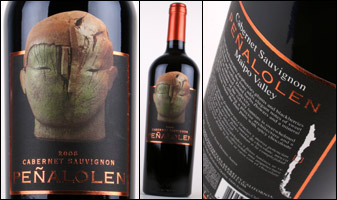
The first smell of this wine makes me say, “hmmm, that’s nice” which is pretty good, but not quite a “wowee!” It shows some pretty typical aromas for a cabernet sauvignon, like cassis, black cherry, cedar and pencil shavings. The palate offers up tart blackberry, plum and coffee flavors with really good acidity. The mouthfeel is nice with this one too. The finish is medium in length and provides a tart cherry finish.
Wine: Peñalolen
Variety: Cabernet Sauvignon
Vintage: 2009
Alcohol: 14%
Rating: 87
Price: $18.00
Find Peñalolen Cabernet Sauvignon with Snooth
Disclosure: This wine was received as a sample.

 Prev
Prev