In a couple days celebrators around the world will pop open a bottle of bubbly to ring in the New Year. A number of them will drop too much coin for high-priced sparklers that, although they can be great, many wine drinkers won’t even be able to tell the difference between them and a much cheaper bottle of bubbly. For the record, I’ve tasted some of those finer sparklers and I do think there is a difference in many of them… but I struggle to find that difference significant enough to justify the massive price difference.
While I love good sparkling wine, I also love a good bargain. And with Voveti Prosecco, I get the best of both worlds.
Prosecco is a good bubbly option for bargain hunters. It’s made using the Charmat process, which involves secondary fermentation in stainless steel tanks and bottling under pressure versus the secondary fermentation in bottle (as done in the traditional Champagne method). The Charmat process is less expensive, resulting in more budget-friendly bottle prices. Wines made with the Charmat process are considered less capable of aging and are intended to be consumed young — but who cares, since consuming is exactly why you’d by a Prosecco.
Voveti is a great option for a cheap Prosecco too. It’s delicious and priced well-under $20. Currently they only produce one wine under this brand so there’s no confusion about what you’re buying.
Soft floral, peach and melon aromatics give this wine a pleasant nose. The mouthfeel offers a nice contrast of silky bubbles and tart acidity. The palate brings well balanced tangy peach, apple and lemon flavors. A tart green apple flavor lingers on the finish. This is an easy-drinking prosecco.
Wine: Voveti Prosecco
Variety: Glera
Vintage: Non-vintage
Alcohol: 11%
Rating: 90
Price: $14.00
Disclosure: This wine was received as a media sample.
‘Tis the season of celebrations and the time of year when people are more likely to be thinking about sparkling wines than other times of year. Although I’m an advocate of celebrations anytime of year and of enjoying sparkling wine with or without a celebration.
And I don’t think I’m the only one with this perspective. More and more people are discovering that sparkling wine is something to enjoy year round. Of course that can be challenging with high-priced wines, which is why I love to find good bubbly at bargain prices. A good option for that is Cava.
Cava is a style of sparkling wine from Spain. It is made using the traditional Champagne method, which means specific techniques are used including secondary fermentation in the bottle to create the carbonation. While some Cava is on the high-end, you can find plenty that is reasonably-priced.
Segura Viudas is one of the larger Cava producers. They focus exclusively on Cava and they have a number of different styles (with different price ranges) that they produce. This wine is released under their “Aria” brand, in which they have offer the Estate Brut, Extra Dry and Pinot Noir Brut.
A touch of yeast, a touch of lemon, a touch of green apple and a touch of orange blossom make up the aromas on this sparkler. The complexity is fabulous and elegant. The palate offer zesty lemon flavors along with some green apple and subtle coriander flavors. The acidity is perfect and the mouthfeel is nice. It finishes with tangy, lemon-drizzled apple flavors and a bit of salty-mineral.
Wine: Segura Viudas Aria Estate Brut
Variety: Cava – 50% Macabeo, 40% Parellada, 10% Xarel-lo
Vintage: Non-vintage
Alcohol: 12%
Rating: 89
Price: $14.00
Disclosure: This wine was received as a media sample.
Fumé blanc is another way to say sauvignon blanc. It’s the same grape, just another name. Perhaps a more elegant or exotic sounding name. And it just so happens that this is an elegant sauvignon blanc. But it also happens to be one that is priced above my general target of $20 or less.
The grapes for this wine come from Robert Mondavi Winery’s To Kalon vineyard in Napa Valley. They refer to To Kalon as a “first growth” vineyard, which is a translation of the French “Premier Cru” and means that the vineyard is classified as producing wines of exceptional quality. This is also where Robert Mondavi established his winery in 1966.
This wine offers a harmonious blend of grapefruit, lemon, coconut and mineral aromatics. The palate is also well-balanced and delicious, bringing flavors like lemon, lime, granny smith apple and flinty mineral. It’s very dry and not as tropical as many of the sauvignon blancs from New Zealand or Chile. Vibrant acidity makes this a lively wine. The finish is nice and long. It’s a delicious wine.
Wine: Robert Mondavi Winery, To Kalon Vineyard Fumé Blanc
Varieties: Sauvignon blanc, semillon
Vintage: 2010
Alcohol: 14%
Rating: 90
Average price: $42.00
Disclosure: This wine was received as a media sample.
Red blends are where it’s at when it comes to finding good red wines that won’t break the bank. Sure there are plenty of varietal wines that are good too, but the bang for the buck you get from red blends tends to be more consistent than single-variety wines in this price range.
This blend of 20% bonarda, 20% cabernet saugivnon, 20% malbec, 20% syrah and 20% tannat comes from Graffigna Wines in Argentina. It’s a winery with a long history, dating back over 140 years. While its origins are as a family winery, it was sold to Allied Domecq in 1980 which itself was acquired by Pernod Ricard in 2005, bringing the Graffigna brand into the Pernod Ricard portfolio.
It’s been a while since I’ve included this reference in a tasting note, but I get a bit of barnyard on the nose of this wine. That’s not in a bad way, it is just a bit “earthy.” It also shows some blackberry and plum aromatics. The palate is brimming with ripe blackberry, black raspberry, cassis and chocolate flavors. There’s also a touch of spice, particularly going into the finish. There’s a vibrancy to the wine from the acidity and a slight silkiness from the tannins. This is a tasty red blend.
Wine: Graffigna Centenario Elevation Red Blend
Varieties: 20% bonarda, 20% cabernet saugivnon, 20% malbec, 20% syrah, 20% tannat
Vintage: 2012
Alcohol: 14%
Rating: 86
Average price: $10.00
Disclosure: This wine was received as a media sample.
Want another opinion? Here are some reviews from other folks:
Over the past year, I’ve found myself becoming more and more a fan of South African wines. Of course with any region there are going to be some wines that are better than others — and some producers who are better that others. And Ken Forrester is quckly becoming my “go to” producer from South Africa.
I’ve mentioned before, quite recently in fact, that I like to find producers who are consistent. And so far, the wines I’ve tasted from Ken Forrester have been consistently good. His chenin blanc is phenomenal and the reds I’ve had have also been quite tasty.
By the name, you might guess there’s some petit sirah in this wine, but you’d be wrong. This wine is a blend of 67% cabernet sauvignon and 33% merlot. Previous vintages of it have been named “best value” by a couple different critics and I’d say this vintage is a marvelous value too.
Cherry, blackberry, tree bark and plum aromatics make for a rich and delightful nose with character. The palate is rich, with concentrated black cherry, strawberry, plum and blackberry flavors. There’s more fruit in this wine than in Carmen Miranda’s hat! It has a touch of spice too on the mid-palate and into the finish.
It’s a very tasty wine, and I’d say particularly good for burgers. In terms of value, it’s out of this world!
Wine: Ken Forrester Petit Cabernet Sauvignon / Merlot
Variety: 67% cabernet sauvignon, 33% merlot
Vintage: 2012
Alcohol: 13.5%
Rating: 88
Price: $10.00
Disclosure: This wine was received as a media sample.
If you’re one of those wine drinkers who swears they hate chardonnay, I implore you to try a “naked” or un-oaked chardonnay. Or try a few of them as the winemaking can bring out different personalities in this style of wine. But if you fancy yourself a chard-hater, stripping away the oak may change your perspective.
This un-oaked chardonnay comes from Emiliana in the Casablanca Valley in Chile and their Natura brand of organic wines. As I’ve shared here many times, the Casablanca Valley is a cool climate region in Chile. Some exceptional white wines come from this area and it’s the perfect climate to create great chardonnay. And that’s exactly what they did.
There’s a nutty note on the nose of this chardonnay, along with aromas like melon, lemon and green apple. The palate brings crisp apple, melon, pineapple and citrus flavors with good acidity. It finishes with lingering pineapple flavors. It’s a tasty wine that doesn’t hide the flavor of the chardonnay in a bunch of oak, because this one is unoaked.
Wine: Emiliana Natura, Un-oaked Chardonnay
Variety: Chardonnay
Vintage: 2012
Alcohol: 13.5%
Rating: 88
Price: $10.00
Disclosure: This wine was received as a media sample.
This is not the first time I’ve reviewed a Kim Crawford sauvignon blanc. Just earlier this year I posted a review of the 2012 vintage and I loved it. Now, I’m happily enjoying the 2013 vintage — and it is equally delicious.
When I find a wine that’s consistently awesome, year after year, that wine becomes top of mind when I’m shopping. It’s an easy pick that I can trust! And while I’m adventurous when it comes to wine and typically want to try something new, I also have times when I just want to grab a bottle I know will be good. This is one of those bottles.
I’m not the only one who has recognized how good this wine is. Wine Spectator included Kim Crawford sauvignon blanc in its Top 100 Wines list in 2003, 2005, 2006 and 2008. While they didn’t include it in their 2013 list, I think this vintage is wonderful.
If you like intense tropical fruit aromatics and flavors in your sauvignon blanc, you’ll love this one. The nose is loaded with peach, pineapple, grapefruit and mango aromas. The flavors are equally complex and delightful, revealing peach, lemon, grapefruit and mango with good concentration.
This is a fantastic wine!
Wine: Kim Crawford
Variety: Sauvignon blanc
Vintage: 2013
Alcohol: 12.5%
Rating: 91
Price: $15.00
Disclosure: This wine was received as a media sample.
It is holiday season and while I recommend sparkling wine any time of the year it’s a must during the holiday season.
You might think that sparkling wine is a splurge, but if you know how to shop for it you can actually get some pretty darn good bubbly at prices comparable to any other wine. Champagne is great, but your unlikely to find any for under $20. But there are many other regions that produce good bubbly at much more reasonable prices.
I’m not gonna lie, there is a difference when you compare the cheap bottles to the pricey stuff. Regions like Champagne and Franciacorta make some spectacular sparkling wines! If you taste a cheap bottle of bubbly next to a good bottle of Franciacorta there’s no comparison. But a good bargain bubbly is still be pretty enjoyable.
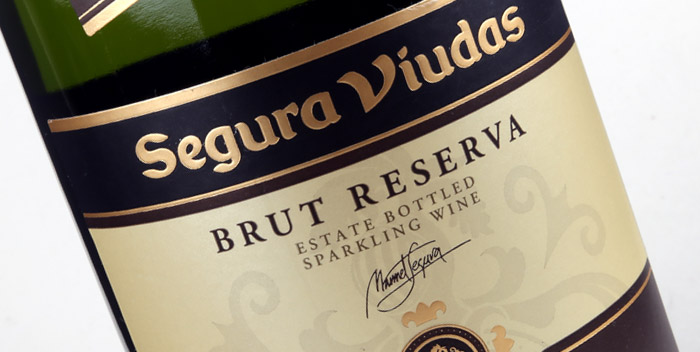
One of my favorite regions for steals on sparkling wines is the Cava region. The one I’m tasting today is from Segura Viudas, who produce a number of different Cavas, from ultra-cheap to moderately pricey. The Brut Reserva is their “entry level” wine in terms of price, but it’s still pretty darn delicious!
This wine sells for under ten bucks, and I’d be glad to have a glass of it any day. It’s made from a blend of 50% Macabeo, 35% Parellada and 15% Xarel-lo.
The aromas are mostly lemon, but it also reveals some nuttiness, yeast and wet stones. The palate is delicious with plenty of lemon, mango and white peach flavors held up on salty minerality. The acidity is just right, giving a nice vibrancy to the wine. And the mouthfeel is perfectly bubbly. It’s a tasty cava and an exceptional bargain!
Wine: Segura Viudas Brut Reserva
Variety: Cava – 50% Macabeo, 35% Parellada and 15% Xarel-lo
Vintage: Non-vintage
Alcohol: 12%
Rating: 88
Price: $8.00
Disclosure: This wine was received as a media sample.
It is holiday season and while I recommend sparkling wine any time of the year it’s a must during the holiday season.
You might think that sparkling wine is a splurge, but if you know how to shop for it you can actually get some pretty darn good bubbly at prices comparable to any other wine. Champagne is great, but your unlikely to find any for under $20. But there are many other regions that produce good bubbly at much more reasonable prices.
I’m not gonna lie, there is a difference when you compare the cheap bottles to the pricey stuff. Regions like Champagne and Franciacorta make some spectacular sparkling wines! If you taste a cheap bottle of bubbly next to a good bottle of Franciacorta there’s no comparison. But a good bargain bubbly is still be pretty enjoyable.
One of my favorite regions for steals on sparkling wines is the Cava region. The one I’m tasting today is from Segura Viudas, who produce a number of different Cavas, from ultra-cheap to moderately pricey. The Brut Reserva is their “entry level” wine in terms of price, but it’s still pretty darn delicious!
This wine sells for under ten bucks, and I’d be glad to have a glass of it any day. It’s made from a blend of 50% Macabeo, 35% Parellada and 15% Xarel-lo.
The aromas are mostly lemon, but it also reveals some nuttiness, yeast and wet stones. The palate is delicious with plenty of lemon, mango and white peach flavors held up on salty minerality. The acidity is just right, giving a nice vibrancy to the wine. And the mouthfeel is perfectly bubbly. It’s a tasty cava and an exceptional bargain!
Wine: Segura Viudas Brut Reserva
Variety: Cava – 50% Macabeo, 35% Parellada and 15% Xarel-lo
Vintage: Non-vintage
Alcohol: 12%
Rating: 88
Price: $8.00
Disclosure: This wine was received as a media sample.
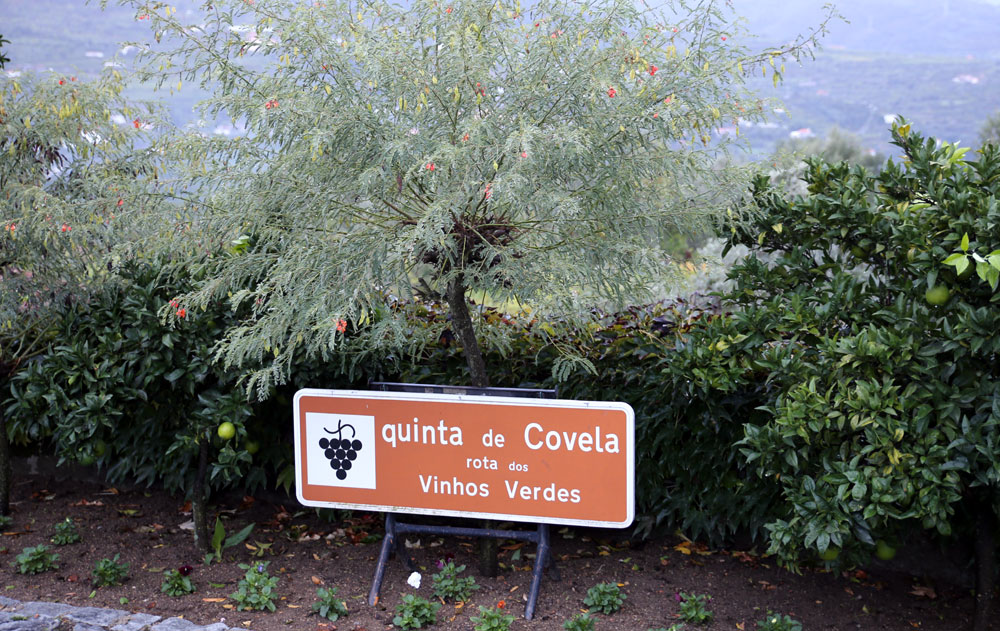
One of the things that fascinates me when I learn the history of many wine producers in Europe is how common it is to find vineyards that have stayed in the same family for several generations. But that’s not always the story. Every now and then I come across a new kid on the block. And that is the kind of story I discovered at Quinta de Covela on a recent trip with several other wine bloggers to Portugal.
A quick disclosure, this trip was organized by a wine communications group in Portugal named Greengrape. Lodging, meals, local travel and wine were provided to participants of this trip.
Meeting the New Kid on the Block
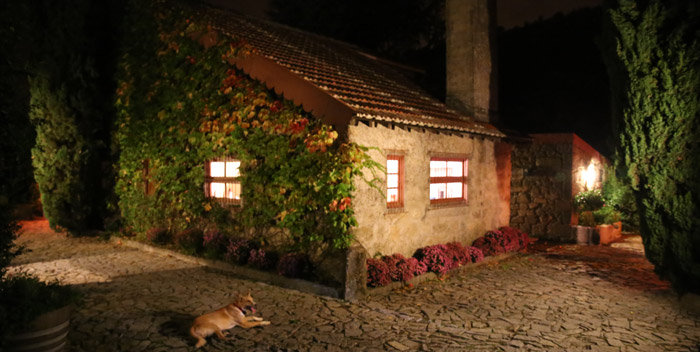
The trip to Portugal happened back in October, and started in Porto and then out to the Douro Valley. We took the commuter train from Porto to the end of its route and then hopped on another train to go further. It was after dark when we got off the train and found ourselves at a small, rural train stop named Aregos, with seemingly nothing around it. And there was Tony Smith awaiting us — a total stranger to us at the time and us to him. After a quick introduction, we hopped into his SUV and off we went to his vineyard.
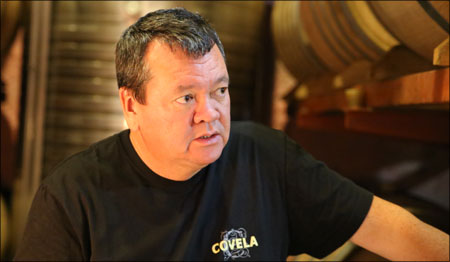
Smith is one of the relatively new owners of Quinta de Covela and Quinta da Boavista – both along the Douro river. And over the next few hours, as I learned about his path to owning these vineyards, I found myself in awe of his fearlessness to chase his dream in such a bold fashion.
Not only is he a new kid on the block in terms of owning a vineyard in Portugal, but he’s truly an outsider who has made a new home in Portugal. He’s originally from the United Kingdom, although has spent time living in Portugal over the years.
And when it comes to winemaking, Smith is an outsider once again. He had no prior background in wine, other than as a consumer. Prior to this venture he worked in publishing, with Conde Nast.
While he was successful in the publishing world, he had always admired that his father had owned his own business and wanted to do the same one day. Through discussions with his eventual business partner, Marcelo Lima, about starting a wine-related business he eventually found himself shopping for a vineyard in Portugal.
Buying a Vineyard in Portugal
Smith and Lima’s search for a vineyard led them to Quinta de Covela, which was on the auction block after the former owner went belly up. The former owner didn’t go out of business due to problems with the wine, but from other real estate investments that didn’t pay out.
Smith and Lima made an offer and ended up as the highest bidder on the property, but the bank that held the property refused their bid – considering it too low.
The bank then neglected the vineyards for two years while they tried to find an investor willing to pay more, until the bank itself went bankrupt. At that point Smith and Lima were contacted to see if they were still interested in the property, they were and they were finally able to complete the purchase.
You Own a Vineyard, Now What?
After acquiring the property, Smith and Lima decided not to harvest their first year but spent that time restoring the vineyard from the neglect it had suffered. The vineyards had formerly been operated as biodynamic, but moving forward they have decided to use organic methods without biodynamic classification.
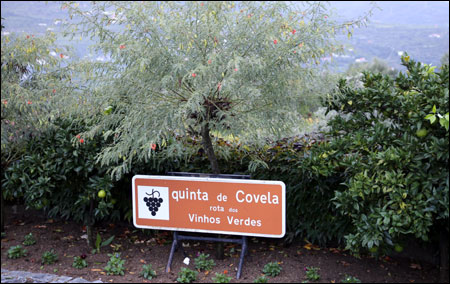
In order to restore and run the vineyards, they needed to find a team to help them. Given the historical quality of the wines, they wanted to rehire the team that formerly worked at the property.
One of their first goals was to rehire the former winemaker, Rui Cunha, but they weren’t sure how receptive he would be as he is the cousin of the previous owner. They reached out to him and fortunately he was thrilled to come back, in part because Quinta de Covela was his first project — and therefore his first love. The rest of the team quickly followed.
Creating a New Vinho Verde
Once Cunha was on board, Smith asked him if there was a style of wine that he had always wanted to create but hadn’t been able to do. Cunha said, “yes, a vinho verde from 100% Avesso.” This was a response that thrilled Smith, as he thought the white wines from this vineyard were already exceptional and he wanted to do more with them. They made plans to do a small batch of this vinho verde as an experiment, but Mother Nature intervened and forced them to rethink their plans.
A hail storm that year devastated much of their Chardonnay crop, a variety that they typically blend with Avesso for the vineyards signature white blend. The loss of so much Chardonnay left them with an abundance of Avesso, which transformed their plan to make an Avesso Vinho Verde as an experiment into their new “Plan A.” In other words, the Vinho Verde went to market and they were counting on the wines success.
Fortunately for them, it was a smashing success. It was released under the name Covela Edição Nacional and the premier vintage (2012) sold out.
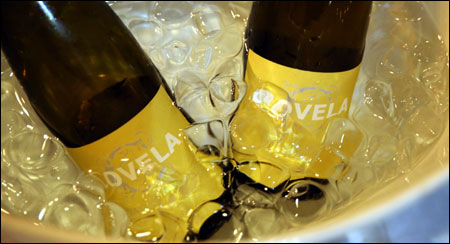
Covela Edição Nacional vinho verde has a bright and floral nose with vibrant lemon aromatics. The palate is also amazing, with vivacious lemon, lime and peach flavors. It’s perfectly balanced and an amazing wine for food. Simply put, it’s amazing!
But like I said, it has sold out. So it’s a great wine that you’re unlikely to have a chance to taste. However, we can all look forward to the next vintage.
Smith and team are so excited about white wines from Quinta de Covela that they are increasing the percentage of white grape vines on their estate. They have historically had 50% white and 50% red, and they are replanting vines with a goal of having 80% white grape vines.
Good People Make Good Wine
One thing that stood out to me on this visit, besides the deliciousness of their wines is that Smith and Cunha were extremely likable people, with a good sense of humor. It made me reflect on something I’ve thought before, that the personality of winemakers comes through in their wines. If you’re an asshole, your wine is more likely to reflect that and taste bad. If you’re a friendly, approachable person with a good sense of humor, your wines will likely be more approachable and delicious.
And that likability is something that I’m sure has helped this team succeed. They’ve built strong relationships with their neighbor-producers and are advocates for the region as a whole, not just themselves.
While they need to be profitable, it’s not all about the money. Smith commented to me that he’s against “prohibitively expensive” wines, but at the same time acknowledges that uber-cheap wines are likely to lack quality. It’s a reasonable viewpoint and one that I appreciate.
Smith is the kind of producer I root for. I want to see him and his team be successful and I hope to get to know him better as he continues on his journey. And, of course, I look forward to tasting future vintages of his wine.
While I appreciate the heritage that comes from multi-generational winemaking families, sometimes the new kid on the block will shake things up by taking chances that result in greatness. This has clearly happened with this team, and I love it!
Disclosure: I tasted this wine as a part of a sponsored blogger tour of the Douro Valley, organized by Greengrape. Travel and accommodations were provided by the sponsors.

 Prev
Prev